
Last updated November 18, 2026







Free written scope consultation - allowances, timeline, and change-order rules on paper before a single trade is scheduled
Construction Warning Signs: An Enterprise Homeowner’s Reference Guide
A hairline crack in drywall is usually nothing. A stair-step crack in your CMU block wall following the mortar joints is your foundation speaking to you in a language you need to understand right now.
Most warning-sign guides hand you a list of cosmetic problems: a water stain here, a sticking door there. That approach fails in Enterprise. Homes built on desert soils and finished in desert heat fail differently than homes in wet climates, and the signs appear in a different order. This guide teaches you to read structural and systemic signals specific to Enterprise, Nevada – how to tell a crack that gives you six months from one that gives you six weeks, what to photograph and in what order, and when a warning sign has crossed from “watch it” into “call today.”
Quick Answer
The warning signs that matter most in Enterprise are stair-step cracks in block walls, doors that suddenly rack out of square, roof-deck and fascia separation you can’t see from the ground, and soil-driven edge lifting at slab and paver perimeters. What separates a serious sign from a cosmetic one is direction and pace: a crack that’s moving, or a symptom that appeared in the last 60 days, needs a professional inspection now.
Styles & brands we work with
- Kitchen remodeling
- Bathroom remodeling
- Home additions & ADU
- Roofing
- Windows & doors
- Driveway & pavers
- Fence
Table of Contents
- How to Read Crack Patterns: Settlement vs. Thermal vs. Structural
- Enterprise Soil Conditions and the Signs They Produce
- Door Frame Racking: A Symptom with Three Possible Causes
- Roof Warning Signs You Can’t See from the Ground
- Six Months vs. Six Weeks: Rating the Clock on a Warning Sign
- The Photographic Documentation Protocol
- Which Signs Justify a Call Today
- Pavers, Driveways, and Fences: The Exterior Early-Warning System
How to Read Crack Patterns: Settlement vs. Thermal vs. Structural
Not every crack means the same thing. The pattern, width, location, and critically the direction of travel tell you what’s happening. In Enterprise, dry air and a 40-degree-plus daily temperature swing in summer push materials through constant expansion and contraction, so some cracking is inevitable. The job is separating the inevitable from the alarming.
Thermal expansion cracks run straight and short. They appear at corners of windows and doors, along the line where two dissimilar materials meet (stucco against trim, block against wood frame), and they typically close and reopen with the seasons. Under 1/8 inch wide and vertical or diagonal once, these are cosmetic. Caulk, paint, and watch.
Settlement cracks tend to be wider at one end, often near a corner or where the home meets a garage, and follow a diagonal or a stair-step pattern along weak points. A stair-step crack climbing a CMU block wall is the classic signature: it’s following the mortar joints because the block itself is stronger than the joint, so the wall moves where the wall is weakest. That’s the pattern that warrants attention before it widens further.
Structural movement cracks come in sets, not singles. When a crack appears with a matching door that won’t latch, a floor that’s gone slightly out of level, or a window that’s cracked its corner, you’re looking at a system moving, not a surface reacting. Multiples matter more than any single crack’s width.
- Straight, short, at a material joint, under 1/8″ – thermal; monitor seasonally.
- Diagonal or stair-step, wider at one end – settlement; have it evaluated.
- Stair-step through block mortar joints – structural; call a professional now.
- Crack plus a sticking door or window – system movement; call a professional now.
Enterprise Soil Conditions and the Signs They Produce
Enterprise sits on desert soil with a high clay component and a dramatic shrink-swell cycle. When the soil dries in the long summer, it contracts; when winter rain or a summer monsoon event soaks it, it swells. That cycle produces soil movement at the edges of your home that homes in wet, stable climates never experience, and the signs it leaves are specific.
Edge lifting is the first sign most Enterprise homeowners notice. The perimeter of your driveway, patio, or slab rises where the soil underneath has heaved or where irrigation runoff has undermined it. You’ll see paver courses that were flush a year ago now riding a half inch high at the edge nearest the foundation, or a visible gap between the slab edge and the soil line. Left alone in a desert climate, edge lifting usually leads to cracking and paver failure, because the supported edge is doing the work the soil underneath stopped doing.
Corner separation happens when one corner of a foundation shifts relative to the rest, and it shows up as a widening gap at a wall-to-wall corner, a crack fanning out from a single point, or stucco pulling away at the corner of an addition. In Enterprise, where additions and patios are common on newer homes, the joint between the original structure and any later-added element is a hotspot to watch.
Dry-soil shrinkage cracking is the inverse problem: soil cracking in the yard close to the foundation, which lets water run straight down into the soil column instead of across it. That water, when it arrives, hits a soil column that’s already been starved. If you see deep yard cracks running toward your foundation after a heat wave, that’s a soil-moisture discipline problem before it’s a structural one, and it’s worth addressing early.
This is the point where good foundation-adjacent hardscape and drainage choices matter as much as the structure itself. If your pavers or driveway are part of the foundation’s water story, a professional evaluation of that interface is the right first step. Our Driveway & Pavers in Enterprise page covers how we handle soil and base prep, and it’s worth reading if edge lifting has already appeared at your property.
Door Frame Racking: A Symptom with Three Possible Causes
A door that sticks is easy to dismiss. A door that stuck last month and now has a visible gap at the top on one side and is tight on the bottom on the other is a data point – it means the frame itself has moved, and that movement came from somewhere. Door frame racking in Enterprise has three common causes, and each leaves a different signature.
- Foundation and soil movement. If racking appears alongside a stair-step crack or a corner separation at the same side of the house, the frame is tracking the foundation. This is the one to take seriously and the one worth an inspection.
- Seasonal wood movement. Desert homes swing from dry winter air to monsoon-humidity summer, and an interior door can bind for a season and release. The tell: it resolves on its own within a few weeks and no crack accompanies it.
- Loose or under-fastened hinges. Older homes in established Enterprise neighborhoods have doors that have been slamming shut for fifteen years. A door that racks only at the top and shows torn screw holes at the hinges is a hardware problem, not a structural one.
The test that separates them: walk the room after you find a sticky door. Look for a matching crack in the wall on the same side, a gap at the baseboard, or a slight slope in the floor. If any of those ride along with the door, get it looked at. A single sticking door in a room with otherwise straight walls and intact baseboards is almost always the door.
Roof Warning Signs You Can’t See from the Ground
The roof is the single most under-inspected component of an Enterprise home, and the desert climate hides its failures better than any other environment. In wet climates, a failing roof leaks; you find out from a stain. In Enterprise, a failing roof can sit for two or three seasons before a monsoon event finds the vulnerability, and by then the deck is compromised.
What you can’t see from the ground, and what an accessible inspection catches:
- Fascia and soffit separation. Gaps at the roof-to-fascia joint mean the deck edge has moved or moisture has swollen the substrate. From the ground, this reads as a shadow line.
- Granule loss in patches, not evenly. Even granule wear is normal. Patchy wear on one slope means that slope is failing faster and worth replacing before the whole roof.
- Pipe boot and flashing deterioration. The rubber boots around plumbing vents crack in desert heat and UV exposure. It’s a small part that fails long before the shingles and lets water straight into the deck.
- Attic-side warning signs. Discolored decking, daylight at the ridge, sagging between rafters, or daylight visible at the ridge line – all of these are visible from inside the attic and all of them are invisible from the ground.
- Tile and shingle adhesive failures. In desert climates, adhesive strips lift and tiles loosen. If you can see lifted or sliding tiles from the ground after a wind event, the underlying attachment has already failed.
If any of these are visible or you’re in the window where the roof is 15+ years old, a professional roof inspection will settle it. Our Groundwork Construction Co. of Enterprise home has a full breakdown of what our roofing inspections cover and how we sequence a repair vs. replacement decision.
Six Months vs. Six Weeks: Rating the Clock on a Warning Sign
The single most useful skill in this guide is triage: knowing how much time a warning sign gives you before it becomes an emergency. Two cracks the same width can mean six weeks or six months depending on what surrounds them. Here’s the framework we use.
Six months or more (monitor, plan, budget):
- Cosmetic thermal cracks under 1/8″ at material joints
- Patio and driveway pavers showing early edge lifting of 1/4″ or less
- Roof granules that are wearing evenly across all slopes
- One sticking door with no accompanying wall or floor symptom
- Drywall cracks that reappear after patching but don’t widen
Six weeks to six months (schedule an inspection, don’t wait):
- Stair-step cracks in block mortar joints, even short ones
- Corner separation at an addition or at the garage-to-house joint
- Fascia and soffit separation visible from the ground
- Paver edge lifting over 1/2″ with adjacent course disruption
- Repeated door racking that returns each season and is worsening
Six weeks or less (call now, this is heading toward an emergency):
- Any crack actively widening over days – measure it monthly and photograph it
- Two or more structural signs appearing within a few weeks of each other
- Roof leaking during a monsoon event, or daylight from the attic at a ridge or valley
- An interior door that has racked out of square in a short period and won’t close
- Fence posts that have leaned in the last month after years upright
The pattern: single symptoms give you time, and correlated symptoms don’t. When a crack appears with a door and a floor, or a roof sign appears with an interior water stain, the clock is much shorter than any single sign suggests.
The Photographic Documentation Protocol
Before you call anyone, build your record. A good photographic record in Enterprise does two things: it makes the professional diagnosis faster, and it protects you if this turns into an insurance or warranty conversation later. Homeowners who document well get better quotes and cleaner resolutions.
- Establish scale. Place a coin, a ruler, or a taped measure alongside every crack. A crack that looks like 1/8″ in a close-up photo may be 1/4″ in reality. Lay a scale next to it in the frame.
- Label location in context. Every close-up should be paired with a wide shot that shows where in the home it is. Same lighting, same angle, wide then close.
- Date and timestamp. Enable the timestamp on your phone camera, or include a handwritten date card in the frame of the first shot of each location. Repeat the shot at the same time of day on the same day of the month.
- Shoot the same view on a schedule. Take a set on day one, then again in 30 days, then again in 60. A crack that’s quietly moving will be obvious in a same-angle sequence; a crack that’s stable will read as identical.
- Document adjacent symptoms in the same set. Pair the crack with the door. Pair the roof-edge shadow line with the attic shot. A professional diagnoses the system, not the crack, and adjacent evidence is what tells the story.
- Keep the originals, not screenshots. Save the original image files, not just what you texted to a family member. Originals carry their metadata.
We’ve seen homeowners in Enterprise save themselves weeks of back-and-forth with a well-run photo set. A confident, dated, scaled record of the same view over 60 days is worth more than a dozen cell-phone grabs taken in different light at different times. Bring that record to your estimate and you’ll get a more accurate number, faster.
Which Signs Justify a Call Today
Most warning signs you can watch for a while. Some you can’t. These are the ones that justify a call today and a professional on-site inspection this week.
- Stair-step cracks climbing a block wall. The pattern is the message. Get a pro eyes-on before you patch or paint over it.
- Active water intrusion during a monsoon. A finding roof leak in the middle of a storm is a call-now situation, because the window between “wet” and “deck-rotten” is short in the desert.
- Multiple symptoms that appeared together. A crack, a sticking door, and a floor slope in the same area within weeks – the bundle is the emergency.
- A crack that has measurably widened since your last photo. If you’re running the protocol above and see movement, the question is no longer “is it moving” but “how fast.”
- Any warning sign on a home you’re about to sell. Disclosure requirements aside, a buyer’s inspector will find it. Better to have it documented and quoted before the sale than after.
A professional in Enterprise can read these signs quickly. The right call is the one that turns a hidden, moving problem into a documented, priced, scheduled fix before it becomes a structural emergency – which is how the review with a service partner should feel whether you’re on your first call or your third.
Pavers, Driveways, and Fences: The Exterior Early-Warning System
Homeowners tend to walk the walls and skip the yard. That’s a mistake in Enterprise, because the exterior hardscape and fence line are often where soil movement announces itself first. Pavers and fence posts are lighter and lower-stakes than your foundation, so they show you the same soil story a year earlier.
Pavers and driveways: edge lifting, settled areas that hold water after a rain, sand joints washing out faster in one area than another, and courses that have shifted more than their neighbors. One settled course after a wet winter is normal; three courses all moving toward the same corner of the house is the same soil story your foundation will tell. Base prep and grading matter enormously here. Our Driveway & Pavers in Enterprise page covers how we approach desert soil and proper base depth so a paver surface doesn’t telegraph the same heaving failure under the slab.
Fence lines: leaning posts, gaps at gate hardware that appear after a wet season, split rails at the base plate, and sagging sections on the side of the yard nearest the highest soil movement. A fence post that’s leaned slightly over a decade is settling; a post that only leaned in the last season after a wet winter is moving faster. Our Fence Installation in Enterprise team sees this constantly after a wet spring and can tell you whether the issues you’re seeing are cosmetic or the same soil story that’s reaching your foundation.
Additions and ADUs: the joint where a new structure meets an existing one is the most sensitive seam on the property for movement. If you’re adding or have added on in the last couple of years, watch that joint – our Home Additions & ADU in Enterprise team builds those seams to move together, and they can evaluate whether an existing joint is behaving or separating.
The takeaway: read your yard first. It’s the cheapest, earliest warning system you have.
Common Mistakes to Avoid
- Patching a moving crack. If a crack is active and you drywall-mud over it, the patch fails within a season and you’ve destroyed the evidence a professional needed. Photograph, measure, and monitor before you patch.
- Assuming desert dry air means no water damage. Summer monsoon events deliver more water in an hour than a wet-climate homeowner gets in a week, and desert soil sheds it into places a wet-climate roof would shed it off. Water is the silent partner in most Enterprise roof failures.
- Treating one symptom as the whole story. A single sticking door is usually hardware. A sticking door with a wall crack and a floor slope is a foundation story. Read symptoms in bundles, not singles.
- Skipping the attic. Half the roof warning signs in this guide live above the ceiling line. If you’ve never opened the attic hatch and looked at the underside of the deck, you haven’t inspected the roof.
- Calling after the sale is underway. In Enterprise, the pace of the market means a pre-listing walkthrough catches issues on your timeline. A buyer’s inspector catches them on theirs.
- Reading crack width without reading crack direction. A 1/4″ crack that’s stable and cosmetic is a smaller problem than a 1/16″ crack that’s climbing a block wall in a stair-step. Width is the wrong sole measure.
- Ignoring the yard. The pavers, the fence, and the yard grading are the exterior early-warning system for the same soil movement that later shows up at the foundation.
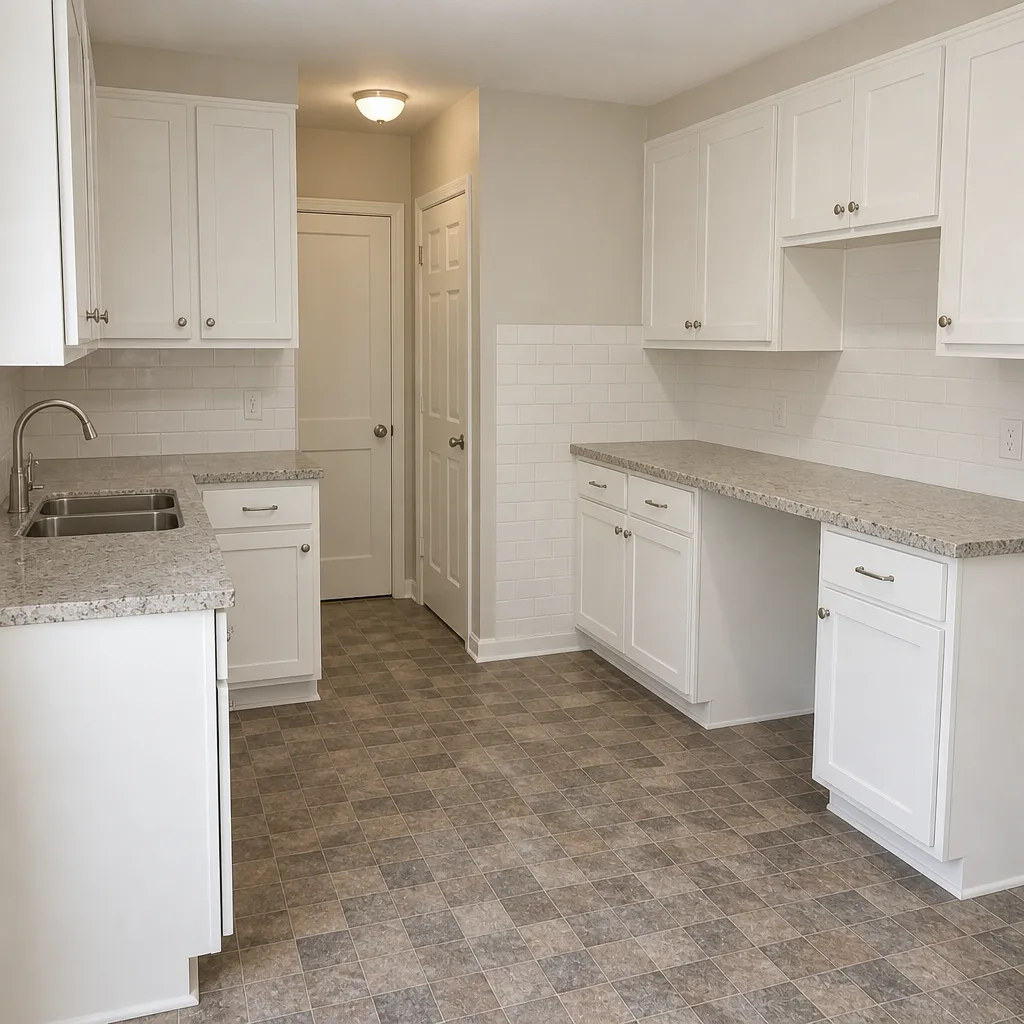
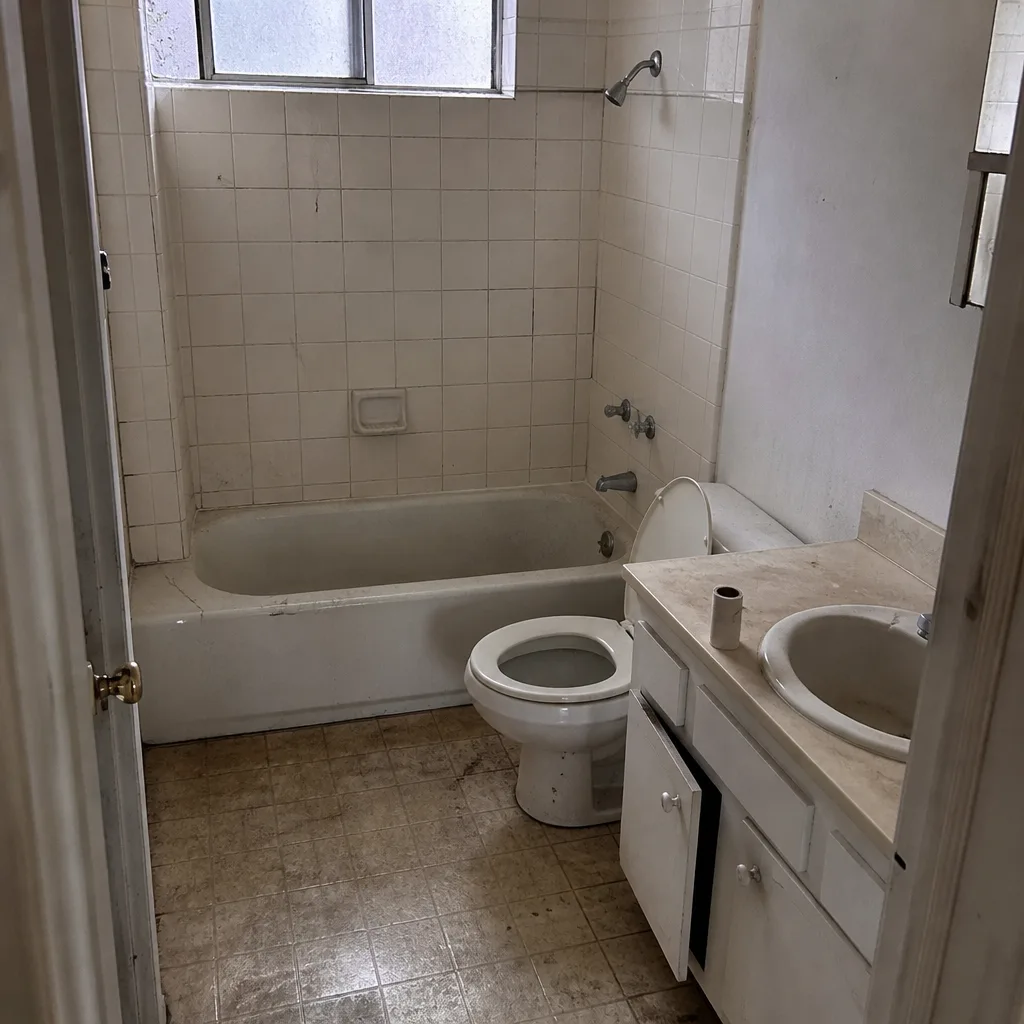
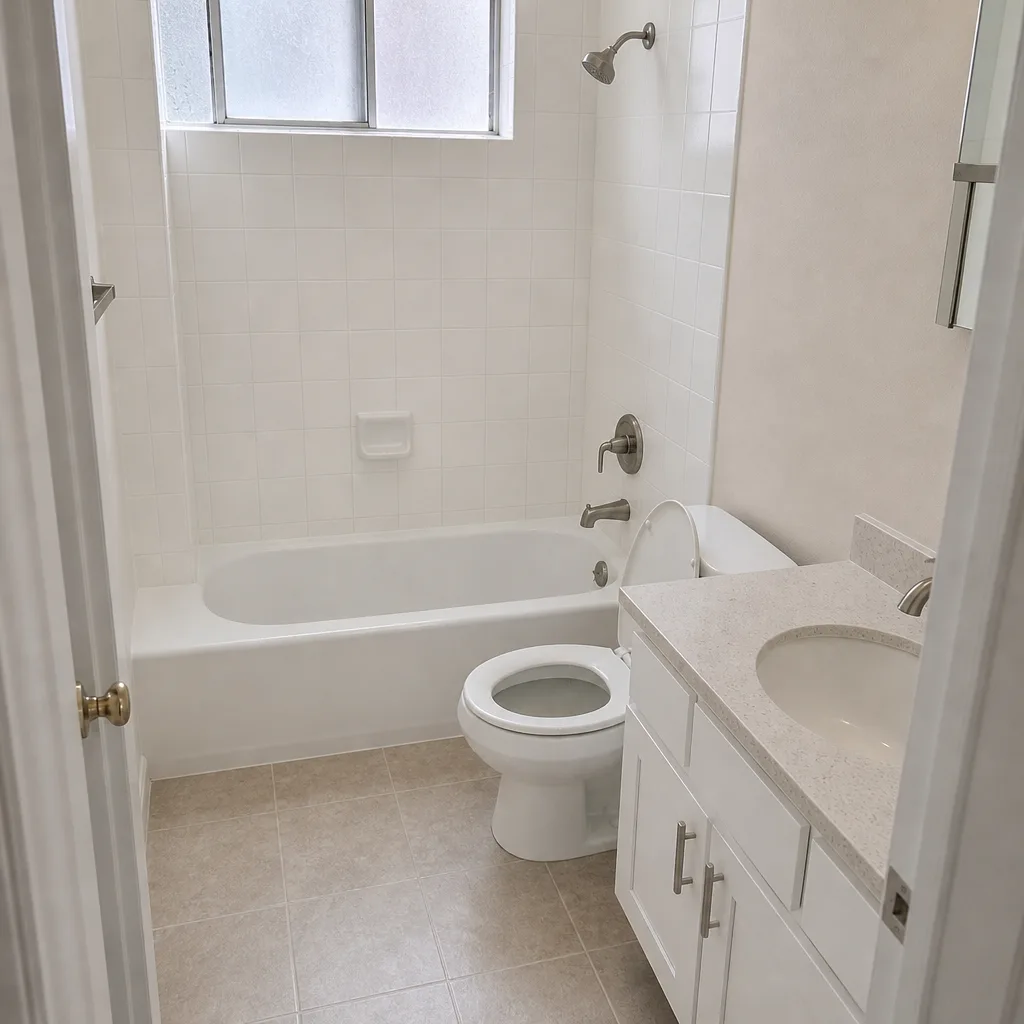
See the difference
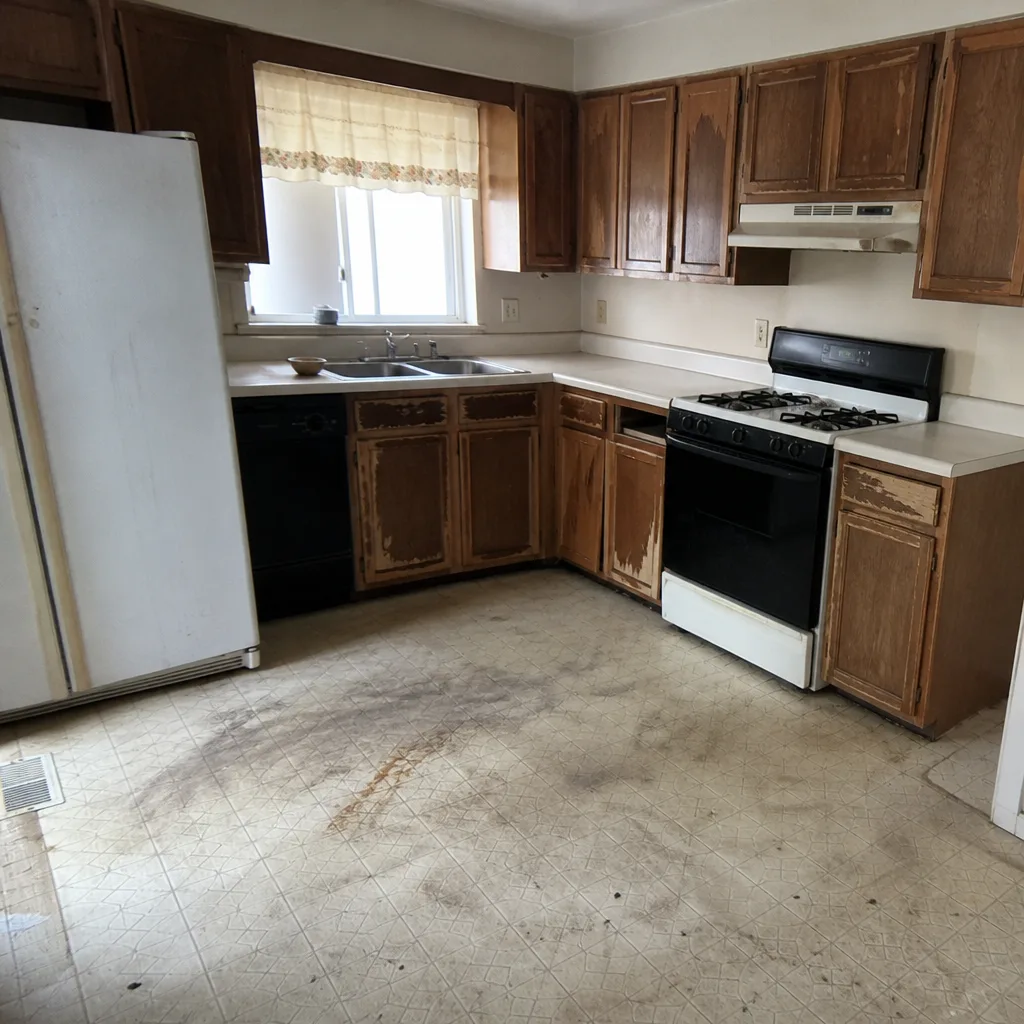 Before
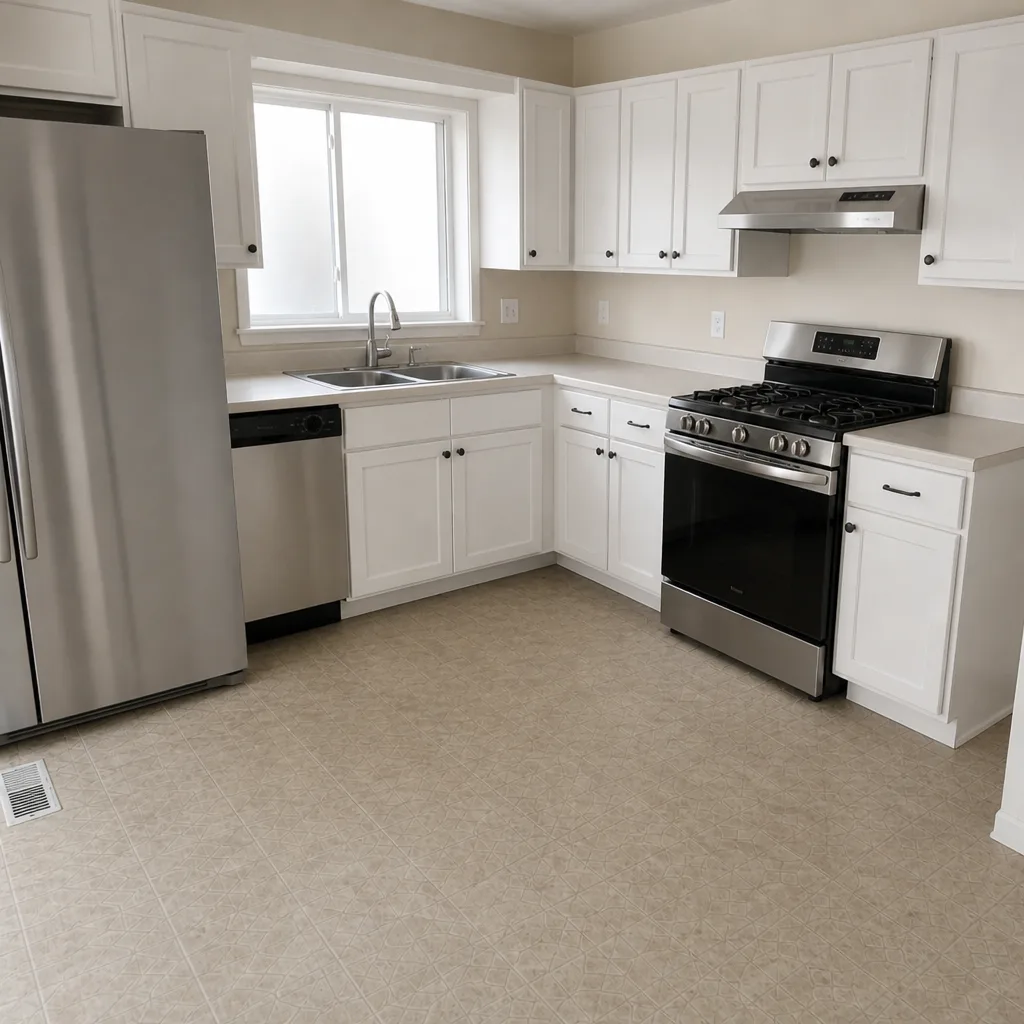 After
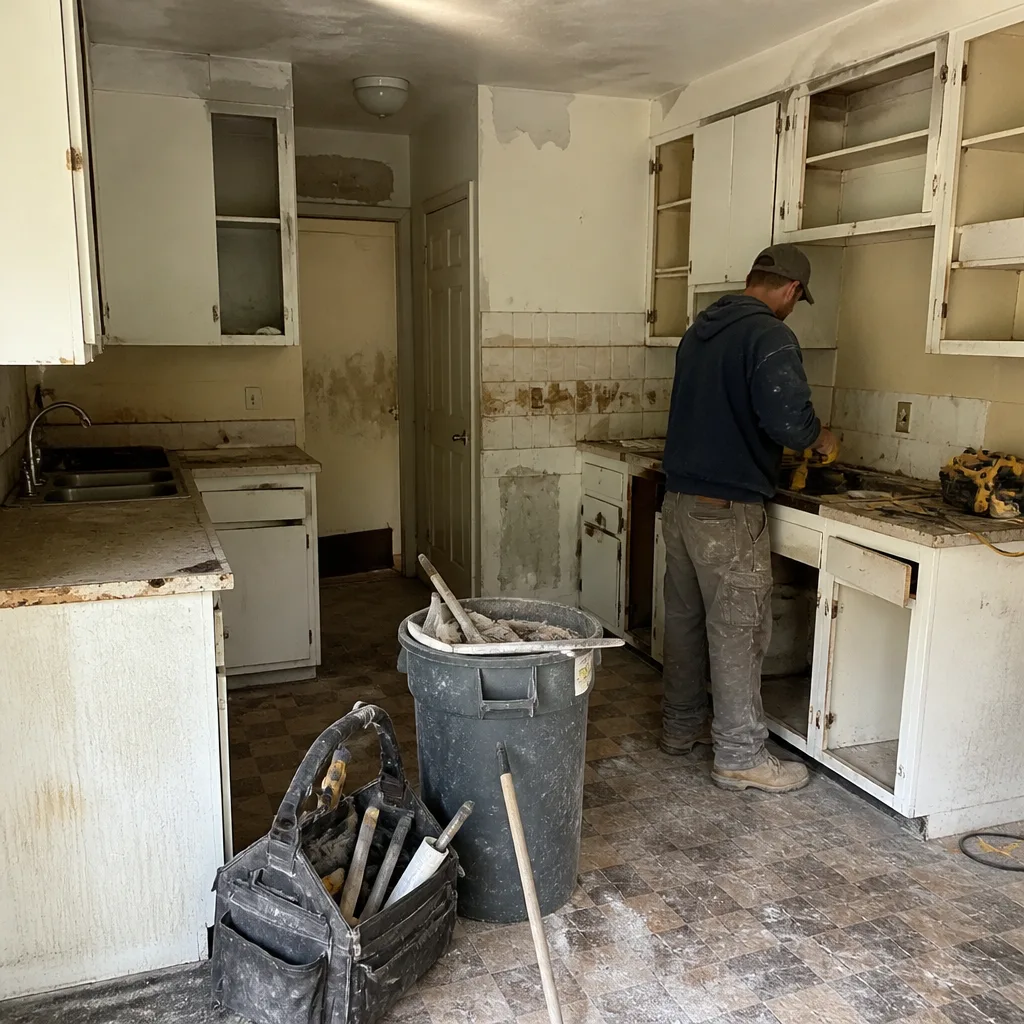 Before
 After
 Before
 After
When to Call a Professional
Call a professional when any of the following is true: you’ve found a stair-step crack in a block wall; two or more warning signs appeared together within a few weeks; a crack is measurably widening between monthly photos; a roof leak has appeared during a monsoon, or you’ve seen daylight in the attic; or you’re preparing to sell and want a documented pre-listing inspection. In each case, the right call is a free, no-pressure estimate from a licensed, insured professional who can put eyes on the actual condition and give you a written line-item quote. Groundwork Construction Co. of Enterprise offers free estimates in Enterprise – call (844) 797-4406. Our technicians have up to 12 years of experience, they arrive uniformed and background-checked, and your project is covered by our 730-Day Done Right Promise. Bring your photos; we’ll tell you straight.
Frequently Asked Questions

Not always, but it always deserves a professional look, because the pattern tells you the wall has moved along its mortar joints. A short stair-step crack under 1/8″ wide with no adjacent symptoms may be a minor settlement that’s already finished moving. A stair-step crack that’s wider at the top, longer than a couple of blocks, or accompanied by an interior crack or a racked door is a call-today situation. Call (844) 797-4406 for a free inspection so you’re working from a diagnosis, not a guess.
The tell is where the crack is and what’s next to it. Enterprise soil movement shows up as edge lifting at pavers, corner separation at additions and garage joints, and door racking on the affected side of the home, often appearing in a cluster. Thermal cracks in Enterprise are short, straight, at material joints, and seasonal. If you have three or more symptoms on the same side of the home, treat it as soil movement and schedule an inspection – estimates are free at (844) 797-4406.
Fascia and soffit separation, patchy granule loss on a single slope, cracked rubber pipe boots, daylight at the ridge line, and sagging between rafters are the big ones, and all of them require an attic-side or on-roof inspection. In Enterprise’s climate, these failures lag behind wetter climates by a season or two, so a leaking roof often looks fine from the driveway. A professional inspection catches them before the monsoon does. Call us to schedule one.
Photograph the same view, from the same angle, at the same time of day, on day one, day 30, and day 60. Include a scale object (a coin or ruler) in every close-up and pair it with a wide establishing shot. If nothing has changed at 60 days, the crack is likely stable and monitoring at six-month intervals is enough. If it’s measurably wider, stop monitoring and get it looked at. Our team can review your photo set for free – call (844) 797-4406.
Sometimes, and it’s worth ruling out. A fence post that moved in a single season points to soil moisture in that area, which is the same soil a few feet from your foundation. A post that has leaned gradually over a decade is normal aging. Our Fence Installation in Enterprise team can tell you which one you’re looking at, and if the lean is recent and paired with paver movement, we’ll recommend you look at the foundation-side story too.
Yes. We give written, line-item quotes before work starts, and the number you see is the number you pay – no surprise change orders mid-project. For larger repairs, we offer 0% financing for 18 months and $1,000 off projects over $10,000, and every project is covered by our 730-Day Done Right Promise. Call (844) 797-4406 to schedule your free estimate and get the number in writing.
The Bottom Line
Crack patterns tell you what’s moving; correlated symptoms tell you how urgently. Enterprise homes fail on a desert-specific schedule, driven by shrink-swell soil and monsoon-driven water timing, and the early signs show up in your pavers, fence line, and attic before they show up as a foundation problem. Photograph before you patch, rate the clock honestly, and know which signs give you six months vs. six weeks. When in doubt, take the free estimate.
Groundwork Construction Co. of Enterprise brings 730-Day Done Right Promise coverage, upfront pricing, 0% financing for 18 months, $1,000 off projects over $10,000, and a live person answering every call, 24/7. Free estimates in Enterprise – call (844) 797-4406 today.
Written by the team at Groundwork Construction Co. of Enterprise.