
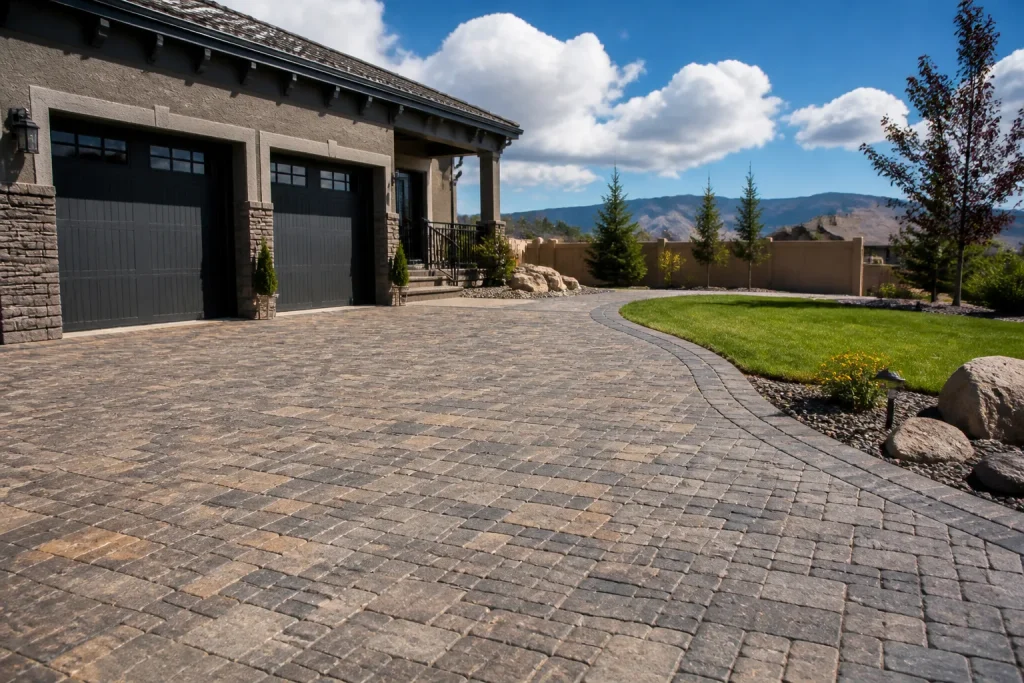
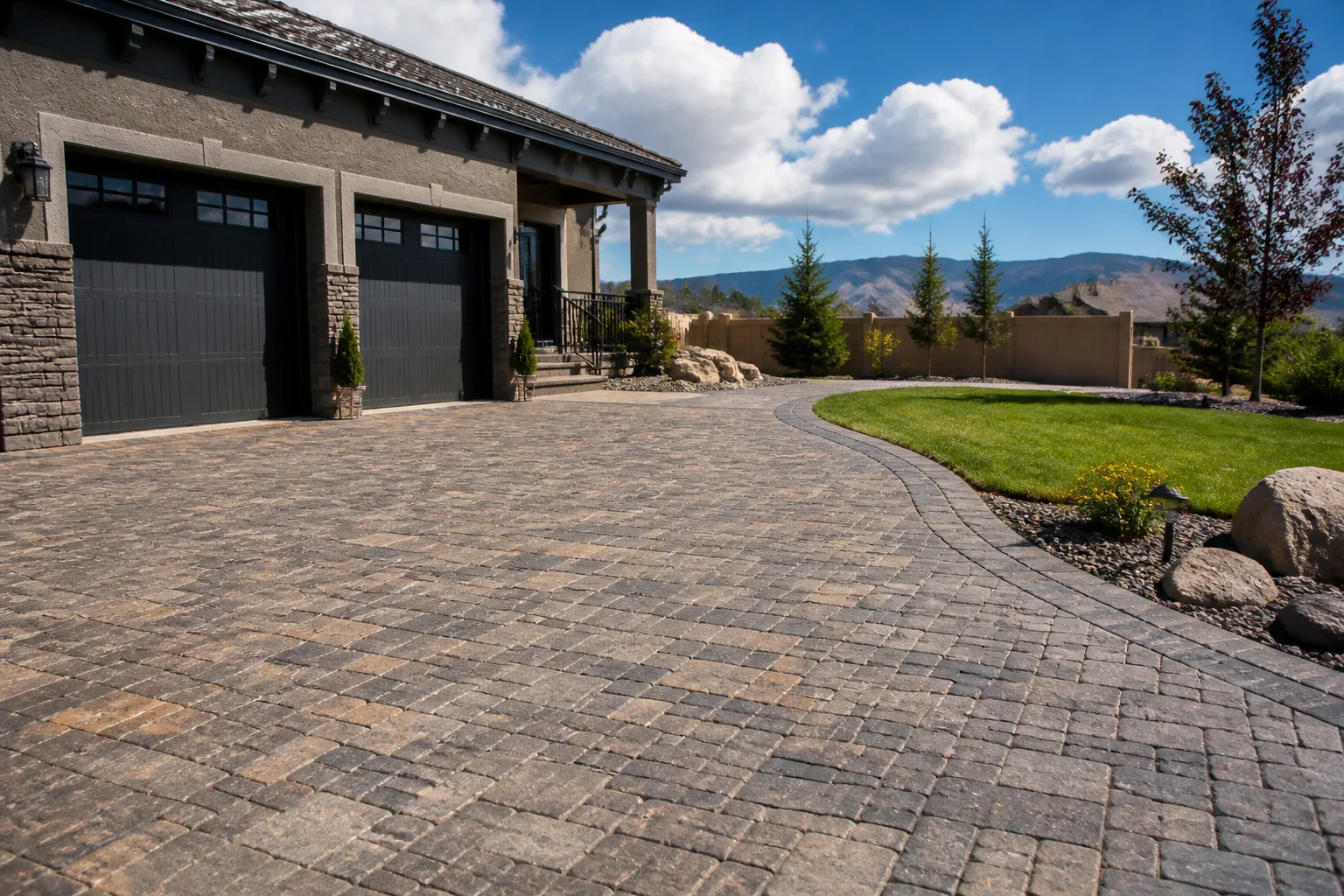
Oldcastle Driveway & Pavers in Enterprise: A Homeowner’s Guide
Oldcastle makes more than 300 paver SKUs. In Enterprise, only a handful of them are actually built for what our ground does to a driveway. The rest look great in a showroom and struggle the first August after a February frost. This guide is about the handful that work, how their strength ratings turn into real load capacity, and how to read a contractor’s quote against the actual product spec so you know what you’re buying. If you’d rather skip the research and get a straight number, call (844) 797-4406.
Which Oldcastle Lines Actually Hold Up in Enterprise?
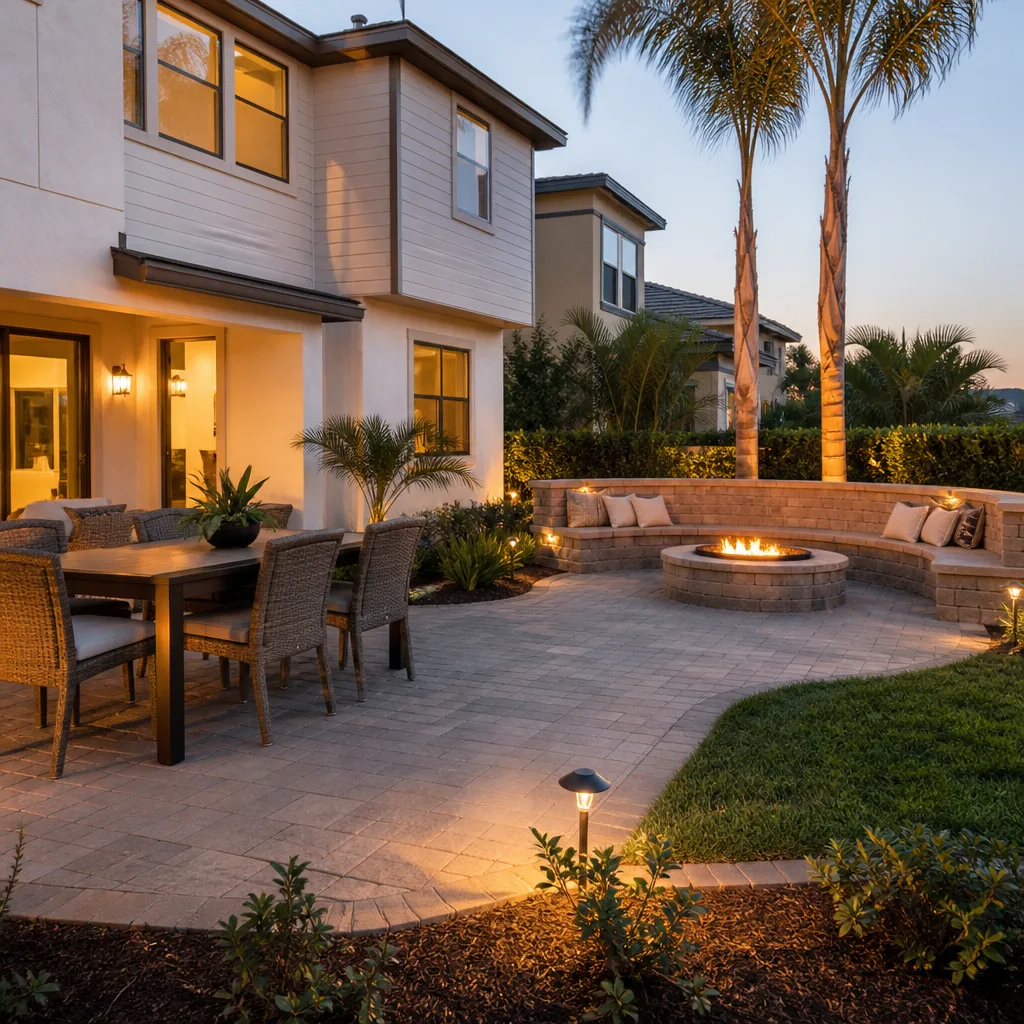
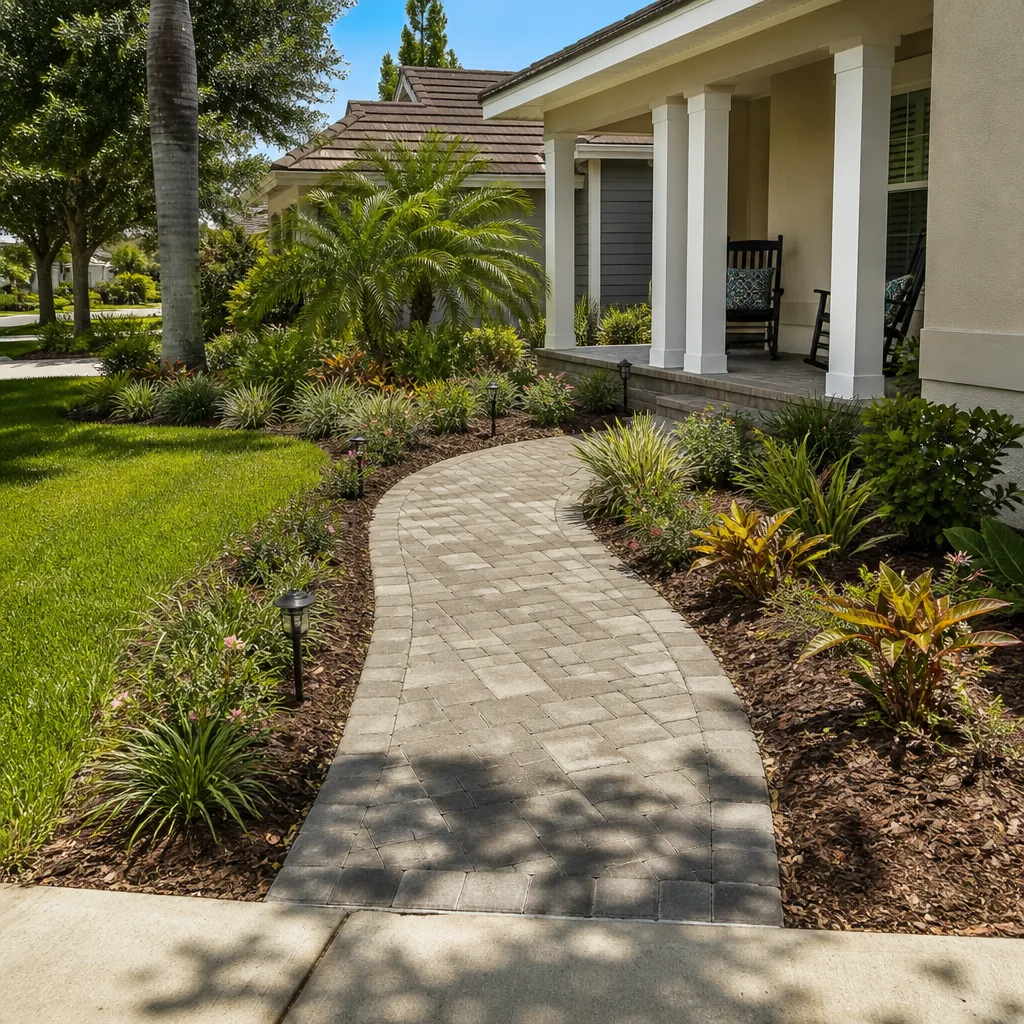
Three Oldcastle lines earn their place on Enterprise driveways: Holland Stone, Mega-Bergerac, and Brussels Block. Each handles the two forces that wreck pavers here – summer heat expansion and shallow winter frost – for different reasons.
Holland Stone is the workhorse. Its 60mm profile and tight dimensional tolerances mean the joints stay tight through heat cycling, and a properly compacted base lets the whole field flex as one surface instead of shifting paver by paver. We see it most on standard residential driveways in Enterprise where the load is passenger vehicles and the occasional delivery truck.
Mega-Bergerac runs thicker and heavier, with a tumbled, old-world face. That mass matters on Enterprise driveways with a slope or where a heavier vehicle parks regularly – a full-size pickup or a work van sitting on the same two tire spots every day will tell you within two summers whether the base was built right.
Brussels Block is the classic rectangular paver with a slightly antiqued edge. It’s a good fit for Enterprise front walks, aprons, and driveway borders where you want the look without the full-field cost. The wider joint lines mean more sand movement, so it rewards a base that was prepped to spec rather than rushed.
What these three share: a dense, low-absorption concrete body that doesn’t sponge up moisture and then crack when Enterprise drops to freezing on a January night. What they don’t share with the wider Oldcastle catalog is the same forgiveness in our soil. Ornamental and thin-profile lines that sell well in milder markets tend to telegraph every base imperfection once caliche is underneath them. That’s the gap between the catalog and your driveway.
What Do Oldcastle Compressive Strength Ratings Mean for a Real Driveway?
Compressive strength tells you how much load a paver can carry per square inch before it fails. For a residential driveway in Enterprise, what matters is the load per tire and how that load spreads through the base – not the number on the spec sheet in isolation.
Run the math roughly. A 6,000-lb pickup carries about 1,500 lbs per tire on the drive axle. Spread across a contact patch and through a properly compacted base, that load lands well within the range a quality Oldcastle paver is built to handle. A standard passenger car puts a fraction of that down. The failure mode on Enterprise driveways is almost never the paver crushing – it’s the base settling unevenly underneath and the paver rocking, chipping at the edge, or opening a joint that lets water in.
Where the strength rating does earn its keep in Enterprise:
- Heavy vehicles parked regularly. A work truck, boat trailer, or RV stored on the drive loads the same footprint every day. Higher-strength, thicker pavers (Mega-Bergerac territory) buy you margin.
- Summer heat expansion. Pavers expand and contract with Enterprise’s temperature swings. A stronger, denser paver resists edge spalling when the field pushes against a fixed border.
- Point loads. A jack, a trailer tongue, a dropped toolbox. Dense pavers take a hit without cracking through.
Ask any contractor quoting Oldcastle in Enterprise for the actual product line and thickness in writing. “Concrete pavers” on a bid is not a spec. The line name is the spec.
Why the Base Under Oldcastle Pavers Matters More Than the Paver
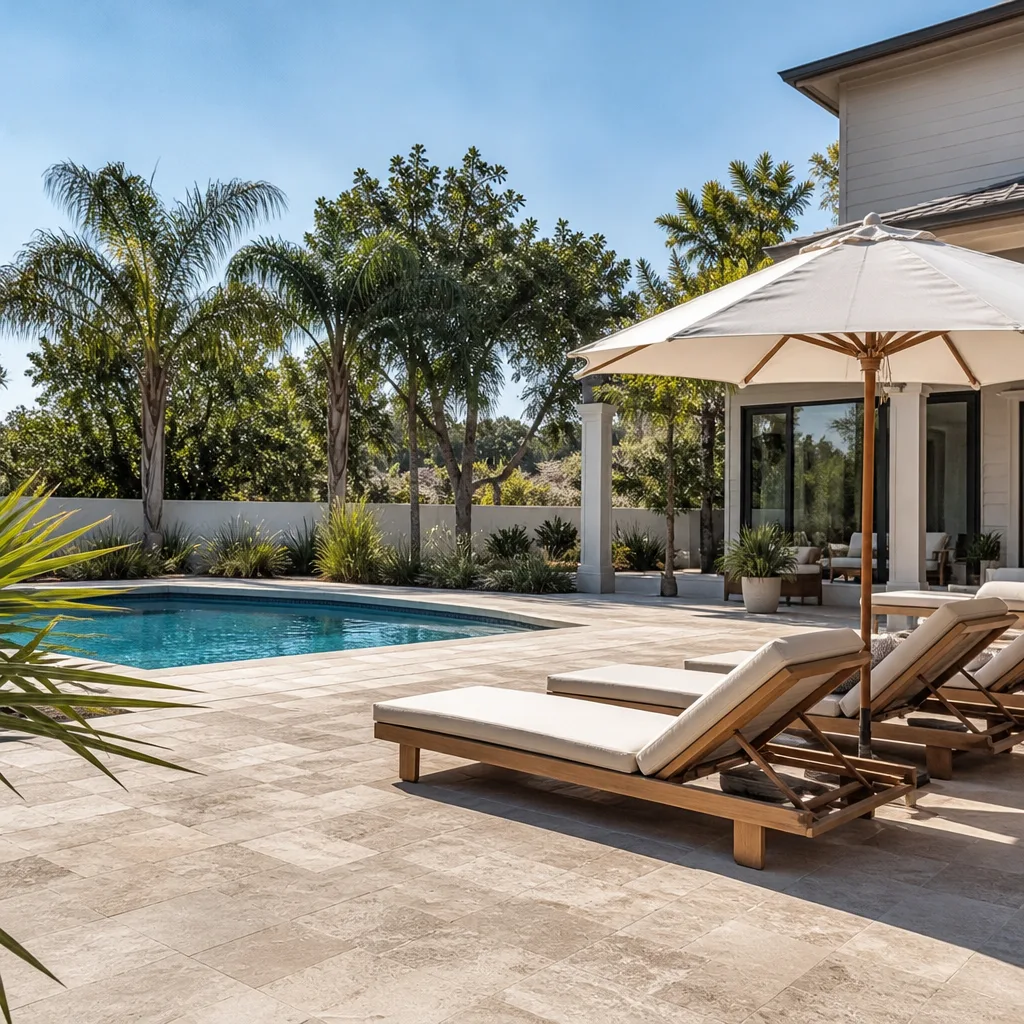
Here’s the part that competitors skip: the base under your Oldcastle pavers decides whether the driveway lasts 25 years or starts rocking in three. The paver is the visible layer. The base is the infrastructure.
Enterprise sits on caliche-heavy soil in many areas – a calcium carbonate layer that can be hard as concrete in dry conditions and turn soft and uneven when it gets saturated. A base built on top of undisturbed caliche without proper excavation and aggregate will fail. The paver gets blamed. The base is the culprit.
What a base built to spec looks like for an Enterprise driveway:
- Excavation to the right depth. Usually 6 to 8 inches below finished grade for a residential driveway, more if the soil is poor.
- Geotextile fabric. Separates the native soil from the aggregate so the two don’t migrate into each other.
- Compacted aggregate in lifts. 4 to 6 inches of crushed stone, compacted in 2-inch layers, not dumped in one pass and hit once with a plate compactor.
- Setting bed. An inch of concrete sand screeded to grade, not a pile shoveled under the pavers as they go down.
- Edge restraint. A fixed border that keeps the field from spreading – the reason a paver driveway without proper edge restraint develops a wandering pattern within a season.
The shortcuts we see on Enterprise bids that undercut the paver’s rating: skipping the geotextile, compacting the base in one pass, setting pavers on native soil with a thin sand layer, and using plastic edge restraint where a concrete curb is called for. Each of those shaves cost off the bid and years off the driveway.
How to Cross-Reference an Oldcastle Spec Against a Contractor’s Quote
A quote that says “Oldcastle pavers, installed” tells you nothing. A useful quote names the line, and you can check that line against the product spec in about five minutes.
When you’re comparing bids on an Oldcastle driveway in Enterprise, ask for these in writing and check each one:
- Product line and thickness. Holland Stone, Mega-Bergerac, Brussels, or a named alternative. Thickness in millimeters. If the bid won’t name the line, that’s a red flag by itself.
- Base depth and material. Inches of excavated base, aggregate type, and whether geotextile is included. This is where cheap bids hide.
- Edge restraint type. Concrete curb, plastic edge, or nothing. The right answer depends on the driveway, but “nothing” is always wrong.
- Drainage plan. Where the water goes when it leaves the driveway. Enterprise’s summer monsoons push water hard off a slope, and a paver field with no pitch to a drain or gutter will pond and undermine.
- Compaction method. Plate compactor in lifts, or a single pass. Ask. A crew that knows what they’re doing won’t blink at the question.
- Joint sand and sealing. Whether polymeric sand is used and whether sealing is included or optional.
Two bids can look identical on the summary line and be $3,000 apart on the base work underneath. The lower bid usually isn’t cheaper. It’s smaller. If you want to compare the full scope line by line, see our Driveway & Pavers in Enterprise page.
What the 730-Day Done Right Promise Means With Oldcastle Materials
The 730-Day Done Right Promise is our workmanship guarantee: if it’s not done right, we make it right, for two full years after the job. On an Oldcastle driveway in Enterprise, that promise covers the parts most warranties leave out – the base, the compaction, the edge restraint, the drainage pitch, and the installation itself.
Here’s why placement matters. Manufacturer warranties on pavers cover the paver. They don’t cover a base that was compacted in one pass, or an edge that was never restrained, or a driveway that ponds at the apron. Those failures get blamed on the material when the material was fine. Our 730-Day Done Right Promise backs the installation as a whole, so if the field starts rocking or a joint opens up in an Enterprise freeze-thaw cycle, that’s on us to fix, not on you to chase.
We use a curated set of brand partners across every trade – Belgard in pavers, KraftMaid and Cambria in kitchens, GAF and CertainTeed on roofs, Andersen and Pella for windows – because we don’t want to install a product we can’t stand behind for two years. Oldcastle earns a place on that list the same way: because it holds up in Enterprise’s climate when it’s installed to spec. Upfront pricing, no surprises, and a live person answers the phone 24/7 if you have a question after the crew leaves. That’s the standard whether we’re pouring a driveway apron or framing an addition, and you can see the full scope on our Groundwork Construction Co. of Enterprise home page.
When to Call a Pro (And When You Probably Can’t DIY)
We’re not going to tell you that any able homeowner can lay an Oldcastle driveway. It’s not a fence post or a garden bed. The base excavation, the compaction in lifts, the screeding, and the edge restraint are the parts that fail quietly and show up two summers later. A paver field that looks right on install day and rocks in year three is almost always a base that wasn’t built to spec.
Where a pro genuinely earns the money on an Enterprise driveway:
- Excavating and hauling off the existing surface – often concrete or failing asphalt that has to come out first
- Compaction and moisture control on caliche-heavy soil, which behaves differently than aggregate
- Setting the drainage pitch so monsoon runoff leaves the property instead of pooling at the garage
- Cutting pavers clean at the apron, the walk, and any curved border
Small jobs – a walkway, a small patio, a repair to a single failed field – are sometimes worth tackling yourself if the base under them is intact. A full driveway replacement usually isn’t. We helped one homeowner in the Enterprise area last year whose “little paver repair” turned out to be a 4-inch-deep base over native caliche that had never been excavated. Every paver in the field had to come up before a single new one went down. That’s the story most DIY estimates miss.
Related services in Enterprise: if the driveway project is rolling into a broader exterior update, our Fence Installation in Enterprise and Home Additions & ADU in Enterprise pages cover the surrounding scope.
The Bottom Line
Oldcastle’s catalog is deep, but the shortlist that works on Enterprise driveways is Holland Stone, Mega-Bergerac, and Brussels Block – and only when the base underneath them was excavated, compacted in lifts, geotextiled, and edge-restrained to spec. The paver is the visible layer. The base is the infrastructure. Read every quote for the product line by name and the base depth by number, and you’ll spot the cheap bids before you sign. When you’re ready for a number in writing, our Driveway & Pavers in Enterprise service page lays out the scope, and Groundwork Construction Co. of Enterprise offers free estimates – call (844) 797-4406. Upfront pricing, no surprises, and the 730-Day Done Right Promise in writing.
Frequently Asked Questions
Most Oldcastle paver driveways in Enterprise land between $12 and $22 per square foot installed, depending on the product line, base depth, and site conditions. Holland Stone on a standard 400-square-foot driveway usually runs $5,000 to $8,000 installed with proper base prep. Mega-Bergerac with a concrete edge restraint and heavy-vehicle load design runs higher, typically $8,000 to $12,000 for the same footprint. Brussels Block on walkways and borders is the lower end of the range. The biggest cost variable isn’t the paver – it’s the base excavation and haul-off, especially where existing concrete has to come out. Call (844) 797-4406 for an exact quote on your driveway; estimates are free.
No. We quote upfront and we hold the number. The one legitimate addition is if we open up the base and find something the quote couldn’t have accounted for – buried concrete, roots, or a drainage issue that wasn’t visible at estimate. When that happens, you get a written change before any work continues, not a surprise line item at the end. Upfront pricing, no surprises is the standard, and our 730-Day Done Right Promise backs the installation in writing.
Most residential paver driveway replacements in Enterprise don’t require a building permit if the footprint, drainage, and grade stay as they were. Widening a driveway, changing the drainage path, or working in a right-of-way does usually require one, and so does any work that touches the public sidewalk approach. We pull permits when they’re required and pass the inspections before the job closes out. If you’re unsure whether your project needs one, that’s part of what the free estimate answers.
A typical 400-square-foot Oldcastle driveway in Enterprise runs three to five working days once materials are on site. Demolition and haul-off are usually day one, base excavation and compaction are days two and three, and setting, cutting, and joint sand finish out the schedule. Larger driveways, complex curves, and heavy-vehicle load designs with thicker base will push past five days. Summer scheduling matters too – pours and paver installs on Enterprise jobsites are easier in the shoulder seasons than in the middle of a July heat wave, and material lead times on specific Oldcastle lines can add a week or two if the color isn’t in stock locally. Call (844) 797-4406 to schedule your free estimate and get a firm schedule.
Written by the team at Groundwork Construction Co. of Enterprise.
Need Construction Help?
Call Groundwork Construction Co. of Enterprise - licensed & insured, here with fast after-hours help in Enterprise.
(844) 797-4406