

Free written scope consultation - allowances, timeline, and change-order rules on paper before a single trade is scheduled
Styles & brands we work with
- Kitchen remodeling
- Bathroom remodeling
- Home additions & ADU
- Roofing
- Windows & doors
- Driveway & pavers
- Fence
See the difference
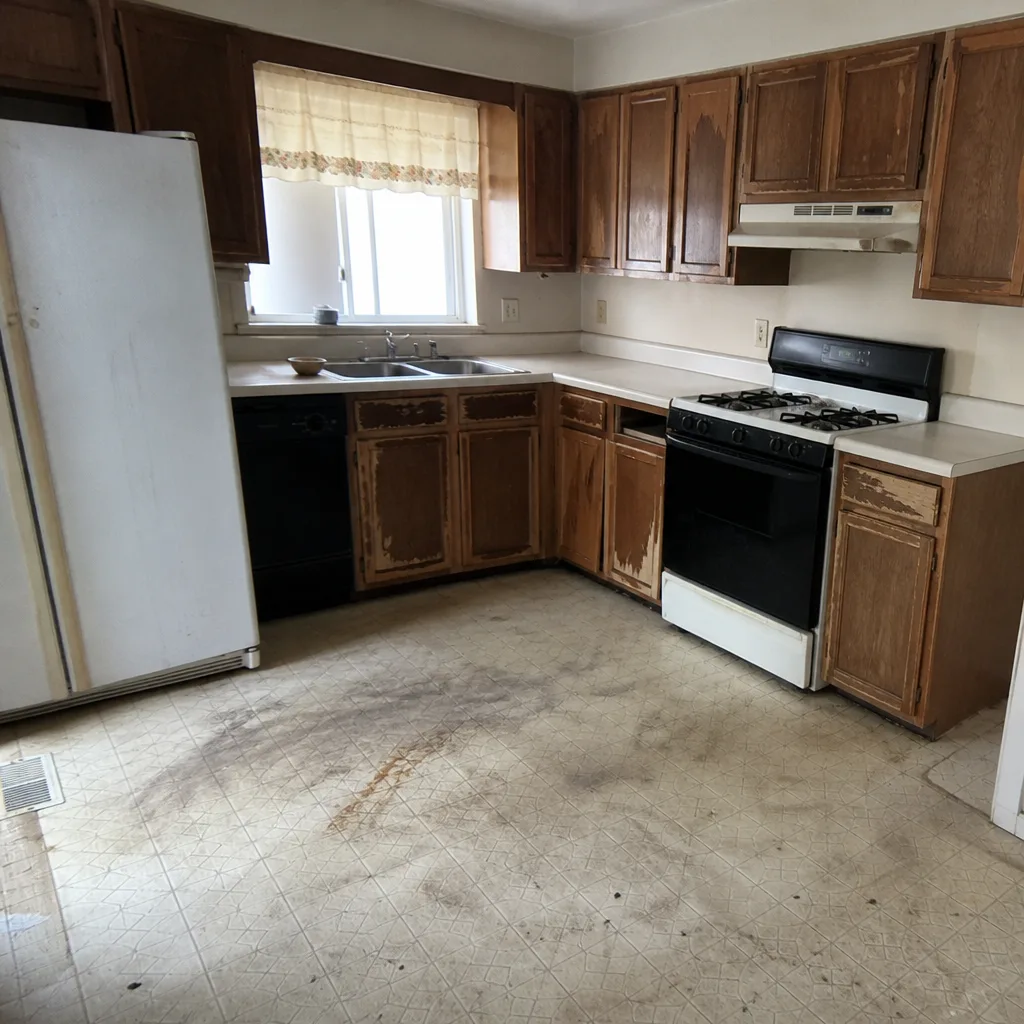 Before
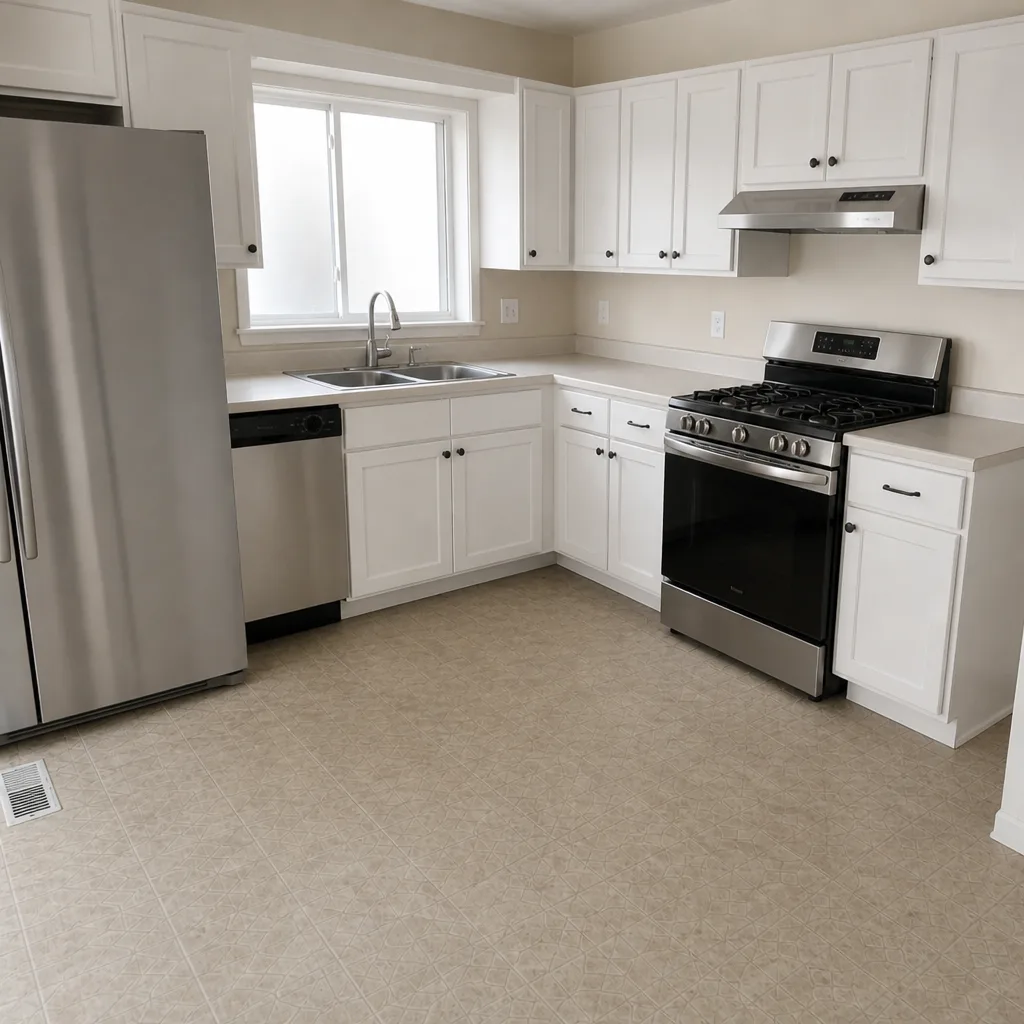 After
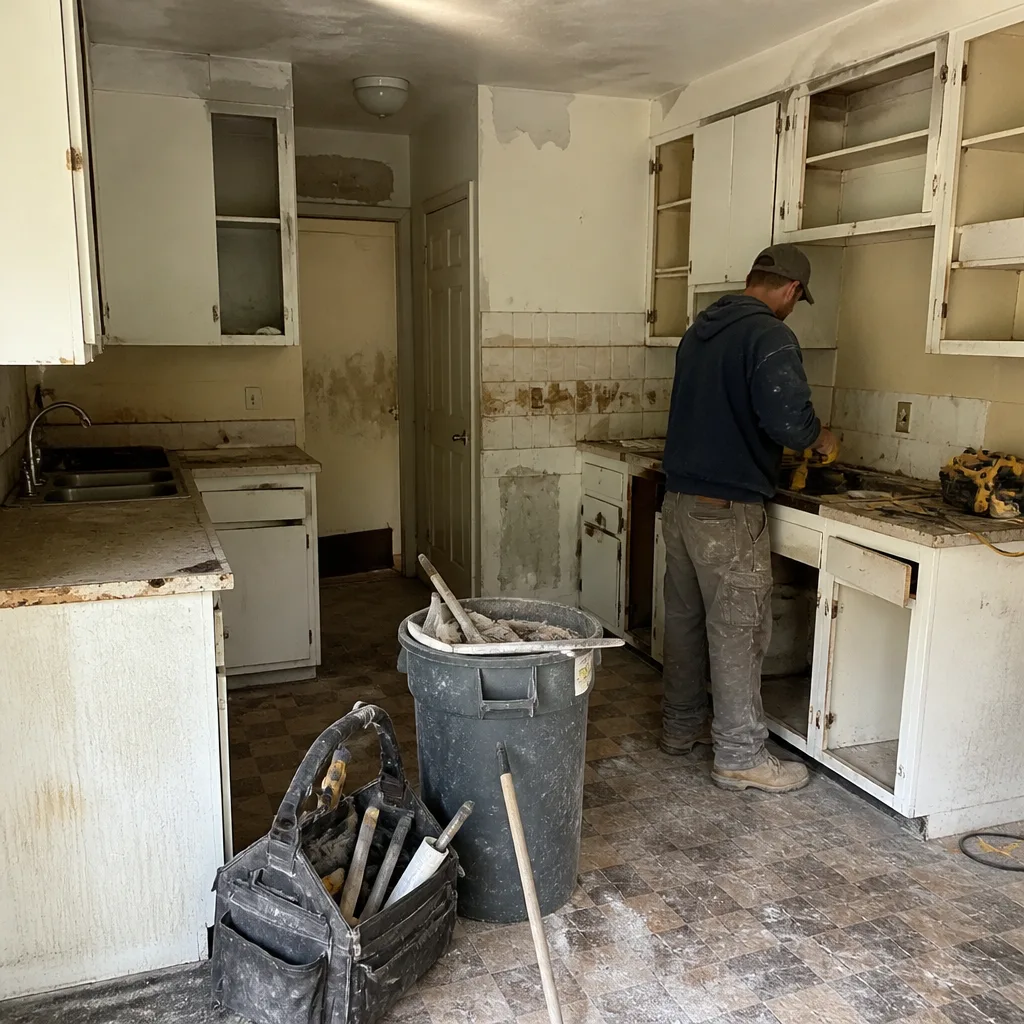 Before
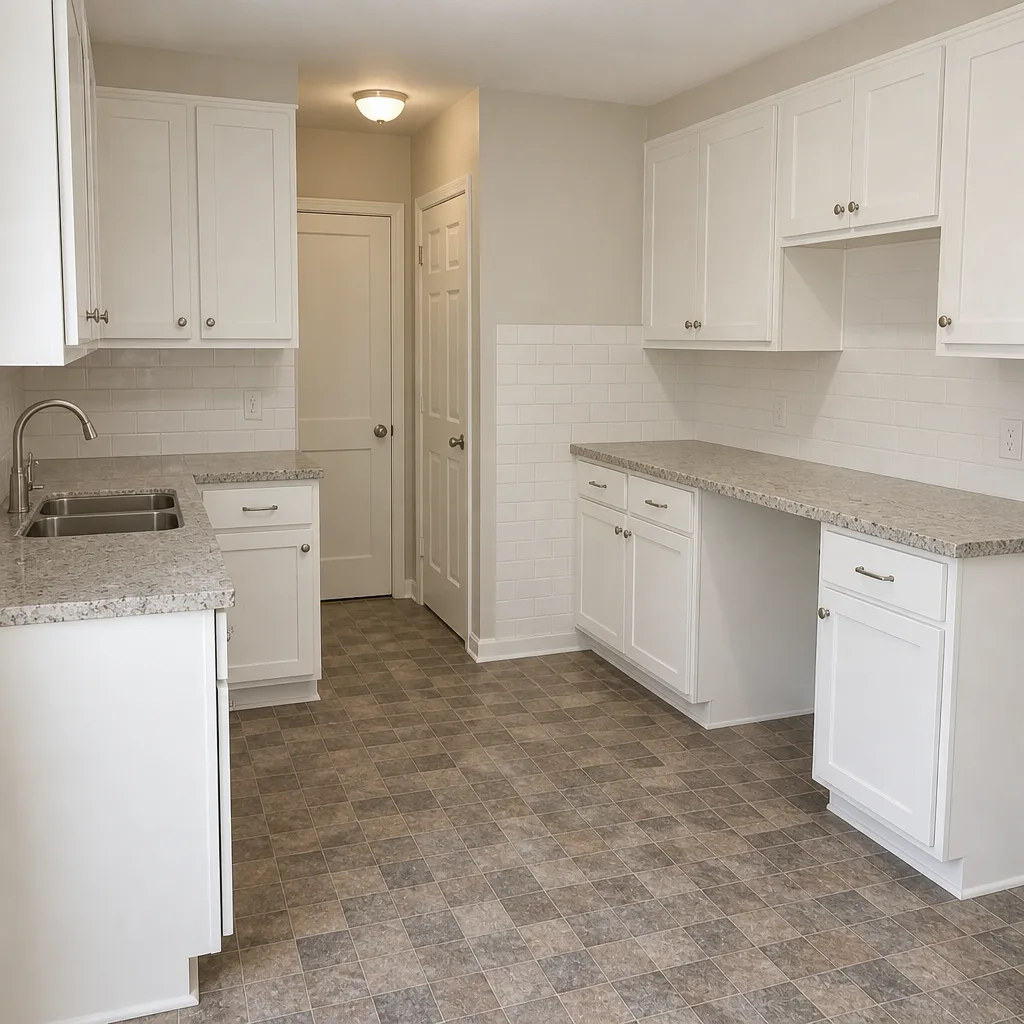 After
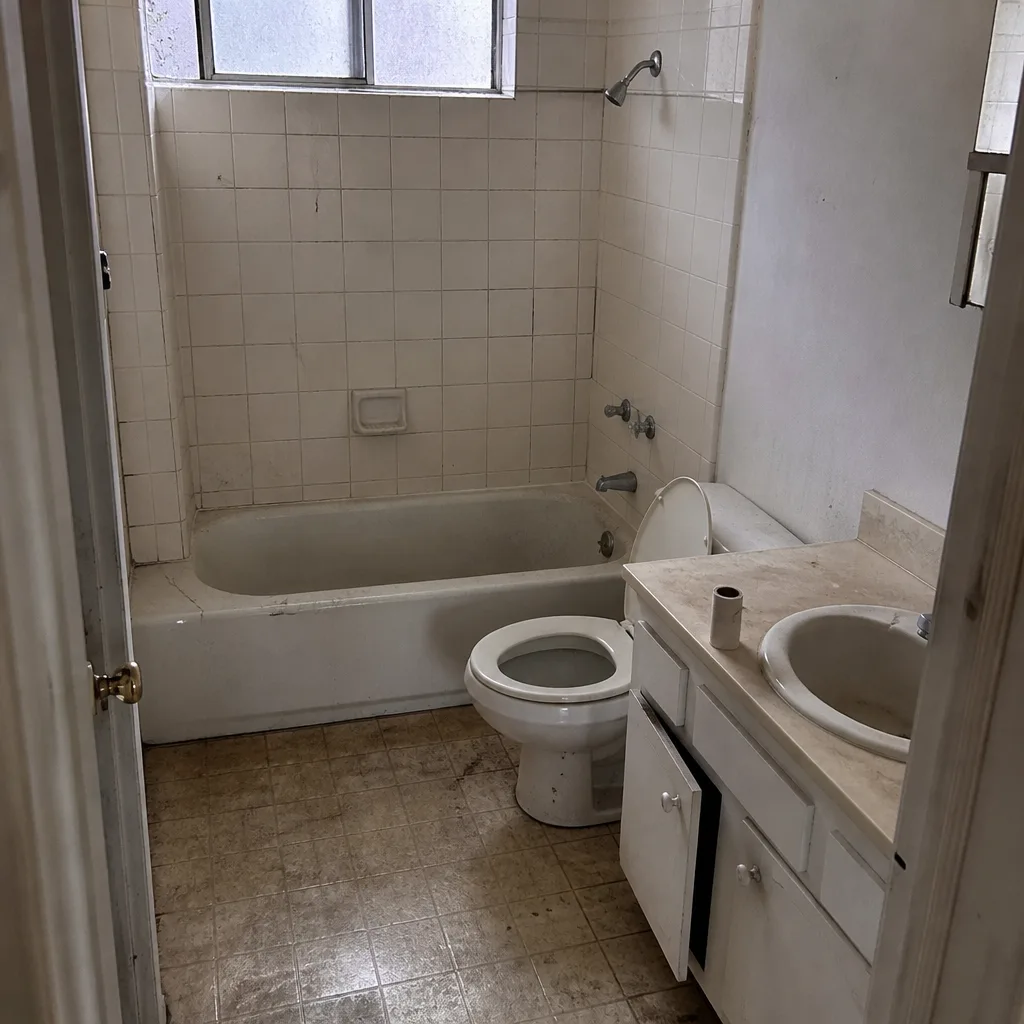 Before
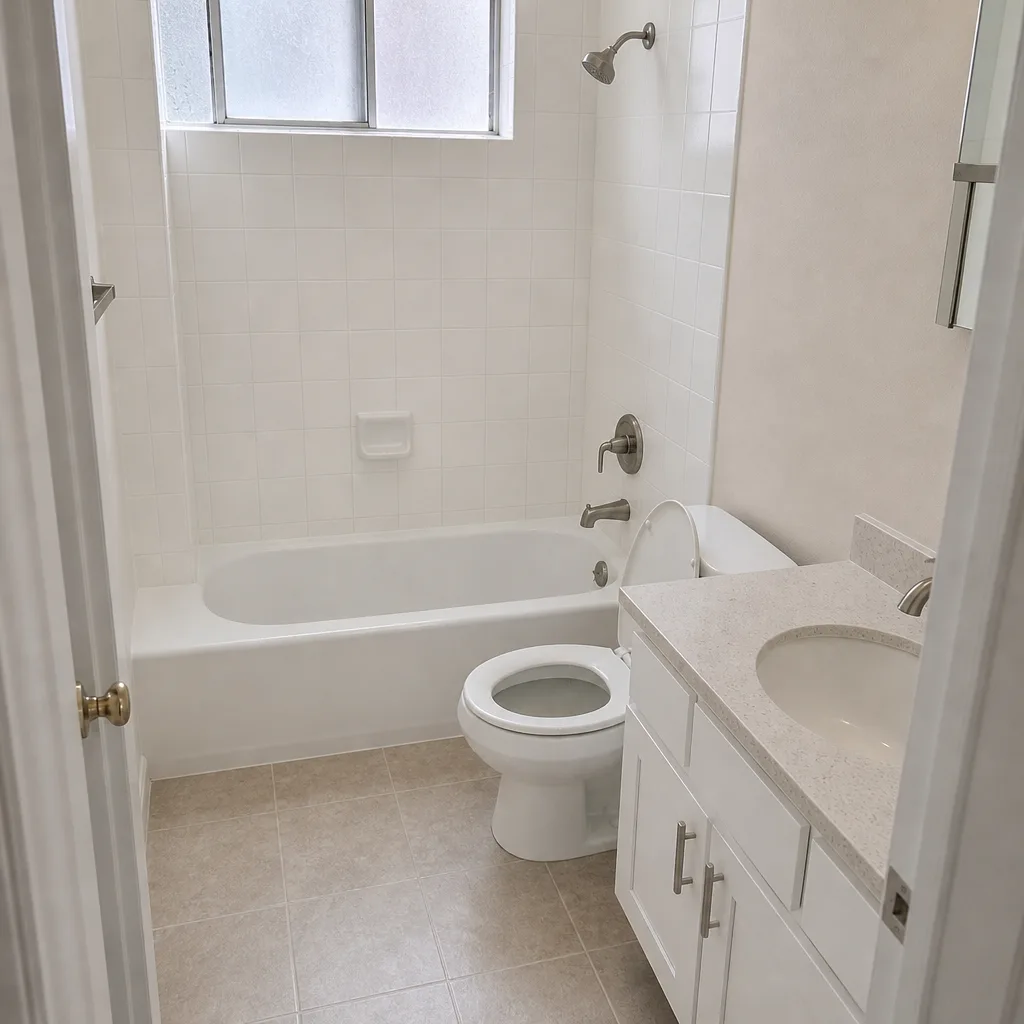 After
Vinyl vs Aluminum Fence in Enterprise, NV: Which One Still Looks New in 2035?
Choose aluminum if your Enterprise property sits on a sloped or engineered-fill lot, faces a Mountain’s Edge or Southern Highlands HOA with a tight color palette, or you want a fence that holds its line and color in 110°F summers without maintenance. Choose vinyl if you have a flat, graded pad, want the lowest upfront cost, and prefer the solid-privacy look. Both outlast wood in the Mojave by a wide margin. The real difference shows up five to ten years in, when vinyl’s thermal behavior and UV fade start telling on it and aluminum’s powder coat hasn’t moved. For a straight answer on your specific lot, call (844) 797-4406 and we’ll walk it with you.
Here’s the part most material brochures skip: in Enterprise’s master-planned subdivisions, vinyl and aluminum aren’t really competing on durability. They’re competing on how each material handles sustained extreme heat, HOA compliance, and resale optics over a 10-to-20-year horizon.
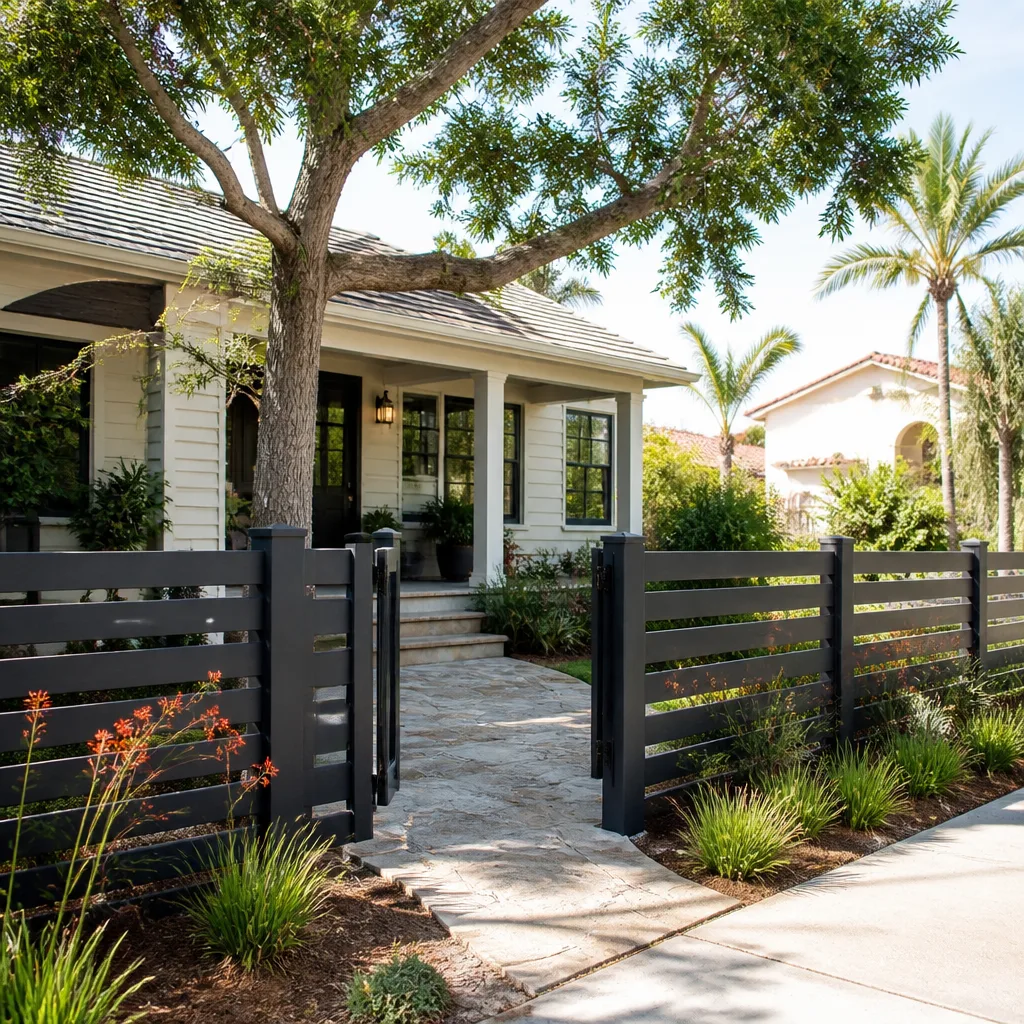
Why Enterprise Summers Treat These Two Fences So Differently
Summer highs across Enterprise routinely push past 105°F, and the sun here is relentless in a way that milder markets never test. That combination exposes the single biggest gap between vinyl and aluminum, and it has nothing to do with how thick the panels are.
Vinyl expands and contracts with temperature. A lot. Contractors calibrated to cooler climates often install panels with expansion gaps that are fine back East but too tight for Enterprise. When the material heats up through a July, those panels bow, warp, and can push post caps right off their posts. We see this repeatedly on fences installed a few summers back by crews who didn’t account for the local swing. Aluminum doesn’t share that failure mode. Its powder coat is UV-stable and its structure doesn’t move the way vinyl does under heat.
Then there’s color. Standard vinyl pigments aren’t rated for desert UV intensity, and without a premium UV-stabilized formula you’ll see chalking and fade within 5 to 8 years. Aluminum’s powder coat is rated to hold color to manufacturer spec in direct sun. If “still looks new” is the goal, that trajectory matters more than the day-one price tag.
Vinyl vs Aluminum Fence: Side-by-Side for Enterprise Conditions
| Factor | Vinyl | Aluminum |
|---|---|---|
| Heat behavior at 105°F+ | Expands significantly; warps, bows, and pops caps if expansion gaps are too tight | Stable; powder coat and structure hold shape |
| UV color fade | Chalks and fades in 5-8 years without premium UV-stabilized pigment | Powder coat rated for UV; holds color to spec |
| Sloped / engineered-fill lots | Panels can flex on settling fill, throwing the fence line out of true | Rigid, consistent modulus of elasticity; holds geometry on uneven terrain |
| HOA color and profile options | More limited architectural palette | Wider color-match and profile-customization range |
| Typical installed cost | $3,500-$9,000 | $4,000-$10,000 |
Those cost ranges reflect what we see across Enterprise. Your number depends on linear feet, height, gate count, and how much site prep the lot needs. Vinyl Fence Installation in Enterprise typically lands between $3,500 and $9,000; aluminum runs $4,000 to $10,000. For a precise figure on your property, we do a free estimate and design consult so there are no surprises when the invoice comes. See the full range of what we build on our Fence Installation page.

The Fill-Lot Problem No Brochure Warns You About
Enterprise is Las Vegas’s southwest growth corridor, and construction here pushes toward the Sloan and Blue Diamond foothills and the mountains’ edge. That means a lot of homes sit on sloped, engineered-fill pads with retaining walls, not the flat infill you’d find in older parts of the valley. On that ground, material behavior under settling matters.
Vinyl panels flex. When engineered fill settles unevenly, a vinyl run can sag or bow and throw the whole fence line out of true, which looks sloppy and can trip an HOA walkthrough. Aluminum’s rigidity and consistent modulus of elasticity mean it holds the geometry you set. On an uneven foothill-edge lot, that difference is the whole ballgame. It’s also why we spec expansion gaps and post depth to the specific grade in front of us rather than pulling one number off a chart.
What Your HOA Will and Won’t Approve
Mountain’s Edge and Southern Highlands both enforce material and color palette requirements, and this is where aluminum often wins on paper before anyone talks about heat. Aluminum’s wider color-match and profile-customization range lets you hit an HOA’s approved palette more precisely than vinyl’s more limited architectural options. If your community specifies a particular iron-style look or a color the vinyl catalog doesn’t carry, aluminum gets you to approval faster. We review the HOA standards before we order a single panel, so the fence you install is the fence that clears the architectural review.
- Choose aluminum when your lot is sloped or on fill, your HOA has a tight palette, or you want a 15-year look without repainting or replacing panels.
- Choose vinyl when you’re on a flat graded pad, want solid privacy, and the upfront price is the deciding factor.
- Avoid standard-pigment vinyl in direct sun unless you’re using a premium UV-stabilized formula, or plan on fade within 5 to 8 years.
- Insist on climate-correct expansion gaps on any vinyl install in Enterprise. This is the detail that decides whether your fence survives its first serious summer.
Why the 730-Day Done Right Promise Matters Here
Material selection is documented in the project file. That means when we spec aluminum powder coat or a UV-stabilized vinyl and set expansion gaps to Enterprise’s temperature swing, we’ve got the record to back the work. If something performs outside what the material was warranted to do, the conversation isn’t your word against ours. It’s in the file.
Every fence we install is covered by our 730-Day Done Right Promise. If it’s not done right, we make it right. That’s one of the longer workmanship guarantees in residential construction, and it’s why we’re picky about which brands and formulas go into an Enterprise yard. We use verified material partners across every trade, from GAF and CertainTeed on roofs to Belgard on pavers, and we hold fence materials to the same standard. Our technicians have up to 12 years of experience, they’re background-checked, and they arrive in uniform. Calls get answered by a live person, 24/7, so a question about your install never waits until Monday.
If the project is part of a larger exterior upgrade, fence work pairs naturally with home improvements like driveway and paver work, and we can scope both in one visit so the materials, colors, and grades line up. Ask about our $1,000 off projects over $10,000 and 0% financing for 18 months when you book the estimate.
FAQs
Aluminum handles Enterprise’s 105°F+ summers better because its UV-stable powder coat holds color and its rigid structure doesn’t warp or bow the way vinyl can when expansion gaps are too tight. Vinyl can perform well, but only with premium UV-stabilized pigment and climate-correct gaps. Call (844) 797-4406 to talk through your lot and we’ll give you a straight recommendation with no pressure.
Vinyl fence installation in Enterprise typically runs $3,500-$9,000 and aluminum runs $4,000-$10,000, depending on linear feet, height, and gates. Sloped or fill lots may add site prep. Estimates are free, so call (844) 797-4406 for an exact number on your property.
Not necessarily, but vinyl’s more limited color and profile options make it harder to hit some HOA palettes, which is why aluminum often clears architectural review more easily. We check your community’s standards before ordering anything. Call (844) 797-4406 and we’ll confirm what your HOA allows.
Yes. Sloped and engineered-fill lots are common along Enterprise’s foothill edges, and we set post depth and expansion gaps to the actual grade instead of a generic spec. Aluminum’s rigidity holds the fence line better on settling fill. Call (844) 797-4406 for a site walk.
Get a Straight Answer on Your Lot
If you’d rather have it looked at, Groundwork Construction Co. of Enterprise offers a no-pressure assessment in Enterprise. We’ll check your grade, your HOA rules, and your sun exposure, then tell you which material actually fits – vinyl, aluminum, or a mix. Call (844) 797-4406 for a free estimate and design consult.
Written by the team at Groundwork Construction Co. of Enterprise, serving Enterprise, NV.