
Last updated November 18, 2026






Free written scope consultation - allowances, timeline, and change-order rules on paper before a single trade is scheduled
Fence Installation Warning Signs Every Homeowner Should Know
A fence that leans six months after installation isn’t a material failure. In most cases, it’s a post-depth failure that was locked in on day one and invisible until the damage was done. The boards looked straight at the final walkthrough. The gate swung clean. Then the first hard wind or the first summer with real soil movement showed up, and the fence started to tell the truth about how it was built. The warning signs that a fence is heading toward failure almost always show up before the last board goes up. They show up in how a contractor handles the quote, the concrete, the utility locate, and the permit conversation. This guide walks through the specific things to watch at each stage so you don’t inherit someone else’s shortcuts on a fence in Enterprise.
Quick Answer
The biggest warning signs of a bad fence installation are posts set too shallow for the fence height, concrete poured without proper cure time in desert heat, utility locates skipped before digging, permits waved off with a “you don’t need one for that height,” and a contractor who dodges specifics about post depth, concrete mix, or warranty terms on the quote. If a contractor can’t answer those questions in plain language before the first post goes in the ground, the fence is already at risk. Everything below explains how to spot each sign early, in Enterprise and anywhere else with hard soil and real wind.
Styles & brands we work with
- Kitchen remodeling
- Bathroom remodeling
- Home additions & ADU
- Roofing
- Windows & doors
- Driveway & pavers
- Fence
Table of Contents
- Warning Sign 1: The Quote Has No Details
- Warning Sign 2: Post Depth That Doesn’t Match Fence Height
- Warning Sign 3: Concrete Mix and Cure Time Handled Carelessly
- Warning Sign 4: Skipped Utility Locates Before Digging
- Warning Sign 5: Permits Hand-Waved in Enterprise
- Post-Installation Inspection: What “Done” Should Look Like
- Common Mistakes to Avoid
- When to Call a Professional
- Frequently Asked Questions
Before we get into each section, one framing note. Groundwork Construction Co. builds fences across the area as part of a full-scope home construction offering, alongside fence installation in Enterprise, and the warning signs below are the same ones our team checks on every project before backfill. If you already have a fence quote in hand and something on this list is giving you pause, the Groundwork Construction Co. of Enterprise home page has the standing warranty terms and the free estimate offer. Now let’s get into it.
Warning Sign 1: The Quote Has No Details
A fence quote that reads “fence install, approximately 120 linear feet, $X” tells you almost nothing about what will be buried in your yard. The most reliable early warning sign of a bad installation is a quote that won’t commit to specifics. A contractor heading toward trouble keeps the quote vague on purpose, because vague quotes protect them from accountability once the work happens. A contractor who’s confident in the work puts the specs in writing.
Here’s what a detailed fence quote should include, at minimum:
- Linear footage and fence height, spelled out per run, not lumped into one number.
- Post spacing and post depth, stated as a number, not “industry standard.”
- Post material (pressure-treated, steel, composite, vinyl) and brand or supplier where it matters.
- Concrete type used per post, with bag count or yardage per post.
- Gate hardware brand and latch type.
- Warranty terms in writing, including what’s covered and what voids it.
- Permit responsibility, stated as either “we pull it” or “not required at this height,” with a reason.
The “industry standard” answer deserves its own warning. Every trade has real standards, but a contractor who says “industry standard post depth” without a number is either unsure or avoiding the question. In Enterprise, the soil and wind patterns matter too much for a hand-wave answer. Ask what depth they’ll set posts to, in inches, and what that depth is relative to the fence height. A good contractor answers without flinching. A questionable one pivots. If the quote conversation feels like you’re pulling teeth, that’s your sign to keep looking, and it’s worth asking why driveway and pavers in Enterprise projects get detailed line-item quotes from our team when fences don’t from other installers.
Warning Sign 2: Post Depth That Doesn’t Match Fence Height
The single most abused specification in residential fence work is post depth relative to fence height. A 6-foot fence set on 24-inch posts will look perfect on install day and lean within two or three seasons. The underground portion is where the abuse happens, and it’s invisible the moment backfill and concrete go in. That’s what makes it a warning sign homeowners have to catch before the work starts.
Here’s the general rule of thumb we use: post depth in the ground should be roughly one-third to one-half of the above-ground fence height, with deeper settings on taller fences, on gates, and on corner and termination posts where structural load concentrates. That means a 6-foot privacy fence usually needs posts set 30 to 36 inches deep, and a 6-foot gate post often needs to go deeper than a standard line post. Anything shallower than that is going to show up as lean, especially in the hard desert soils around Enterprise where the first deep soak after a monsoon can loosen poorly-set posts fast.
How do you verify depth before backfill? A few practical steps:
- Ask the crew lead to show you a hole before concrete goes in. A 30-second look at the post depth on the first two or three holes tells you what’s happening on the other fifty.
- Watch where the hole bottoms out. If the crew is using an auger and stops before the recommended depth, that’s a hard stop.
- Look at the crown of the post. If the post looks short above grade for the fence height quoted, the depth is likely short too.
- Ask about gate post depth specifically. Gate posts carry more load than any other post in the run, and crews that cut corners skip the extra depth on gate posts first.
If you can’t be on site when the posts go in, ask the contractor to photograph each post hole with a tape measure visible before backfill. A crew that does quality work already has those photos on file and will happily hand them over. A crew that doesn’t will stall or change the subject.
Warning Sign 3: Concrete Mix and Cure Time Handled Carelessly
Fast-set bag concrete in desert heat has a narrower working window than most crews respect. This is the second-most abused spec in residential fence work, and it’s tied directly to the first. Even a properly deep post won’t hold if the concrete around it cures wrong, cracks, or gets loaded too soon.
Where things go sideways in Enterprise:
- Mixing too wet. A crew that adds extra water to bag concrete to speed up mixing weakens the final cure. Bag concrete has a specified water ratio on the bag for a reason. Adding water to make it flow faster is a shortcut with visible consequences a few months in.
- Gravel dropped in dry. Some crews pour dry mix or dry gravel into the hole and water it from above. That can work for certain post types in certain soils, but in our experience it produces uneven cure, especially in summer heat where the top hardens while the bottom stays loose.
- Cure time skipped. Concrete needs time to set before the fence weight loads it. Bag concrete typically needs a minimum cure before full loading, and the exact window depends on temperature. In Enterprise heat, the top of a post hole can set in a hurry while the core is still uncured. A crew that hangs rails on the same day as the concrete pour is rushing the cure.
- No water added to the surrounding soil. A crew that doesn’t pre-soak the surrounding soil before backfill sets posts in soil that will shrink and settle. That’s how lean starts.
Ask before work starts: “What concrete mix are you using, and how many days before you hang the rails?” If the answer is “we pour and finish same day” or the contractor doesn’t know the product name, that’s your signal. The home additions and ADU work in Enterprise that our team handles uses the same discipline on cure times because the same principles apply, whether it’s a foundation or a fence post.
Warning Sign 4: Skipped Utility Locates Before Digging
Utility locates are the fastest tell in the whole process. Every state has a free service for marking underground utilities before digging (in Nevada, it’s 811). Any contractor who digs post holes without a locate has already skipped a step. Watch for rushed post placement near what look like utility corridors, or a crew that starts digging within minutes of arriving with no locate flags or spray paint visible.
What a proper utility locate looks like on a fence job:
- A call to 811 was made at least a few business days before the dig date. Locate services typically need a minimum window to mark lines, and that window varies by state.
- Painted or flagged lines on the ground along the fence run. If they’re not there, the locate didn’t happen or was ignored.
- Crew stops digging when a marker appears. Even a wide locate isn’t perfect, and a good crew stops to hand-dig when a locate mark is close.
- Written confirmation of the locate ticket, usually a request number the contractor can show you.
Why this matters on a fence specifically: fence runs often cross property lines, lanelines, irrigation lines, low-voltage landscape wiring, gas service lines, and water mains. Hitting a gas line or a water main isn’t just expensive. It’s a genuine safety hazard. If a contractor tells you “we’ve never hit anything” or “we know where the lines are in this neighborhood,” that’s not the same as a locate, and it’s a warning sign that shortcuts are already in motion. Ask for the locate ticket, and if you don’t get one, hold the job.
Warning Sign 5: Permits Hand-Waved in Enterprise
Whether your fence needs a permit in Enterprise depends on the height, location on the lot, and what the HOA or local jurisdiction requires. A contractor who waves that off with “you don’t need a permit for that height” without actually checking your specific situation is skipping a step. It’s one of the most reliable warning signs of a fence heading toward trouble, because the permit conversation reveals whether the contractor knows the local code or is just defaulting to a line that makes the sale easier.
Here’s what a legitimate permit conversation sounds like:
- “Let me check the current code for your height and setback before I give you a firm number.” That’s a contractor who takes it seriously.
- Written confirmation of either “permit required” or “permit not required at this height.” Not a hand-wave, not a verbal.
- Interaction with your HOA. In many Enterprise-area neighborhoods, the HOA has more specific rules than the county. A contractor who asks about HOA approval before digging is a good sign.
- Pull the permit before the work, not after. Some contractors pull permits after install and hope no inspector checks. A permit that shows up after the fence is completed is a warning sign, not an administrative detail.
Unpermitted work creates real problems at resale, at HOA review, and at any future insurance claim tied to the fence. If the contractor can’t show you a permit before the fence goes up, ask why. In Enterprise, the height that triggers a permit and the setback rules from property lines can vary by jurisdiction, so the “one-size-fits-all” answer is itself the warning sign. Our team uses the same upfront pricing and permit-included approach on fence work that we use across every project line. It’s the same discipline that makes a driveway and pavers project in Enterprise pass inspection without revisions.
Post-Installation Inspection: What “Done” Should Look Like
The final walkthrough is your last chance to catch a shortcut before it becomes your problem. Here’s the checklist we run through before handing any fence project back to a homeowner, and we walk every customer through the same list so they know what to look for:
- Plumb. Every post should be plumb within a reasonable tolerance (a 6-foot post shouldn’t show visible lean in either direction). Bring a 4-foot level and check two or three line posts and every corner. A post that’s slightly out of plumb today will compound over time as the soil settles.
- Post spacing consistency. From corner to corner, the distance between posts should be uniform. Sloppy spacing shows up as uneven panel width later, and it’s evidence the crew wasn’t paying attention during layout.
- Panel gap consistency. The gap between pickets or rails should be even across every panel. A single tight or wide gap is usually a sign the crew rushed the trim-out phase.
- Gate swing and latch alignment. The gate should open and close without dragging, and the latch should catch cleanly on the first try. If the gate drags, the gate post is likely set wrong or the hinges are undersized. Both are easier to fix before the crew leaves.
- Post tops and caps. Caps or post tops should be firmly set. A loose cap is a small thing but signals a rushed finish.
- Concrete finish. Concrete should be shaped, not slopped over the post or left in a mound. A visible slop job points to a crew that doesn’t take pride in the details.
- Debris removal. The site should be clean. Leftover concrete, discarded bag material, or scattered screws are a sign the crew moved on before the job was actually done.
Anything that fails this checklist is worth flagging the same day, not next week. A contractor with a real warranty will handle issues on the spot. A contractor without one won’t pick up. If you’re not sure what’s acceptable versus what will compound over time, walk the project with the crew lead and ask them to check each item with you.
Common Mistakes to Avoid
- Choosing a bid based on final number alone. The lowest fence quote in Enterprise is often the one with the shallowest posts and the least detailed specs. Look at line items before you look at the total.
- Skipping the pre-backfill check. You can’t verify post depth after the concrete goes in. Be on site for the first few holes, or ask for photographed holes with a tape measure visible.
- Letting the contractor skip the locate ticket. If you don’t see locate marks along the run, ask for the 811 request number before digging starts.
- Assuming you don’t need a permit. Height, setback, and HOA rules vary enough that the safe move is to verify, not assume. Contractors who skip this create problems at resale.
- Not asking about cure time. Crews that pour concrete and hang rails the same day are rushing the cure. In Enterprise summer heat, that window matters more than most contractors admit.
- Accepting verbal warranty promises. “We’ll come back if there’s an issue” is not a warranty. A written warranty with defined terms is.
- Not walking the final inspection with the crew lead. Walking the checklist with the crew during the walkthrough catches small problems before they’re your problem.
Most of these mistakes can be avoided in the quote conversation before any work starts. The pattern is consistent: contractors who shortcut the paperwork and the planning shortcut the work. Our team builds driveway and pavers in Enterprise and fences via the same process, with a written scope and upfront pricing, for exactly this reason.
When to Call a Professional
Some fence problems are genuinely dangerous to fix on your own. A post that’s sunk below grade due to soil movement, a gate that’s dragging on the strike plate because the post has shifted, and any fence line crossing an existing utility run are all jobs that need professional handling. High-tension cabling isn’t a factor on fences, but underground utilities, concrete anchors on retaining walls, and any post set below existing root structures of mature trees are all safety issues that professionals handle routinely. If your fence is on a slope or retaining wall, have that assessed by a professional before touching it, because a bad repair on structural fencing can become a real hazard for people and pets. Groundwork Construction Co. of Enterprise offers free estimates in Enterprise, with a written line-item scope and 730-Day Done Right Promise on workmanship. Call (844) 797-4406 to schedule your free estimate, and the crew will walk the project with you before any number is quoted.
Frequently Asked Questions
As a general rule, post depth should be roughly one-third to one-half of the above-ground fence height. For a 6-foot privacy fence, that typically means 30 to 36 inches in the ground, with deeper settings on gates, corners, and terminal posts where structural load concentrates. In Enterprise’s hard desert soil, the difference between a 24-inch post and a 36-inch post shows up as lean within the first two summers. Call (844) 797-4406 for an exact recommendation on your fence height and soil type. Estimates are free.
Whether a fence needs a permit in Enterprise depends on the fence height, the setback from property lines, and any HOA requirements. A contractor who waves off the permit question with “you don’t need one for that height” without checking the current code is skipping a step. Verify the answer for your specific situation before the fence goes up. Call (844) 797-4406 and our team can walk you through what applies to your property. Estimates are free.
Bag concrete typically needs time to set before full loading, and the exact window depends on temperature, mix, and how the concrete was placed. Crews that hang rails the same day as the concrete pour are rushing the cure, which is one of the reasons fences fail within a season or two. In desert heat, the cure window is narrower, not wider. Call (844) 797-4406 for specifics on your project and weather timing. Estimates are free.
The earliest warning signs appear in the quote conversation, not on the fence line: vague specs, no stated post depth, no concrete mix named, no written warranty terms, and no clear answer on permits. If the contractor can’t commit to those specifics before the work starts, the fence is already at risk. The second-stage warning signs are visible on site: no locate marks before digging, shallow-looking holes, and crews pouring concrete and hanging rails the same day. Call (844) 797-4406 if you’re unsure about a quote you’re holding. Estimates are free.
It depends on the cause. A fence leaning because of a shallow post can sometimes be repaired by resetting or sistering the failed post, but a fence leaning because multiple posts are undersized and shallow typically needs partial or full replacement. In most cases, the repair cost of a bad fence install runs close enough to a rewrite that replacement is the honest answer. Call (844) 797-4406 and our team can assess the fence before quoting anything. Estimates are free.
Two reasons. First, desert soil movement in the dry-to-wet cycle of monsoon season is aggressive on shallow posts. Second, summer heat shuts down concrete cure windows faster, which means crews that rush the process get punished sooner here than in milder climates. A fence that survives a Phoenix or Enterprise summer is genuinely built well. A fence that starts leaning after the first wet season almost always has a post-depth or cure issue underneath. Call (844) 797-4406 for a free assessment of your property. Estimates are free.
The Bottom Line
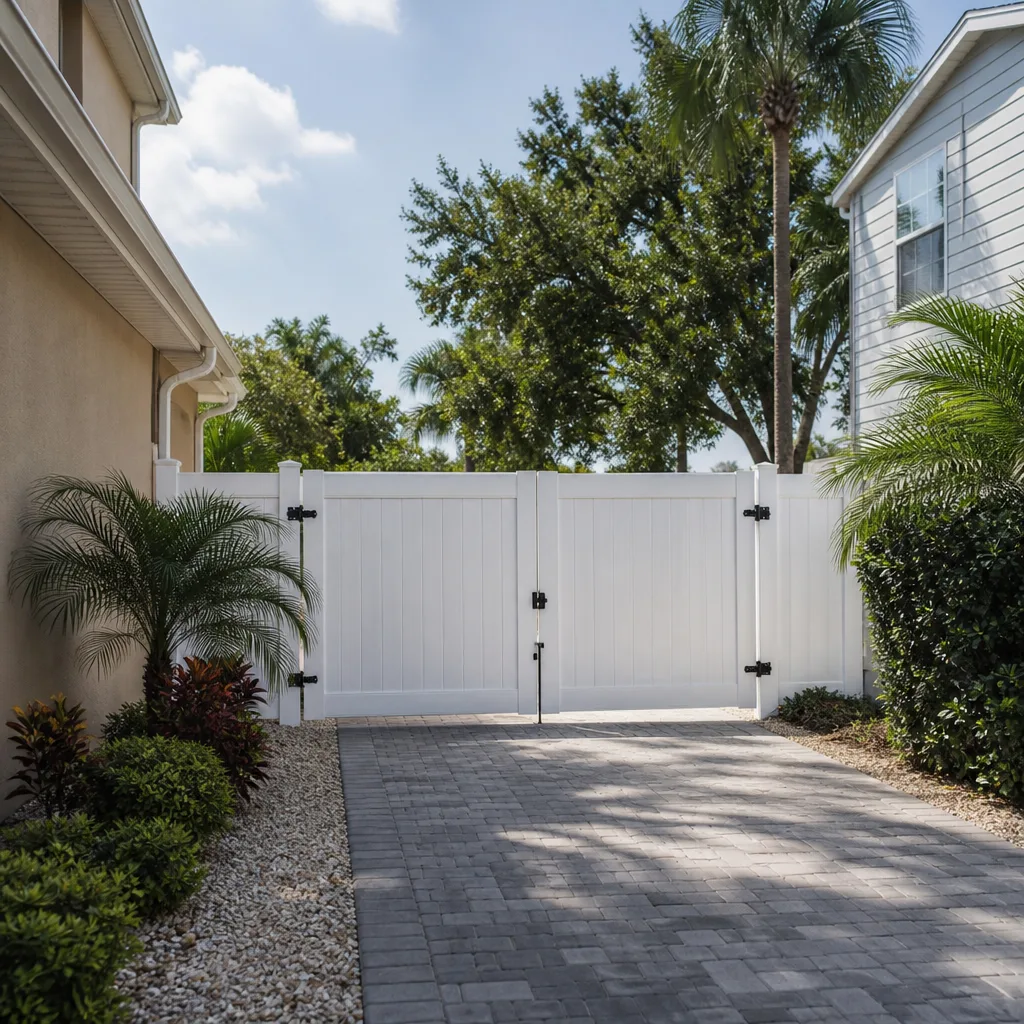
The warning signs of a failing fence show up in the quote conversation, the concrete mix, the locate ticket, the permit answer, and the final walkthrough. The bad ones are visible before the last board goes up, which means you can catch them. If a contractor can’t answer the post-depth question, the concrete question, the locate question, or the permit question without hedging, that’s your sign. The fence will inherit the same shortcuts. Groundwork Construction Co. of Enterprise builds fences with written scopes, upfront pricing with no surprises, and a 730-Day Done Right Promise on workmanship. Every project comes with background-checked, uniformed technicians and calls answered by a live person 24/7. Call (844) 797-4406 to schedule your free estimate and design consult for your fence project in Enterprise. The estimate and consultation are free, the pricing is line-item and upfront, and 0% financing for 18 months is available on qualifying projects.
Written by the team at Groundwork Construction Co. of Enterprise.
See the difference
 Before
 After
 Before
 After
 Before
 After