Last updated November 18, 2026




Free written scope consultation - allowances, timeline, and change-order rules on paper before a single trade is scheduled
Bathroom Remodeling Warning Signs Every Homeowner Should Know
If a contractor skips a moisture barrier behind your shower tile, you won’t know for 18 months – right around the time the drywall starts to soften and the mold bill arrives. That’s the cruel math of bathroom construction: the most expensive mistakes hide behind the finished surface, so the homeowner absorbs the cost long after the crew has packed up. We’ve walked into Enterprise homes where a “complete” remodel was two years old and already growing black mold behind fresh grout. This guide gives you the contractor’s eye: the bid red flags, the on-site details worth photographing, and the first-90-day symptoms that tell you a job was done wrong.
Quick Answer
The most reliable warning signs of a bad bathroom remodel are vague or “allowance-only” bids with no permit line item, skipped waterproofing (no backer board, missing membrane, tile over greenboard), uneven lippage you can feel with a bare foot, and a short or conditional warranty that excludes exactly the failures most likely to happen. If any of those show up before or during the job, stop and ask questions in writing. Small inconsistencies early are how $30,000 surprises get built.
Styles & brands we work with
- Kitchen remodeling
- Bathroom remodeling
- Home additions & ADU
- Roofing
- Windows & doors
- Driveway & pavers
- Fence
Table of Contents
- Pre-Hire Warning Signs in the Bid
- The Waterproofing Steps Bad Contractors Skip
- On-Site Red Flags During Active Work
- The First 90 Days: Signs the Job Was Done Wrong
- Permits and Codes in Enterprise
- How to Document and Escalate Mid-Project
- What a 730-Day Workmanship Warranty Really Covers
- Common Mistakes to Avoid
Pre-Hire Warning Signs in the Bid
Most bad bathroom remodels are decideable before a single tile is set – in the paperwork. A bid is a contract in disguise, and the omissions tell you more than the promises. Here’s what we see in Enterprise bids that should make you slow down.
Vague scope language. “Replace fixtures as needed” or “prep and install tile” means the contractor decides what “as needed” costs. A real scope names the tile line, the square footage, the substrate, and the brands. If a bid won’t name the product, they haven’t priced the product.
No permit line item. Enterprise bathroom remodels that move plumbing, electrical, or walls require permits, and a legitimate bid lists the permit as a line item or states clearly who pulls it. A contractor who says “we don’t need a permit for this” on a plumbing relocate is telling you something about how they work.
Unusually low material allowances. An allowance is a placeholder dollar amount for tile or fixtures. A $1,500 tile allowance on a 100-square-foot shower sounds generous – until you shop and realize it covers builder-grade ceramic, not porcelain that lasts in a dry desert climate. Every overage becomes a change order with markup.
- No physical address or verifiable local references
- Bid expires in 24 hours or pressure to sign “today”
- Large cash deposit requested (30%+ up front with no schedule)
- No written change-order process
- Warranty verbal only, or “one year on labor” with no exclusions listed
If you’re comparing bids, ask each contractor to quote the same scope line by line. Groundwork Construction Co. of Enterprise builds its estimates that way – upfront, itemized, and fixed – because a bid you can’t compare isn’t a bid, it’s a guess.
The Waterproofing Steps Bad Contractors Skip
Water is the enemy in a bathroom, and the waterproofing sequence is where corners get cut first because it’s the step nobody sees once the tile goes up. Here’s the sequence a proper shower build follows – and where shortcuts show up.
- Substrate prep. Cement backer board or a bonded waterproof membrane over the framing. Greenboard (moisture-resistant drywall) is not a shower substrate. If you see drywall in a wet zone, stop the job.
- Waterproofing membrane. A liquid-applied or sheet membrane over the substrate, with seams taped and corners reinforced. A contractor who says “the tile and grout waterproof it” is wrong. Grout is not waterproof.
- Flashing at penetrations. Valve bodies, shower niche, and the curb get sealed with the same membrane system, not caulk on the finish.
- Sloped pan and liner. The shower floor must slope to the drain, and the liner must be installed above a preslope so water can’t pool. Skip the preslope and you get a shower that smells like a basement within a year.
- Backer at wall junctions. Inside corners of cement board get mesh tape and thin-set, not just caulk.
We’ve seen this pattern most often in fast-flip bathroom remodels in Enterprise – tile over tile over a failed substrate, sold to a buyer who finds the problem in month 14. The fix after the fact is a full demo of the shower, not a patch. That’s the 18-month trap in the opening: the mold bill arrives long after the invoice is paid. If your contractor can’t explain the waterproofing sequence by name, that’s your sign to get a second opinion.
On-Site Red Flags During Active Work
Mid-project is the hardest time to raise a concern – you don’t want to insult the crew, and you don’t know what “normal” looks like. Here’s what a properly done job looks like versus a shortcut, so you can trust your eye.
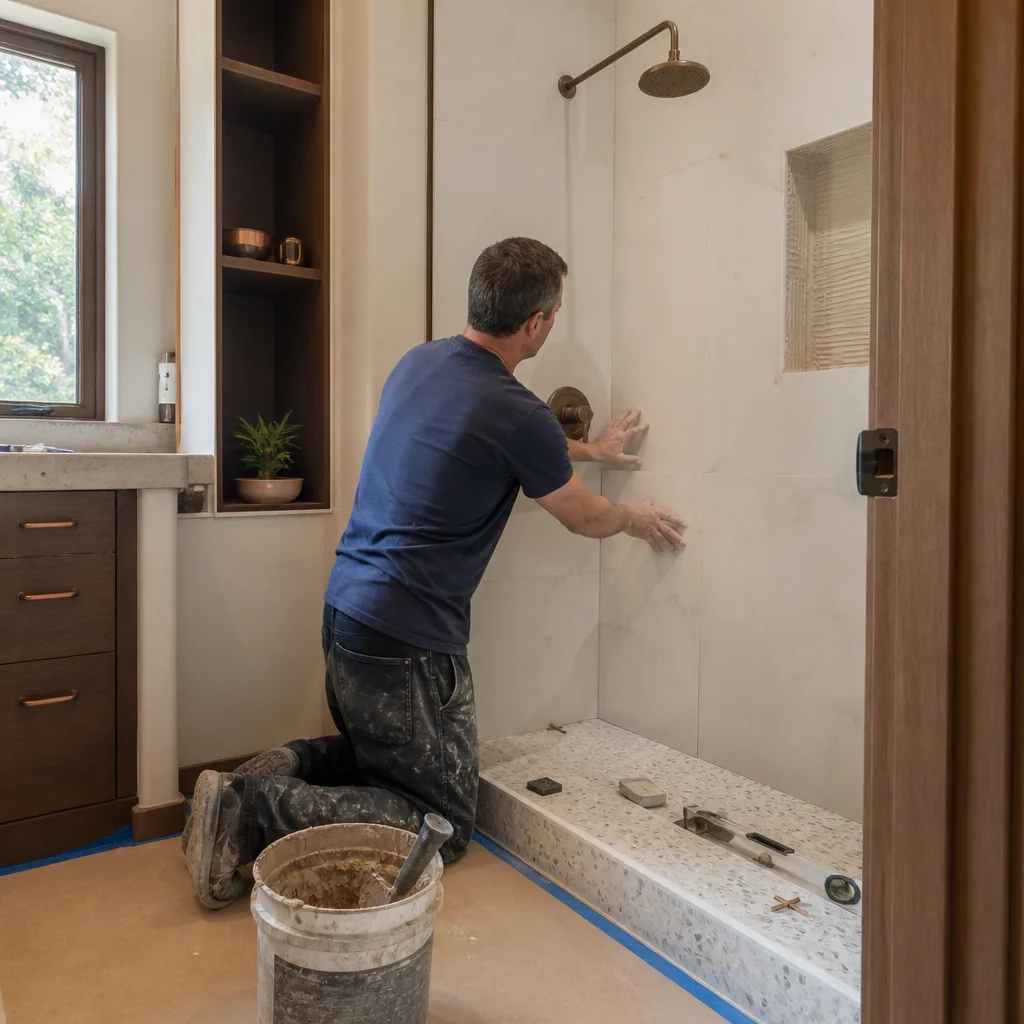
Uneven tile lippage. Run your bare hand across the tile floor or wall. Tiles should be flat to the touch, with no edge catching your fingertip. Lippage over 1/16 inch on an install is a sign of a rushed set or a substrate that wasn’t leveled. In a wet zone like a shower floor, lippage is also a puddle – a slope problem, not a style problem.
Grout lines that drift. Step back and look down a run of tile. Consistent grout lines are the fingerprint of a trained setter. Lines that wander, widen, or lose the plumb are hard to fix later without demo.
Missing backer board at the edges. If a contractor names “the substrate” as greenboard, drywall, or “we used a special adhesive,” you’ve found the skip.
Exposed framing at penetrations. Shower valve bodies, niche surrounds, and the drain collar should have waterproofing turned up onto the framing. If you see bare studs near the wet zone, that’s a leak waiting to happen – and it’s fixable now, for hours of labor, not a full redo.
- Crew arrives without a permit on file
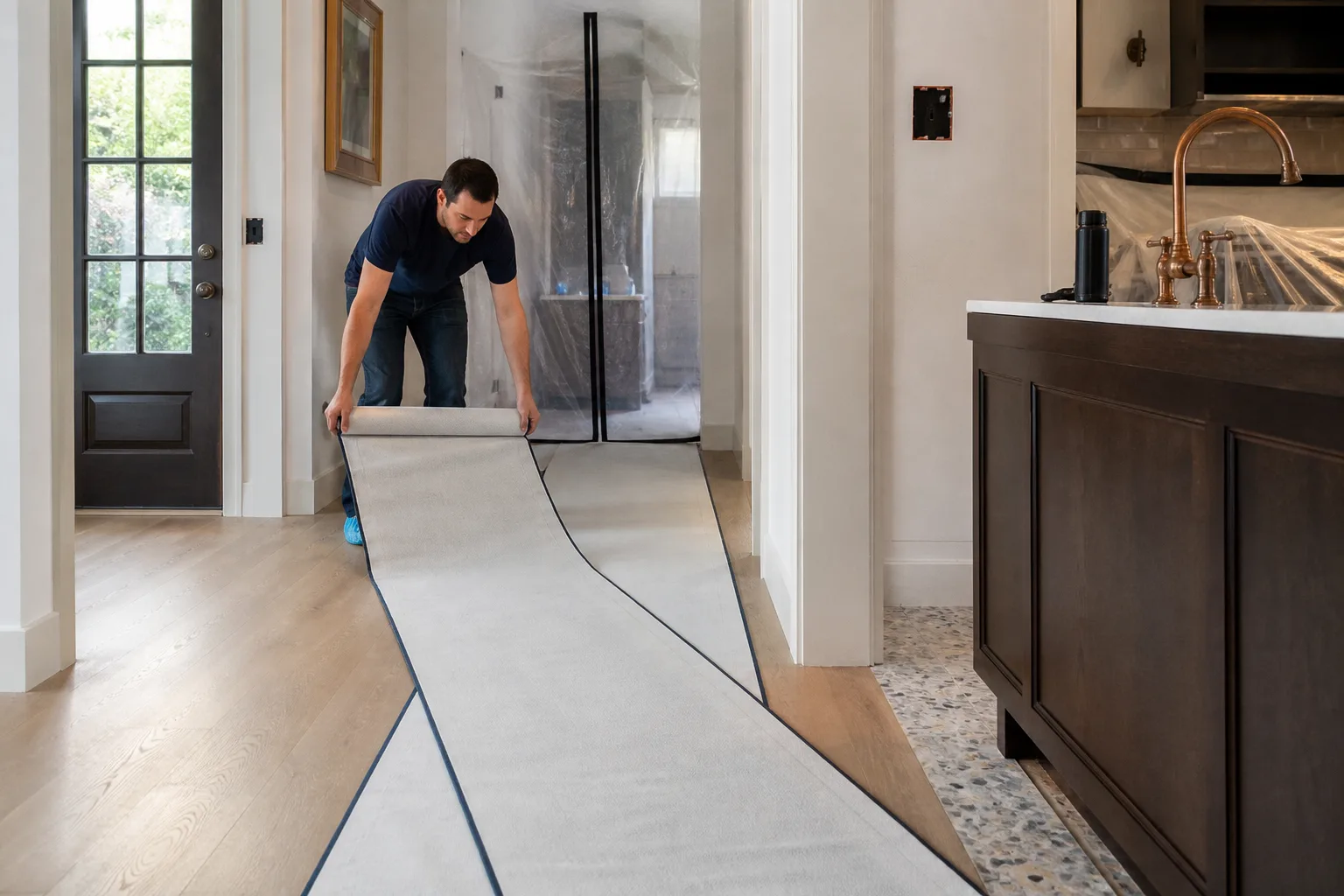
- No dust containment and no protection on adjacent floors
- Demo debris left in the yard for weeks
- Subcontractors rotating through with no consistent lead
- “We’ll fix it later” answers to questions about the substrate
Document these with dated photos. A legitimate contractor will show you why they did it that way, and a good one won’t mind being asked. One Enterprise customer we worked with had a prior installer skip the shower niche membrane entirely; the niche looked fine until the winter dry season shifted and the caulk line opened. That’s a repair shot, not a rumor.
The First 90 Days: Signs the Job Was Done Wrong
Some mistakes are invisible for a year. Others announce themselves before the first season turns. Watch for these in the first three months after your bathroom is finished:
- Hollow-sounding tile. Tap across the floor and walls with a screwdriver handle. A sharp, hollow “tink” means the tile is not bonded to the substrate. A few are common; a run of them is a set failure.
- Grout cracking or crumbling. Hairline cracks along a tile edge are normal movement. Cracks that widen or powder in 60 days mean movement you didn’t build for – often a substrate problem.
- Caulk pulling away in the shower corners. Some flex in a wet corner is expected; repeated caulk failure means water is getting behind it.
- Soft spots behind the tub apron or in the drywall near the shower. Press gently. Spongy drywall means moisture is behind the surface, and the repair is opening the wall.
- A musty smell that doesn’t leave after cleaning. This is the smell of a wet substrate. It doesn’t go away on its own.
- Doors that stick or swing on their own. In a dry desert climate, this can be a settling frame – but in a wet wall, it can be moisture-driven movement.
In Enterprise specifically, our desert air makes wet-zone failures sneaky: the surface dries fast, so a leak behind the tile can run for a year without showing a stain. That’s why we tell every customer that the first 90 days are a stress test, not a finish line. If you see these signs, get a moisture reading with a pin meter before you accept “it’s just settling.”
Permits and Codes in Enterprise
A bathroom remodel in Enterprise that moves plumbing, electrical, or non-load-bearing walls needs a permit and inspections. It’s not just about legality – the inspection is your independent check that the rough-in was done right before the finish goes on.
What gets inspected, roughly: the rough plumbing (drain slope, venting, water lines), the electrical (GFCI protection for the bathroom, dedicated circuits for high-draw fixtures), and the framing if walls move. The final inspection happens before the finish covers the work. If the contractor says “we’ll get the permit later,” you’ve lost the only third-party eyes you have.
- Ask for the permit number before demo begins.
- Confirm who pulls it: the contractor or you. A legitimate bid states one or the other.
- Do not accept “we don’t need a permit for a small bathroom” on a job that relocates a drain or swaps an electrical panel circuit.
- Get a copy of the final inspection card at closeout – it’s part of your home record and matters at resale.
Missing permits also bite at resale: an Enterprise buyer’s agent will pull the permit history, and an unpermitted bathroom shows up as a question mark on disclosure. That’s a $10,000 negotiation lever pointed at you. We pull permits and pass inspections on every job where they’re required, and it says so in the written scope.
How to Document and Escalate Mid-Project
Raising a concern without blowing up the relationship is a skill, and it’s mostly about method. You have more leverage than you think, and the way you use it decides whether the job finishes clean.
- Photograph and date. Take a phone photo with a date stamp of the issue – the drywall in the wet zone, the tile lippage, the missing membrane at the niche. Photos are neutral. Opinions aren’t.
- Write it down. Send a short, polite written note: what you saw, where, and what you’d like to discuss. Email or text is fine. It creates a record without a confrontation.
- Ask a question, not a verdict. “Can you walk me through how the shower pan is waterproofed?” gets a better response than “you skipped the membrane.” Contractors will explain the sequence cheerfully if they did it right – and correctly, they won’t if they didn’t.
- Hold the check, not the crew. Tie the payment schedule to milestones in the written contract. If a milestone is unmet, slow the payment and let the schedule do the talking.
- Escalate in writing, then pause. If the answer is “we’ll fix it later” two times in a row, stop work and request a written plan with a date. That’s not aggression; that’s the contract.
One more: never accept a verbal “we’ll make it right.” Get it in writing with a date. It’s the difference between a completed project and a fight you can’t afford to lose. And if the relationship is already broken, a callback from a fresh set of eyes is cheap compared to a demo.
What a 730-Day Workmanship Warranty Really Covers
The warranty is where the real differences between contractors show up – and it’s the single most under-read line in a bathroom contract. Most standard warranties are one year on labor, and the exclusions are the point: “settling,” “movement,” “normal wear,” “water intrusion from failed caulk,” “improper maintenance by homeowner.” That last clause can quietly exclude the exact failure a skipped membrane causes.
A 730-day workmanship warranty is roughly two years of coverage on the installation itself – not the fixtures, not the paint, but the labor and installation. What it should cover:
- Tile set failures and lippage that appear without abuse
- Grout and caulk failure tied to a construction defect, not normal flex
- Water intrusion caused by skipped waterproofing or a failed pan
- Plumbing rough-in leaks at the connection points the contractor installed
- Electrical fixture failures at the point of installation
What it typically won’t cover: product failure from the manufacturer (that’s the manufacturer’s warranty), damage from misuse, or wear on surfaces. Read the exclusions and ask which failures are excluded and why.
Our 730-Day Done Right Promise is one of the longest workmanship guarantees in residential construction. If it’s not done right, we make it right. That’s not a slogan – it’s a written commitment, and it’s the standard we’d want on our own bathroom. When you compare bids, compare the warranty in writing, not the promise on the phone.
Common Mistakes to Avoid
- Accepting an allowance-only bid. If the tile and fixtures are “to be selected,” price them before you sign and insist on a fixed number. An allowance is a moving target, and the overage is where the budget dies.
- Skipping the permit to save time. In Enterprise, an unpermitted bathroom remodel is a resale problem and a safety problem at once. The inspection is the only independent check on the work behind the tile.
- Not confirming waterproofing by name. Ask the contractor to name the membrane, the backer board, and the slope method for the shower pan. If they can’t, they haven’t done it right before.
- Paying the full balance before the final inspection. Tie payments to milestones and to the completion of inspections. A holdback is not rude; it’s the norm on a legitimate job.
- Treating “we’ll fix it later” as a plan. Get every promised correction in writing with a date. Verbal fixes are the start of a dispute.
- Ignoring the first-90-day symptoms. Hollow tile and crumbling grout are not “just settling.” A moisture meter and a callback now save the demo later.
- Assuming all warranties are the same. A one-year labor warranty with “movement” exclusions doesn’t cover what a 730-day workmanship warranty covers. Read the exclusions before you sign.
See the difference
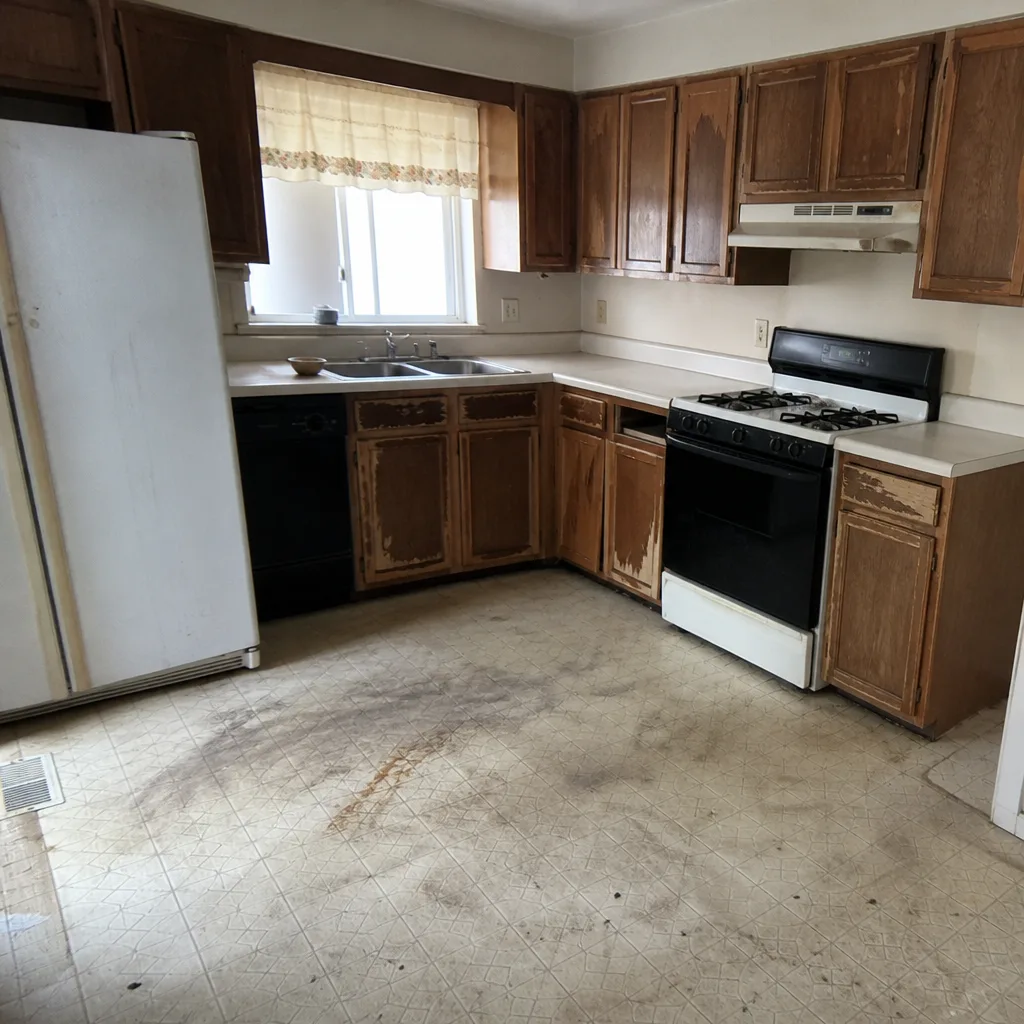 Before
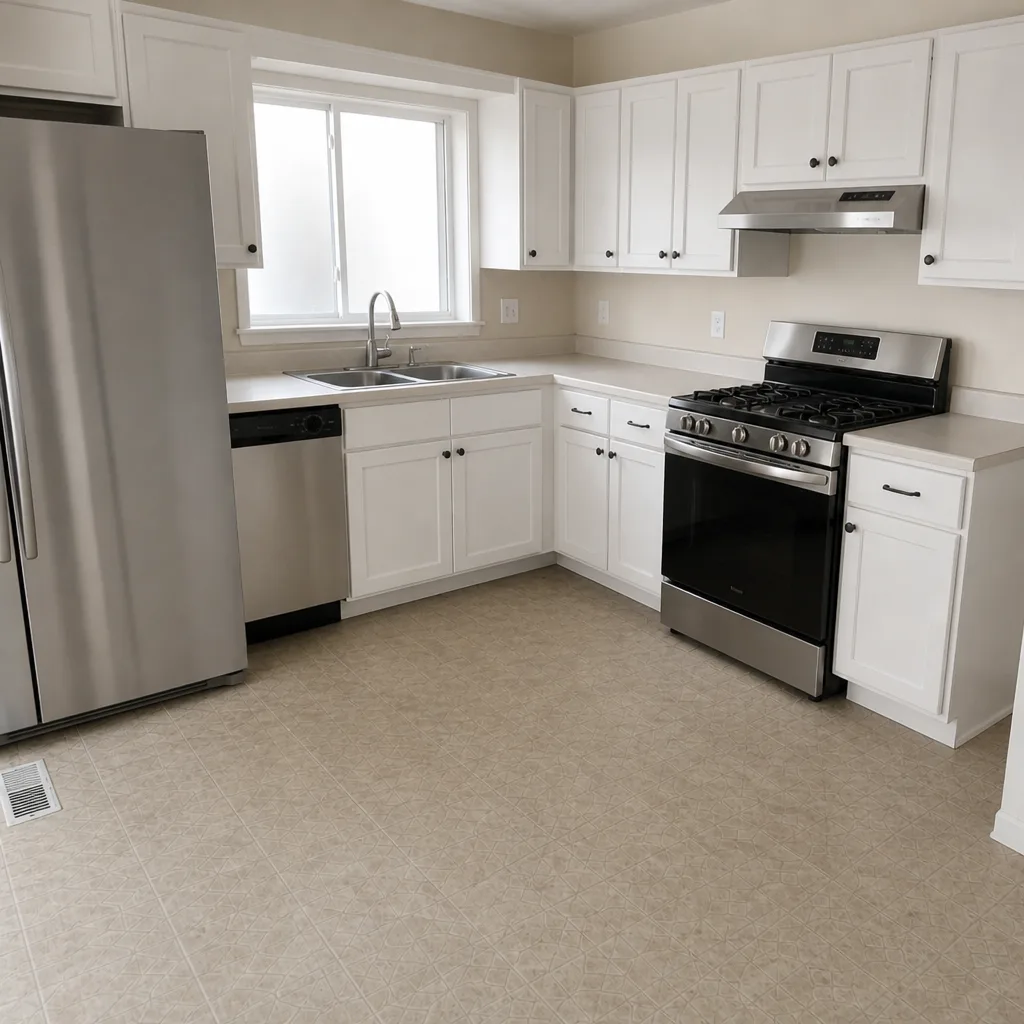 After
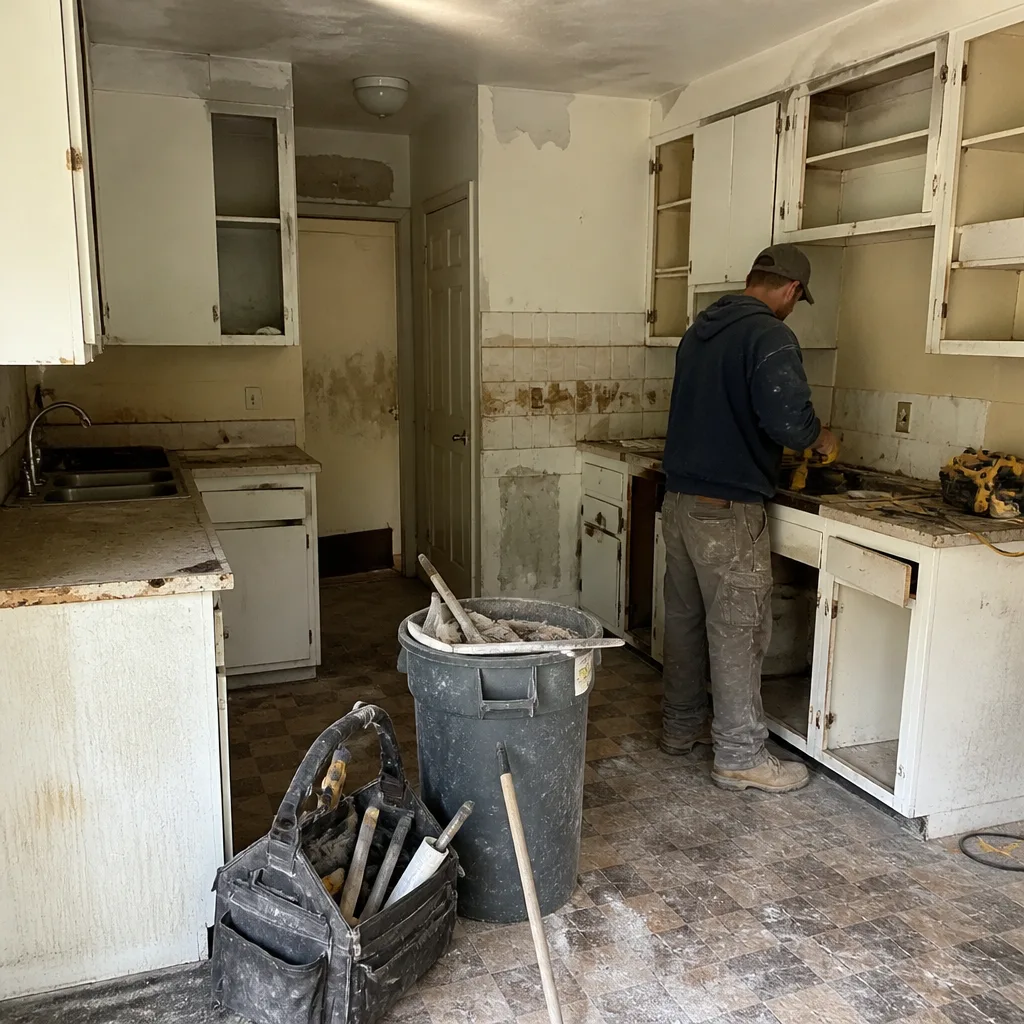 Before
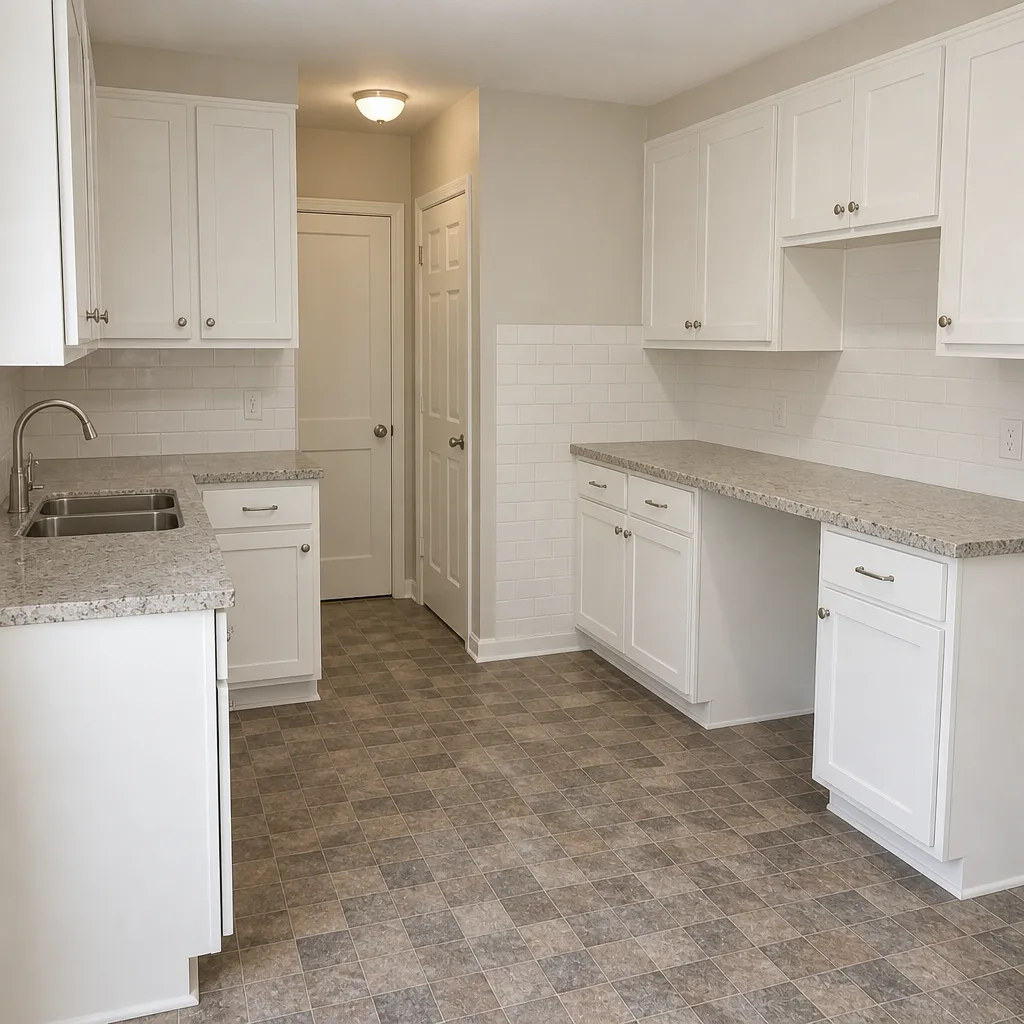 After
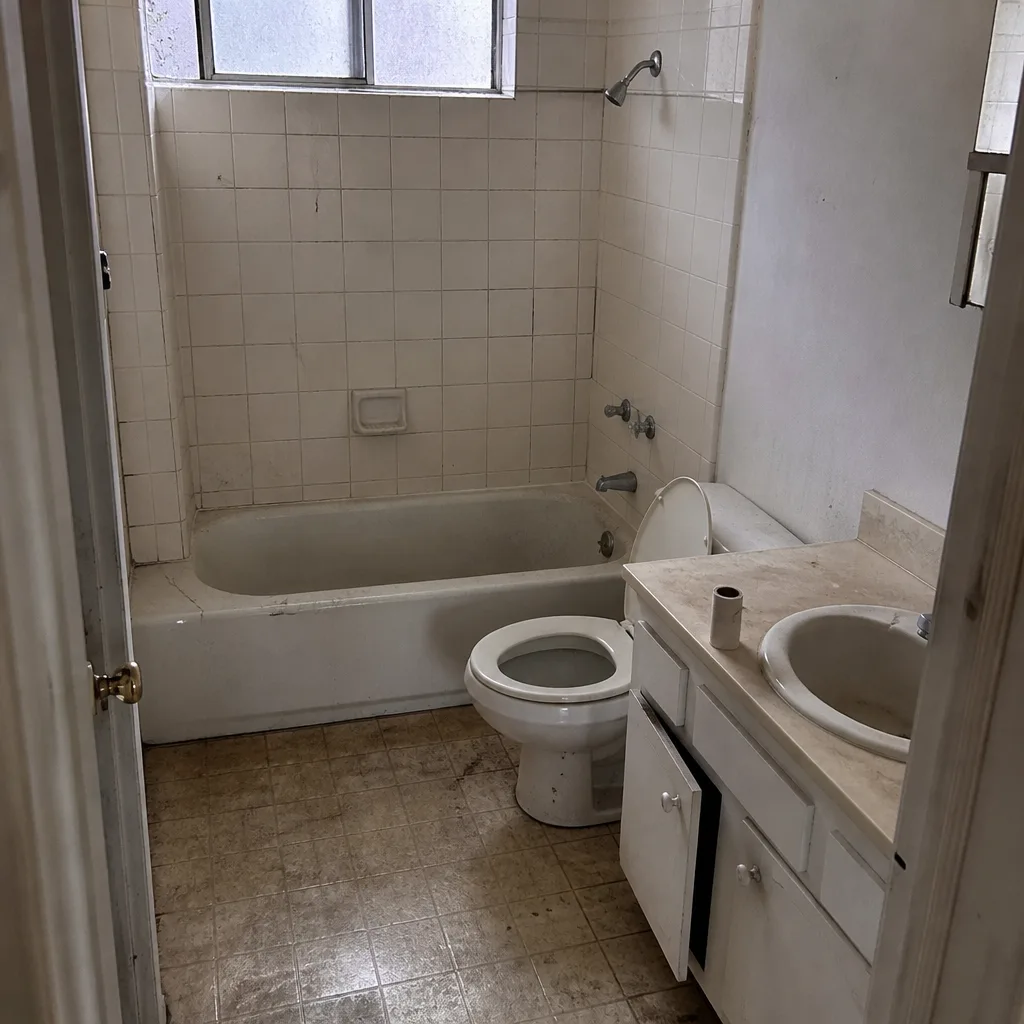 Before
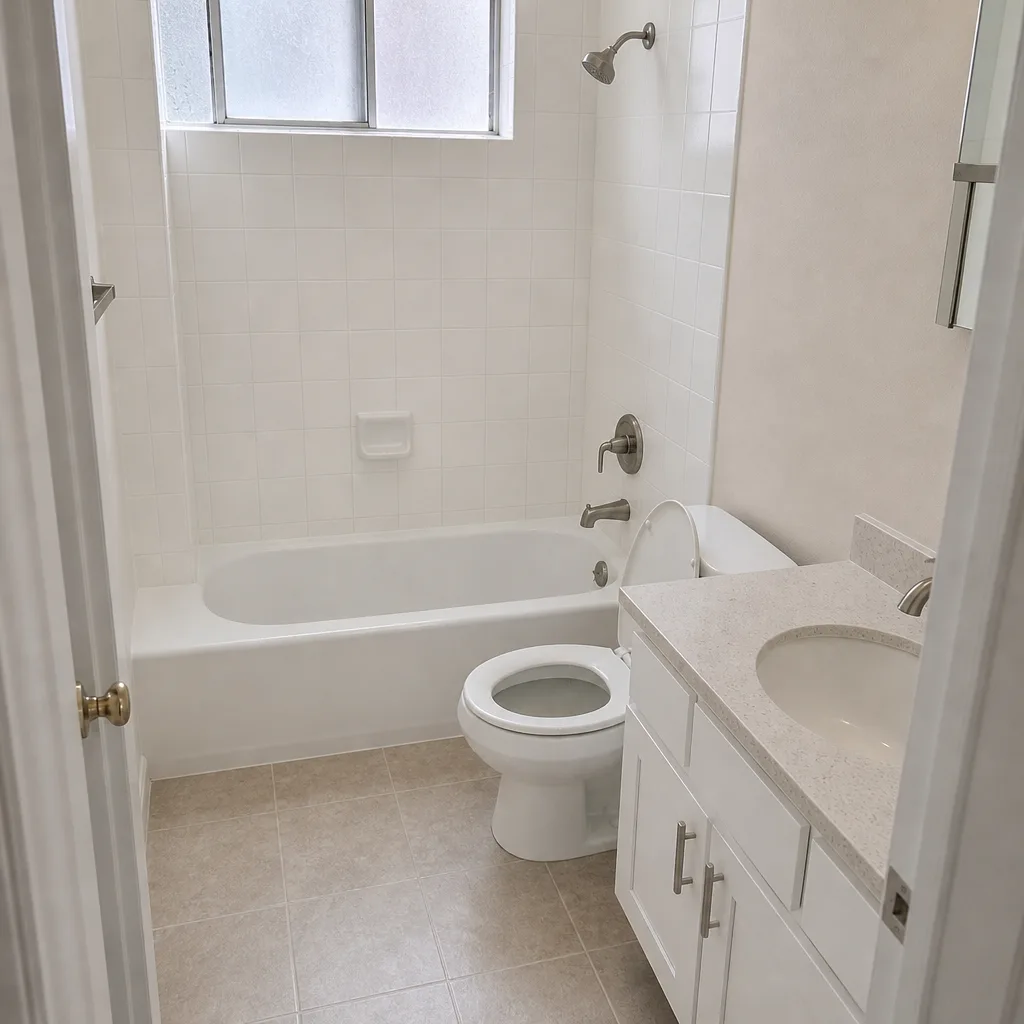 After
When to Call a Professional
Some bathroom problems need a trained eye, not a YouTube tutorial. Call a professional if you see water stains or soft drywall near the shower, hollow tile across a run, a musty smell that doesn’t clear, a shower pan that pools water, or any sign the shower was built without a waterproofing membrane. Also call if a contractor has already started and skipped a step you can name – a substrate in a wet zone, a permit, a liner. Those are time-sensitive in the good direction: caught early, the repair is hours; caught late, it’s the whole shower. Groundwork Construction Co. of Enterprise offers free estimates in Enterprise – call (844) 797-4406 and we’ll walk the bathroom with you, before you spend another dollar on the wrong fix.
Frequently Asked Questions
The biggest signs are a bid with no permit line item, no waterproofing named in the scope, tile you can feel as uneven underfoot, and a one-year warranty that excludes movement and water. Any one of those is a reason to ask questions before you sign. All four together mean you should get a second bid, and call us at (844) 797-4406 for a free comparison estimate if you want it done right the first time.
A correctly waterproofed shower has a cement backer board or bonded membrane over the framing, a waterproof membrane with taped seams and reinforced corners, a sloped pan above a preslope liner, and sealed penetrations at the valve and niche. If the contractor used greenboard or drywall, skipped the membrane, or can’t name the sequence, it’s wrong. In Enterprise, the desert climate can hide a leak for a year, so an early moisture reading is worth the phone call. Call (844) 797-4406 to have a second set of eyes check the work.
A repair ranges from a few hundred dollars for caulk and grout corrections to a full shower demo and rebuild if the waterproofing was skipped, which is the most expensive outcome. The exact figure depends on whether the tile, substrate, and pan have to come out. Get a written line-item estimate before any repair – and call (844) 797-4406 for a free one. Estimates are free and the pricing is upfront, so you see the number before you commit.
On a well-written contract, the price changes only through a written change order that you sign – not a verbal “we found a problem.” Vague scopes and allowance-only bids are where price creep starts, which is why we price line by line upfront. If a contractor can’t tell you in writing what a change will cost before they do it, that’s the red flag. Call (844) 797-4406 for an estimate with no surprises.
Yes – where a bathroom remodel requires a permit, we pull it and the inspection is part of the job, not a “later” item. Plumbing, electrical, and framing changes all get inspected before the finish covers the work. A bid that doesn’t list the permit is a bid that’s planning to skip it. Call (844) 797-4406 and we’ll confirm the permit requirements for your project in writing.
A 730-day workmanship warranty covers the installation for roughly two years instead of one – tile set failures, waterproofing defects, water intrusion from skipped steps, and plumbing or electrical problems at the connection points. A one-year warranty often excludes “movement,” “settling,” and “water intrusion from caulk failure,” which are exactly the failures a bad bathroom build produces. Ours is one of the longest workmanship guarantees in the residential construction space: if it’s not done right, we make it right. Call (844) 797-4406 with questions about coverage.
The Bottom Line
A bathroom remodel fails quietly. The waterproofing under the tile, the permit on file, the slope under the shower pan – none of it shows in the finished photos, and all of it shows up in year two. The signs are there if you know where to look: a bid with no permit line, a scope that won’t name the membrane, lippage you can feel, hollow tile at 90 days. Compare warranties in writing, not promises on the phone, and treat the first three months as a stress test. In Enterprise, we’ve built bathrooms the slow, correct way for long enough to know that the details behind the tile are the whole job. If you want a free estimate or a second opinion on a bid, call Groundwork Construction Co. of Enterprise at (844) 797-4406. From foundation to finish line, built to last and backed in writing.
Written by the team at Groundwork Construction Co. of Enterprise.