Last updated November 18, 2026
Free written scope consultation - allowances, timeline, and change-order rules on paper before a single trade is scheduled
The Complete Driveway & Pavers Guide for Enterprise Homeowners
Most paver failures in Nevada aren’t caused by bad materials. They’re caused by contractors who used a base depth designed for the Pacific Northwest. Enterprise sits at roughly 2,700 feet in the high desert, where surface temperatures push past 150°F in July and winter nights still dip below freezing in the outlying foothills. That combination breaks pavers installed to a national spec sheet. This guide covers what actually holds up here: how Enterprise’s caliche layers change excavation depth, which paver materials stay cooler underfoot, how thickness ratings map to real vehicle loads, and what driveway work really costs from an Enterprise contractor in today’s market.
Quick Answer
A driveway paver installation in Enterprise typically runs $12 to $22 per square foot installed, which puts a standard two-car driveway at roughly $8,000 to $18,000 depending on square footage, base depth, and material. The two decisions that matter most are excavating through caliche to a full 8 to 12 inches of compacted base and choosing a paver rated for your actual vehicle load. Get those wrong and no warranty on earth will save the surface.
Styles & brands we work with
- Kitchen remodeling
- Bathroom remodeling
- Home additions & ADU
- Roofing
- Windows & doors
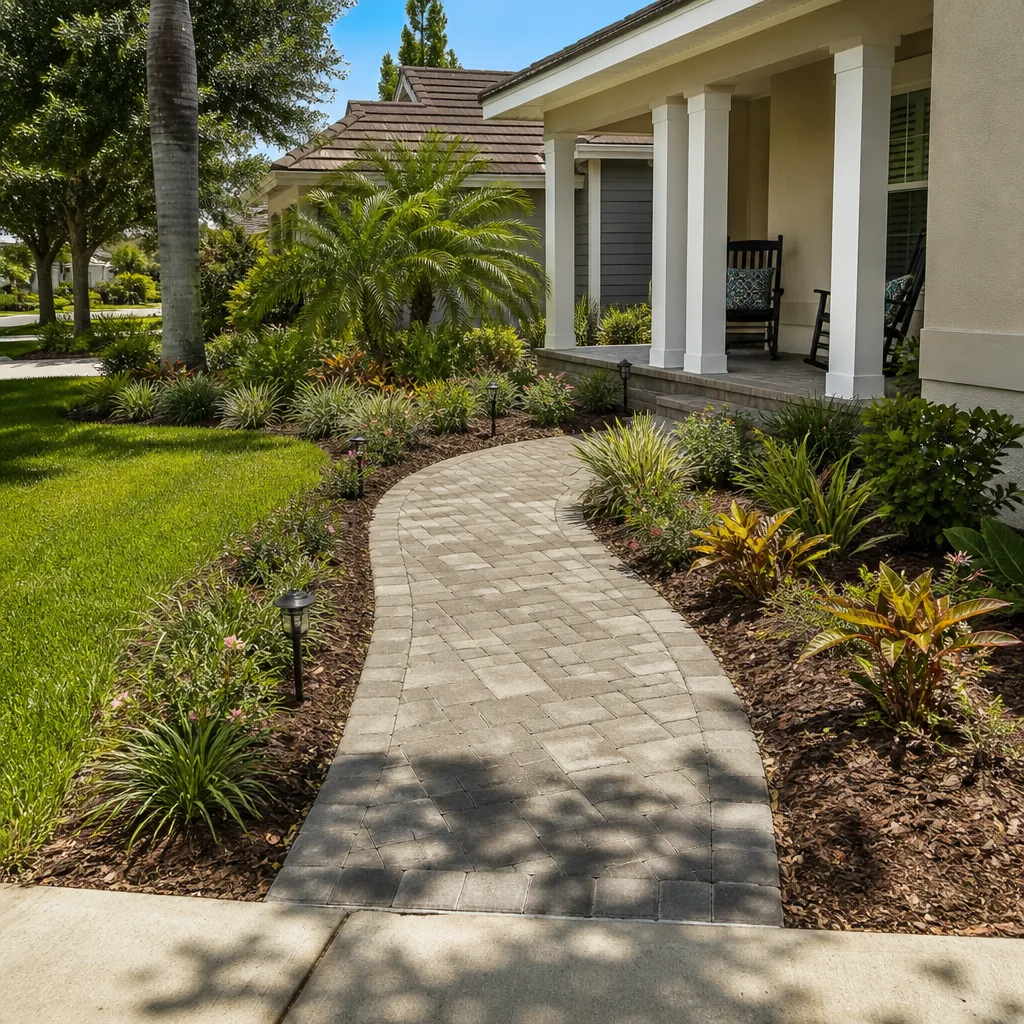
- Driveway & pavers
- Fence
Table of Contents
- Why Enterprise’s Climate Rewrites the Paver Rulebook
- Caliche Soil and Base Depth: What National Guides Get Wrong
- Heat-Reflective Pavers: Colors and Materials That Stay Cool
- Paver Thickness: 60mm vs 80mm by Real Vehicle Load
- Permits, HOA Rules, and Unincorporated Clark County Parcels
- What Driveway Pavers Cost in Enterprise
- The Installation Process, Step by Step
- Keeping Pavers Looking New in the Desert
Why Enterprise’s Climate Rewrites the Paver Rulebook
Enterprise is not Phoenix and it is not Reno. It’s a high-desert pocket of Clark County where the summer sun bakes hardscape for months and the winter still delivers enough cold nights to matter. Pavers expand in July and contract in January, and a base that wasn’t built for both movements will shift, heave, or settle within a few seasons.
Three climate factors drive every decision on an Enterprise driveway:
- UV intensity. Southern Nevada gets more than 290 sunny days a year. Cheap colorants in low-grade pavers fade to chalky pastels in three to four summers. The good ones don’t.
- Surface heat. Pavers in direct July sun can read 140°F to 160°F on an infrared thermometer. That heat radiates back at your house, your garage, and anyone walking barefoot to the mailbox.
- Freeze-thaw at elevation. Enterprise proper rarely freezes hard, but properties on the western edge toward the Spring Mountains see overnight dips into the 20s. Water trapped in an under-built base expands when it freezes and pushes pavers out of level.
We’ve seen driveways in the Mountain’s Edge and Rhodes Ranch edges of Enterprise hold up beautifully for a decade, and we’ve seen driveways off Blue Diamond read like a washboard in two years. The difference is almost never the paver. It’s whether the installer accounted for this climate or just followed a spec written for Oregon.
Caliche Soil and Base Depth: What National Guides Get Wrong
Caliche is the single biggest reason driveway projects in Enterprise go sideways. It’s a naturally cemented layer of calcium carbonate that forms in desert soil, and it can sit anywhere from a few inches to several feet below grade. National installation guides assume loamy soil and a 4-inch base. Neither assumption survives contact with an Enterprise lot.
Caliche doesn’t drain. When a contractor skips deep enough excavation and lays 4 inches of base over hardpan, water pools on top of the caliche instead of percolating down. That trapped moisture is what causes the settlement, rutting, and loose paver edges homeowners call us about.
Here’s what a proper base looks like on an Enterprise driveway:
- Excavate to full depth. That means 8 to 12 inches of compacted base for a residential driveway, not the 4 inches a national guide suggests. On caliche-heavy lots, the excavation often goes deeper to reach soil that will accept drainage.
- Break up the hardpan. Where caliche is present, it has to be scarified or removed. Paving over it is a coin flip.
- Compact in lifts. Base goes down in 2- to 3-inch layers, each one plate-compacted before the next. One thick dump-and-smash layer never compacts evenly.
- Verify slope. A 1 to 2 percent slope away from the garage and house. Flat is wrong even when it looks tidy.
- Install edge restraint. Concrete or steel edging locked into the base keeps the whole field from spreading under load.
If a bid doesn’t mention caliche or base depth, ask about it before you sign. We’ve walked plenty of Enterprise properties where the caliche layer was the deciding factor in the entire job scope. For a closer look at how we handle this locally, see our Driveway & Pavers in Enterprise service page.
Heat-Reflective Pavers: Colors and Materials That Stay Cool
Pavers absorb solar energy and release it as heat. In an Enterprise summer, that’s not a minor comfort issue. It’s the difference between a driveway that radiates heat into your garage all evening and one that stays reasonable to walk on in August.
Two variables control surface temperature: color and material.
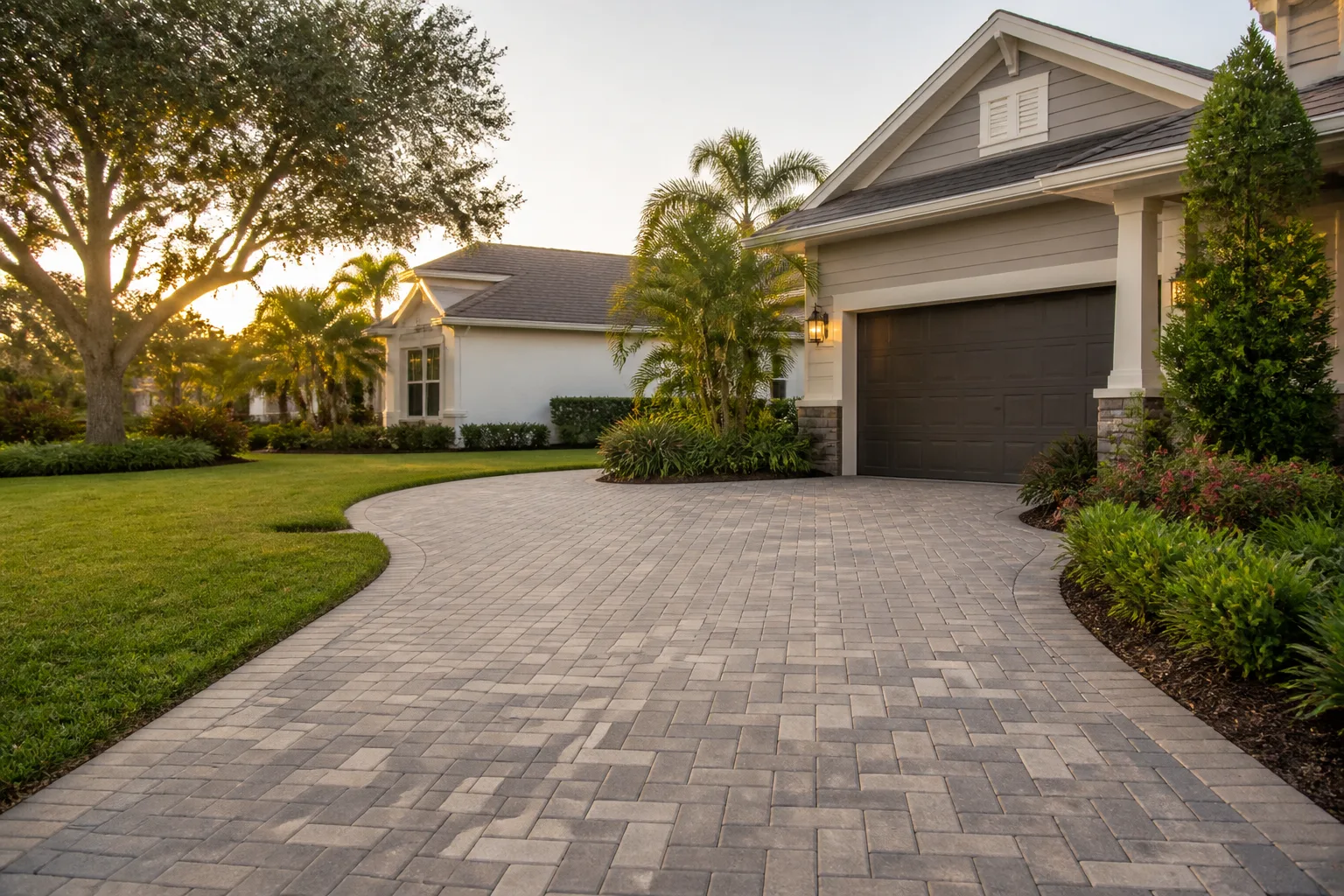
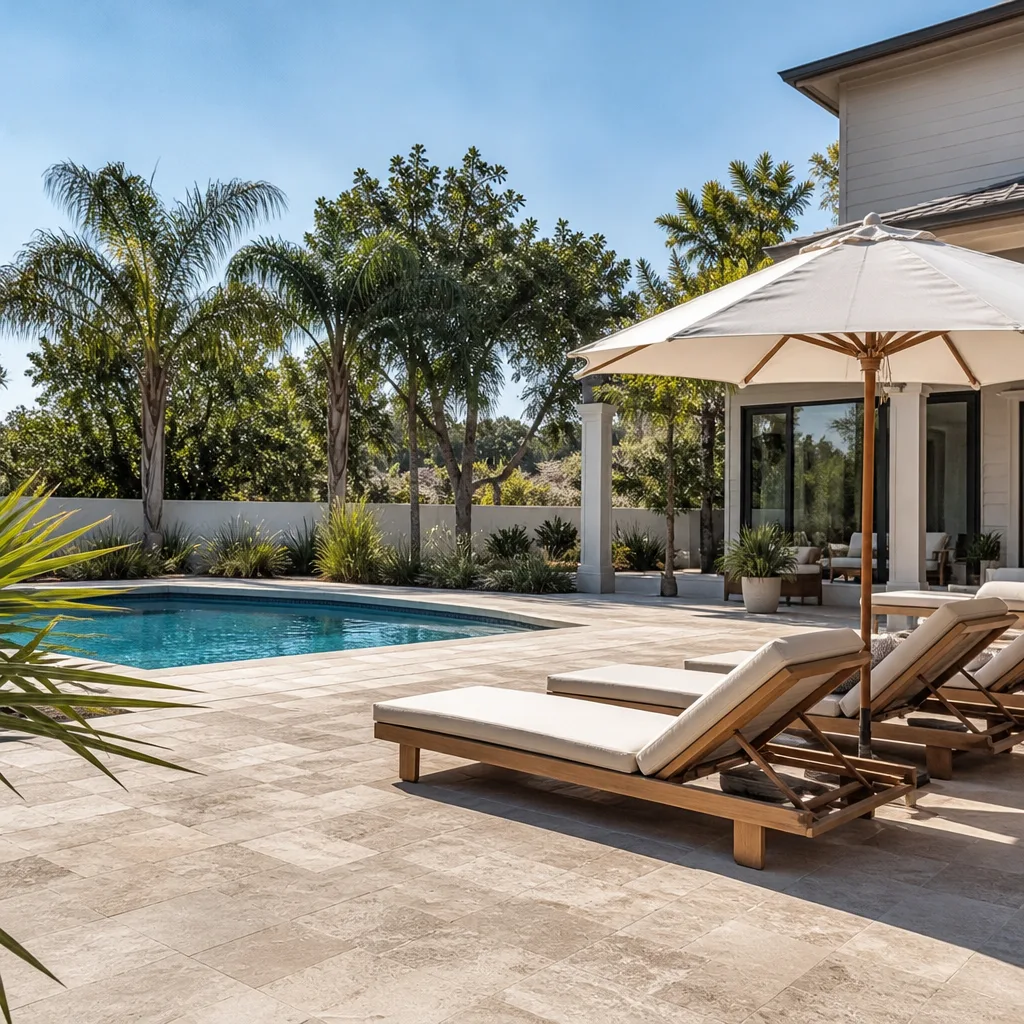
- Light colors reflect more, absorb less. Sand, light tan, cream, and warm gray run meaningfully cooler than charcoal, black, or deep red. If you love a dark paver, consider using it as an accent border and keeping the main field light.
- Concrete pavers run cooler than clay brick. Clay brick is beautiful but absorbs more heat. Concrete pavers with a proper color-through pigment stay cooler and hold color better under UV.
- Reflective coatings help but aren’t magic. Some manufacturers offer cool-roof-style reflective sealers. They reduce surface temperature and help with energy bills, but they don’t replace the base under the paver.
Permeable pavers are worth a serious look for Enterprise homeowners with larger properties. They let rainwater drain between joints and reduce standing water during summer monsoon storms, which matters when the caliche underneath won’t. We install permeable systems on lots where drainage is tight and the homeowner wants the extra resilience.
The manufacturers we partner with, including Belgard, make lines specifically engineered for high-sun environments. Color stability over a 10- to 20-year horizon is what separates a paver that looks great the day it’s installed from one that still looks great in year twelve. Built to last, backed in writing, is what we tell every Enterprise homeowner when we walk through color choices.
Paver Thickness: 60mm vs 80mm by Real Vehicle Load
Most homeowners never think about paver thickness until a paver cracks. By then it’s too late. The 60mm vs 80mm question is not aesthetic. It’s an engineering question that depends entirely on what’s parked on the driveway.
Here’s how the thickness ratings break down by vehicle load:
- 60mm pavers are appropriate for pedestrian paths, patios, and driveways used only by standard passenger cars under about 4,500 pounds. Fine for a sedan or a compact SUV.
- 80mm pavers are the standard for residential driveways that see pickup trucks, large SUVs, or tow vehicles regularly. Most full-size trucks and heavy SUVs exceed 5,500 pounds, and 80mm is what holds up under that load.
- 80mm is the better default in Enterprise because most households here have at least one truck or larger vehicle. The cost difference between 60mm and 80mm is modest, and the longevity gap is not.
There’s one more factor: base. Thickness ratings assume a properly compacted base underneath. An 80mm paver on 4 inches of badly compacted base will crack faster than a 60mm paver on 10 well-compacted inches. Ask about both the paver thickness and the base spec on any bid you get, and treat any contractor who can’t answer both clearly as a warning sign.
Permits, HOA Rules, and Unincorporated Clark County Parcels
Much of Enterprise sits on unincorporated Clark County parcels, which means the permitting picture is different from what you’d expect if you’ve owned in Henderson or Las Vegas proper. This trips up homeowners who assume a driveway is a driveway everywhere.
Here’s what to know before you break ground:
- Clark County Public Works handles driveway approaches. If your project touches the apron or approach connecting to the public street, a permit through Clark County is generally required. Interior driveway paving that doesn’t affect the street approach often doesn’t require one, but you need to check for your specific parcel.
- HOAs add their own layer. The master-planned sections of Enterprise and nearby communities often have architectural review requirements covering paver color, material style, and driveway width. Get written approval before you order materials.
- Drainage is scrutinized. Clark County cares about where stormwater goes. An installation that pushes water onto a neighbor’s lot can trigger a code complaint regardless of how good the pavers look.
- Ask who’s pulling the permit. A real contractor pulls the permit in writing. A handyman will quietly suggest you leave the city out of it.
We handle permit research and HOA submission coordination as part of every driveway project in Enterprise, because a driveway that fails final inspection costs you more than the permitting fee. If you’re also looking at side-yard or perimeter improvements, our Fence Installation in Enterprise team deals with the same Clark County approval process every week and can flag overlapping requirements.
What Driveway Pavers Cost in Enterprise
National averages for paver installation run $8 to $15 per square foot. In Enterprise, realistic installed pricing sits higher because of excavation and caliche work that’s specific to this market. Below are the ranges we see on real Enterprise contracts, not generic averages.
- Base excavation and caliche removal: $2.50 to $6.00 per square foot, higher on lots with heavy hardpan
- Base material and compaction (8 to 12 inches): $3.50 to $7.00 per square foot
- Pavers – standard 60mm concrete: $4.00 to $7.50 per square foot in material
- Pavers – 80mm driveway-grade concrete: $5.00 to $9.00 per square foot in material
- Premium or permeable pavers: $8.00 to $14.00 per square foot in material
- Edge restraint, bedding sand, and polymeric joint sand: $1.50 to $3.50 per square foot
- Labor, equipment, and cleanup: $3.00 to $6.00 per square foot
Total installed cost typically lands in the $12 to $22 per square foot range for a standard Enterprise driveway, with premium or permeable systems reaching $25 to $30 per square foot. A typical two-car driveway of 600 to 800 square feet lands between $8,000 and $18,000.
Those numbers assume a full excavation and proper base. If a bid comes in dramatically lower, ask how deep the base is going and whether caliche is being addressed. That’s usually where the difference lives. We offer Groundwork Construction Co. of Enterprise home visitors a free estimate and design consult, with upfront pricing and no change orders once work begins. For larger driveways, our $1,000 off projects over $10,000 applies, and 0% financing for 18 months is available on approved credit.
The Installation Process, Step by Step
A correctly executed driveway paver installation in Enterprise follows a reliable sequence. Here’s what to expect from a crew doing it right, start to finish.
- Site assessment and layout. Measure the area, locate utilities, check the caliche layer, and confirm drainage direction toward the street or a designated drainage point.
- Permit and HOA approval if required. Filed and confirmed before the first shovel hits the ground.
- Excavation. Remove existing surface, then dig to the full subgrade depth accounting for caliche. Rental dumpsters and haul-away are part of the schedule.
- Base installation and compaction. Base material goes down in 2- to 3-inch lifts, each one compacted. Moisture is added during compaction to hit proper density.
- Edge restraint installation. Locked into the base, not on top of it.
- Bedding sand layer. Screeded to a consistent depth to level the pavers above it.
- Paver placement and cutting. Field pavers laid in the selected pattern, edge cuts made with a wet saw for clean lines.
- Joint sand. Swept into the joints and compacted into place. Polymeric sand helps resist washout and weeds.
- Final compaction and cleanup. One more pass with a plate compactor, then a full inspection walkthrough with the homeowner before the crew leaves.
Most residential driveways in Enterprise are completed in three to six working days once excavation starts, weather permitting. Summer work schedules shift early to avoid the worst heat, which is one more reason the crew showing up at 6 a.m. in July is doing the job right. If your home improvement plans extend past the driveway, our Home Additions & ADU in Enterprise team can align driveway work with larger construction so you’re not tearing up a new paver field a year from now.
Keeping Pavers Looking New in the Desert
Enterprise pavers need less maintenance than pavers in wet climates, but the desert throws two things at you that other regions don’t: dust and UV.
- Sweep regularly. Desert dust settles into joints and dulls the surface. A quick sweep every few weeks keeps the field clean and prevents buildup in the sand joints.
- Top off joint sand annually. Between UV breakdown and wind, joint sand disappears over time. Refill with polymeric sand once a year to maintain weed resistance and stability.
- Rinse, don’t pressure-blast. A light pressure wash at low PSI cleans without dislodging joint sand or stripping sealers. High-pressure washing is the fastest way to damage a paver field.
- Re-seal every three to five years. Sealing is optional but worthwhile in Enterprise for UV protection and color vibrancy. Skip the yearly reseal some companies pitch; a good sealer lasts several years in our climate.
- Watch the edges. After a monsoon season, check the edge restraint and joint lines. Any paver that shifts or lifts is a sign that water got under the base, and it should be addressed before winter.
If a short section of the driveway starts showing weeds, crumbling joint sand, or visible settling, get it inspected early. Minor repairs caught in the fall become major repaving jobs by spring when freeze-thaw does its work.
Common Mistakes to Avoid
- Accepting a national-standard base spec. Four inches of base is a Pacific Northwest number. In Enterprise, that’s an under-built driveway waiting to fail on a caliche lot within two summers.
- Skipping the caliche assessment. Any contractor who hasn’t mentioned caliche by the time they hand you a bid hasn’t done the homework. Ask directly what’s under the driveway and how it gets handled.
- Choosing 60mm pavers for a truck driveway. A 60mm paver looks identical to an 80mm one on a sample board, but it will crack under the wrong load. Match thickness to the heaviest vehicle parked there.
- Going dark on color in full sun. Charcoal and deep red pavers in Enterprise summer sun push surface temperatures way past what a light-sand paver will. The lighter field isn’t just an aesthetic choice, it’s a comfort choice.
- Paving without confirming drainage slope. A driveway that sheds water toward the house or the neighbor’s property is a code and neighbor-relations problem in one. Slope matters and it should be verified with a level before any base goes in.
- Ordering materials before HOA approval. Sending a non-compliant color or pattern to the HOA after the material sits on site is the most common and most expensive ordering mistake in Enterprise master-planned neighborhoods.
- Treating the edge restraint as optional. Without it, a paver field spreads under load and after monsoon rains. It costs a small fraction of the project and prevents the entire field from loosening up over time.
See the difference
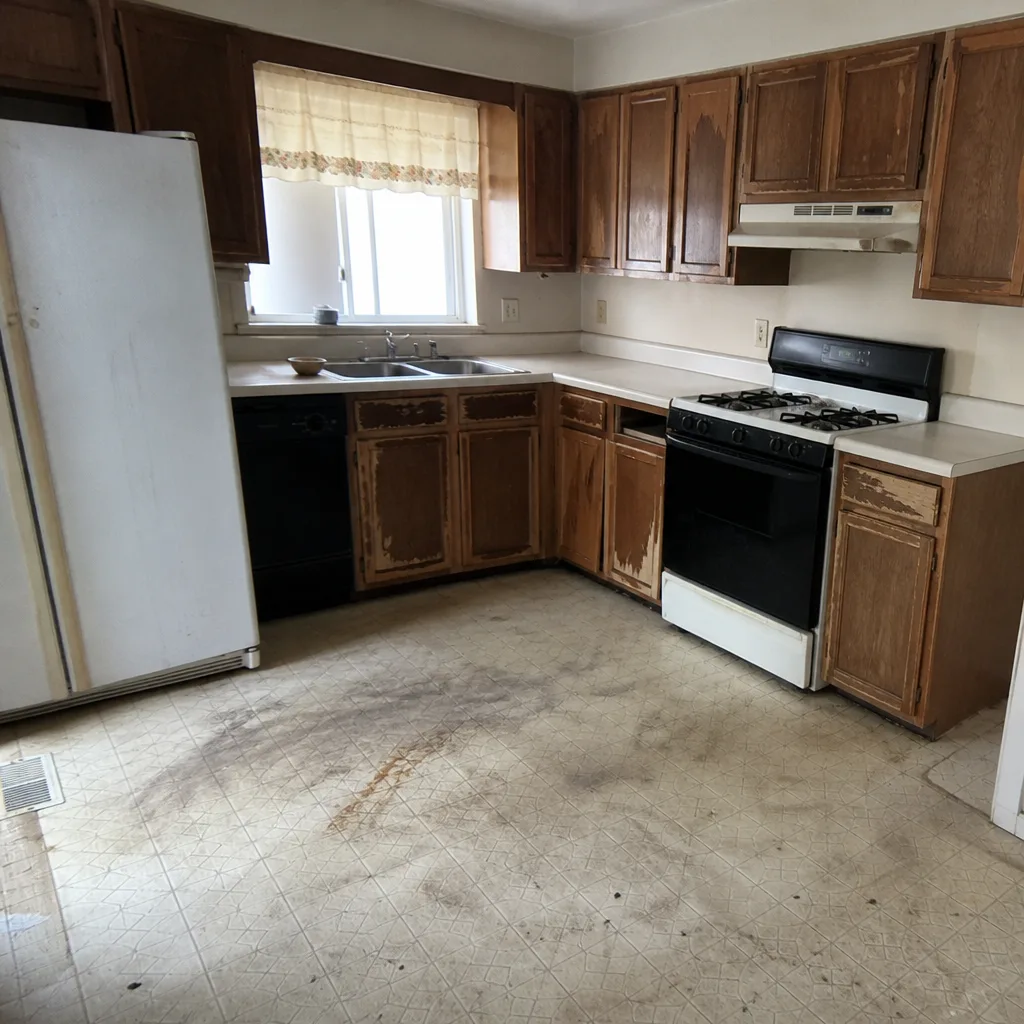 Before
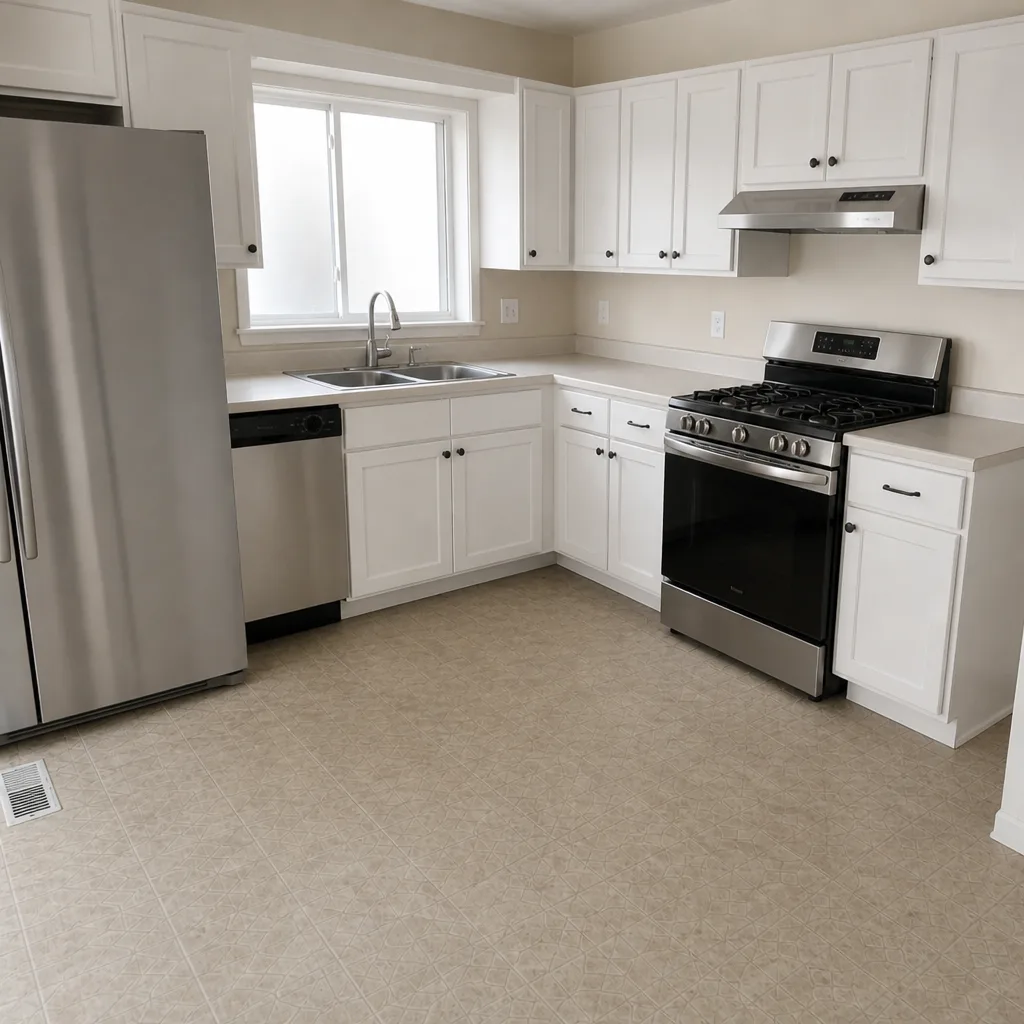 After
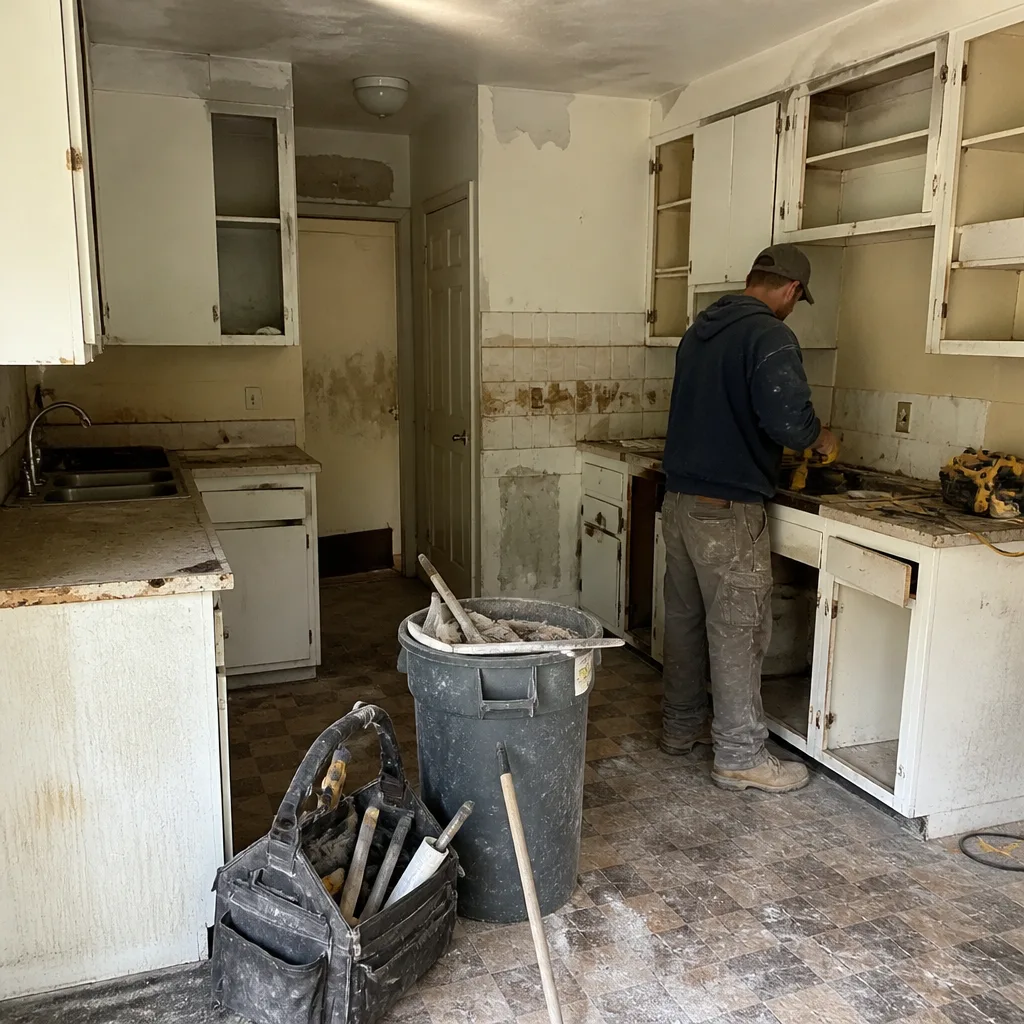 Before
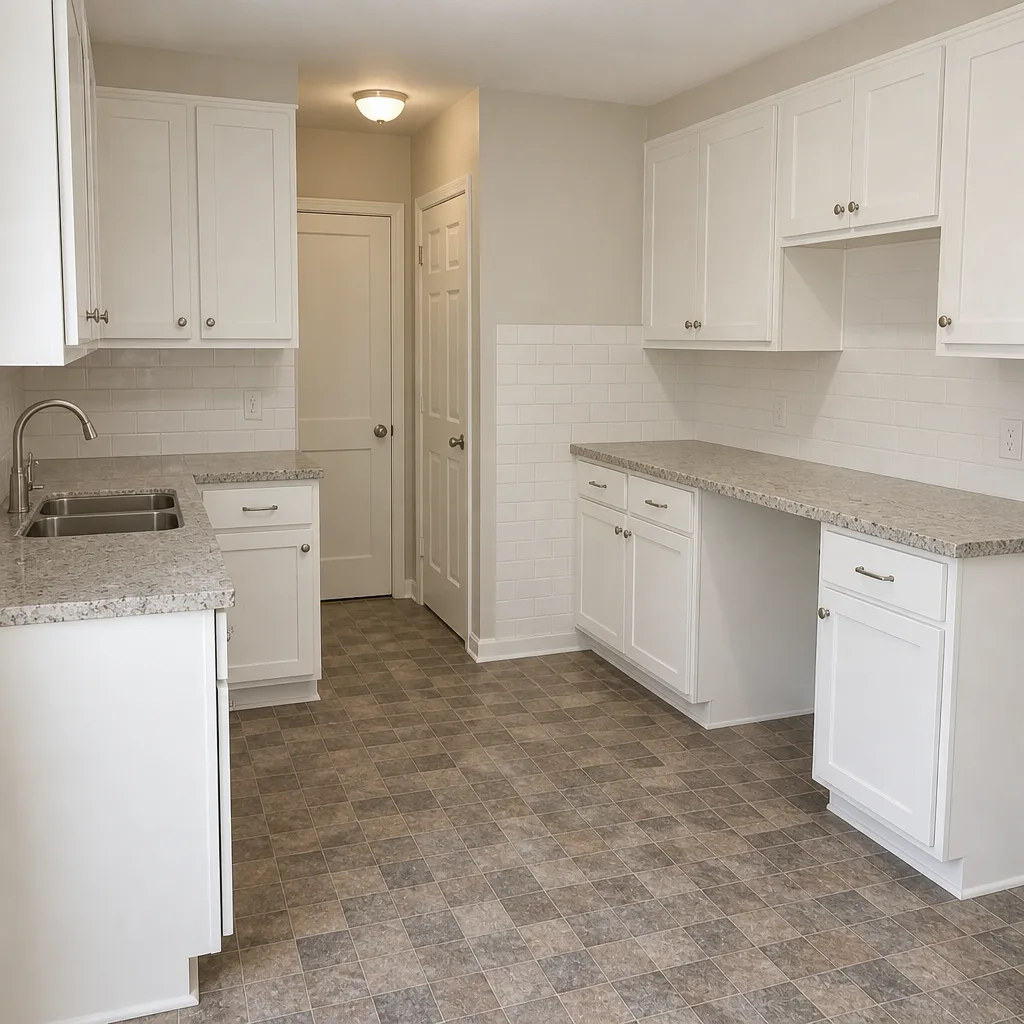 After
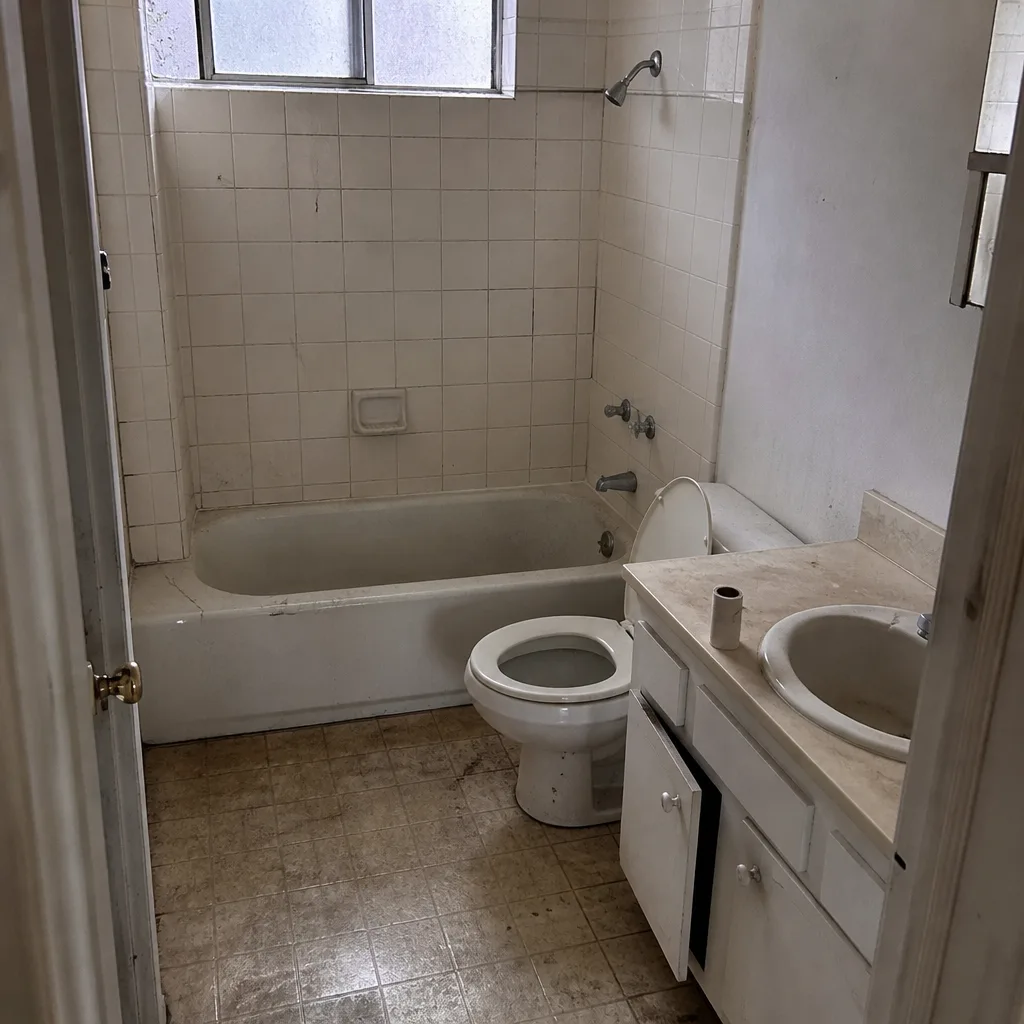 Before
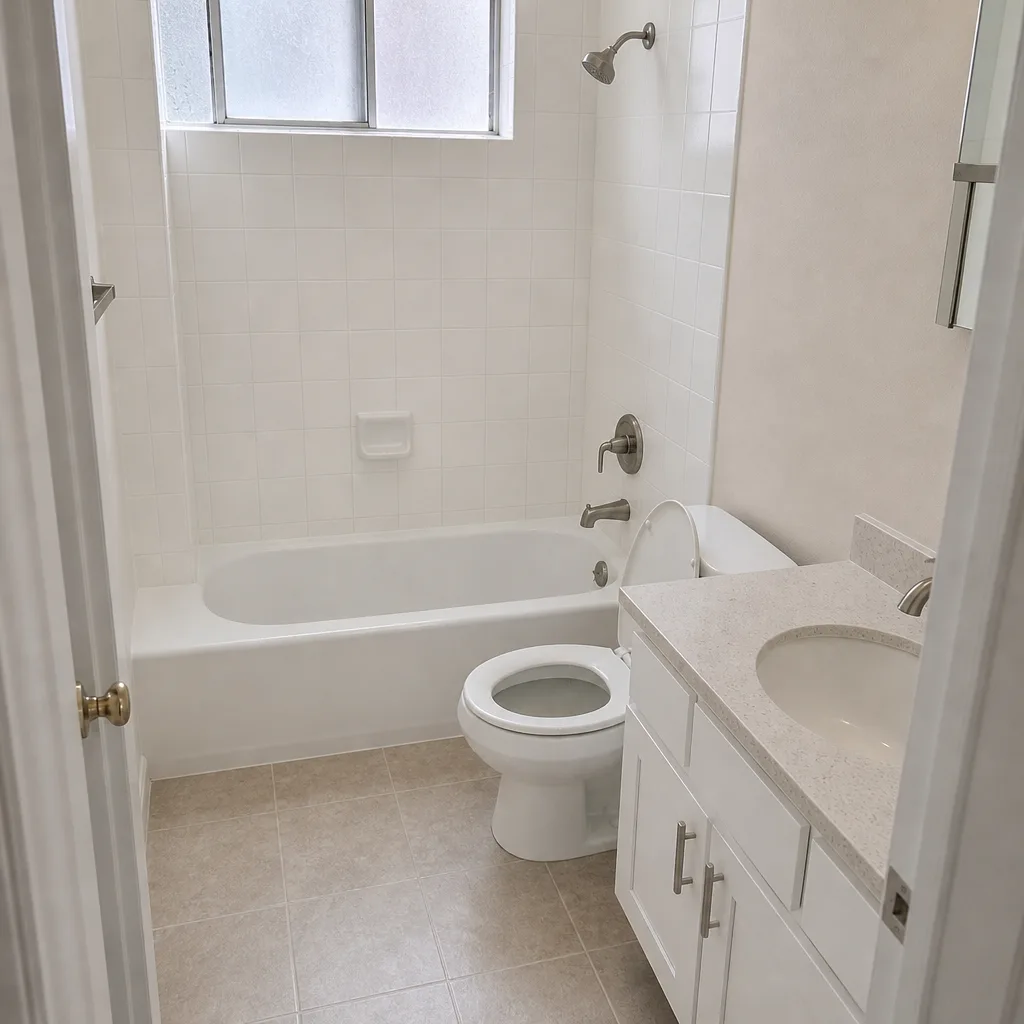 After
When to Call a Professional
Some driveway repairs are genuinely small: a single shifted paver, blown joint sand, or a spot of weeds in a corner. If your driveway has uniform, minor issues you can chase them yourself.
Call a professional if any of these describe your situation:
- You’re installing a new driveway over caliche and don’t know where the hardpan layer sits
- Existing pavers are heaving, settling, or rocking underfoot, which signals base failure
- Your driveway needs to meet HOA or Clark County approval requirements
- You’re choosing pavers for a heavy vehicle and need thickness guidance
- The project is large enough that excavation, base, and drainage slope are all in play
Groundwork Construction Co. of Enterprise offers free estimates in Enterprise. Our technicians have up to 12 years of experience, arrive background-checked and in uniform, and every project is covered by the 730-Day Done Right Promise. Call (844) 797-4406 to schedule your free estimate.
Frequently Asked Questions
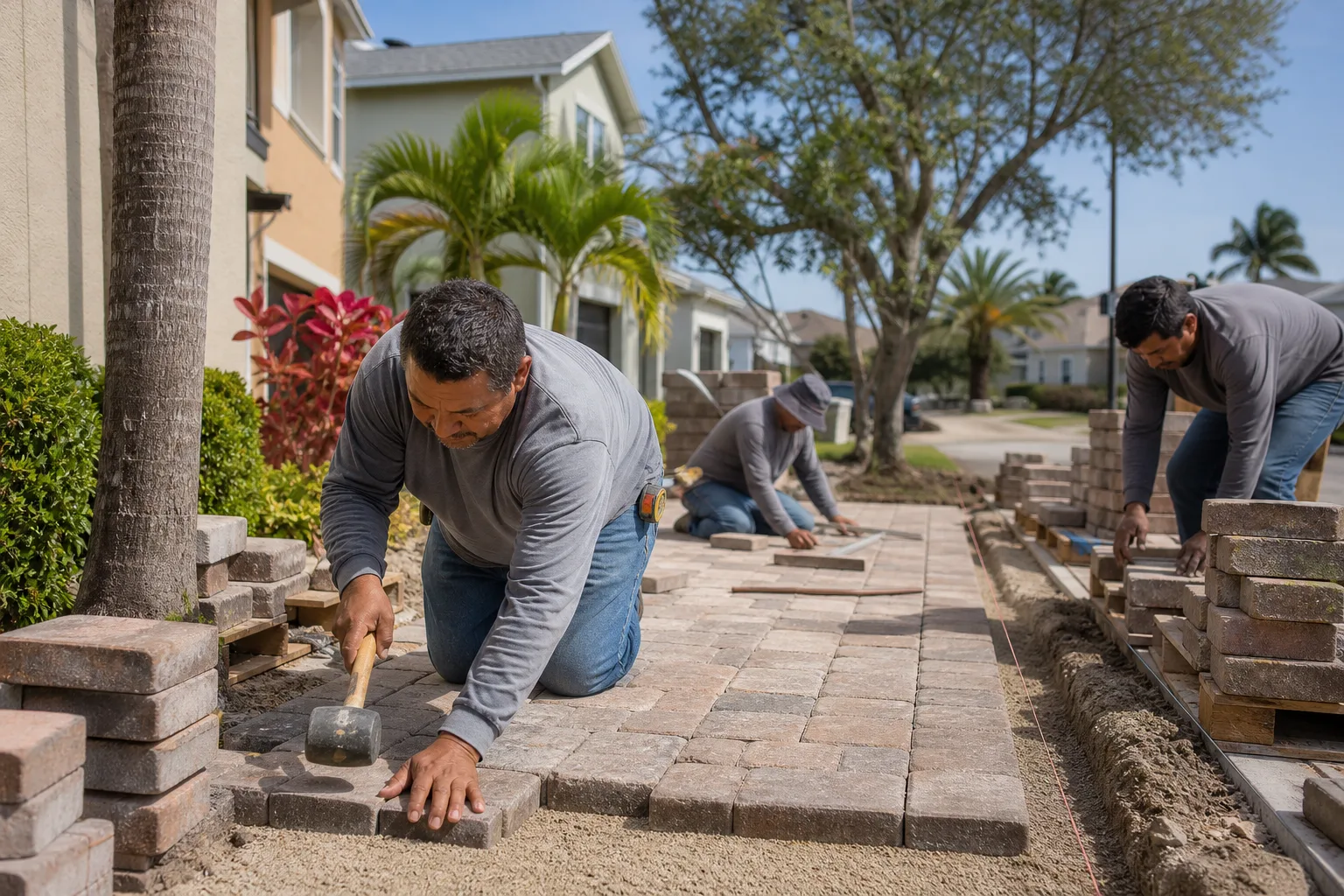
Driveway pavers in Enterprise typically cost $12 to $22 per square foot installed, or roughly $8,000 to $18,000 for a 600 to 800 square foot two-car driveway. That range includes excavation, base, pavers, and joint sand. Caliche-heavy lots and premium or permeable materials can push the total to $25 to $30 per square foot. Call (844) 797-4406 for an exact quote on your property; estimates are free.
Most failures come from base depth designed for wet climates and caliche soil that wasn’t properly addressed. Enterprise lots can have hardpan within a few inches of the surface, and a 4-inch base over that creates trapped water, settlement, and loose pavers. Excavating to 8 to 12 inches of properly compacted base is what actually holds up here.
It depends on whether your project touches the public street approach. Interior driveway paving on an unincorporated Clark County parcel often doesn’t need a permit, but work that modifies the apron or curb line typically does through Clark County Public Works. HOAs in Enterprise area master-planned communities also have their own architectural review requirements. A contractor who pulls the permit when required and confirms the HOA rules in writing is the one to hire.
Choose 80mm pavers if a truck, full-size SUV, or tow vehicle regularly parks on the driveway. Choose 60mm only if the driveway serves passenger cars under roughly 4,500 pounds. In Enterprise, where most households have at least one larger vehicle, 80mm is the practical default for driveways.
Light colors like sand, light tan, cream, and warm gray reflect more solar energy and stay meaningfully cooler underfoot than charcoal or deep red. If you want a dark paver for curb appeal, use it as a border or accent band and keep the main field light. Paver color affects both surface temperature and how much heat radiates into your garage in July.
Not with a competent bid. Upfront pricing means the number you see is the number you pay, and any reputable contractor presents a written line-item quote that accounts for excavation, base, caliche conditions, and materials before work begins. If a contractor starts talking change orders after demolition, that’s a warning sign. Groundwork Construction Co. of Enterprise provides fixed upfront pricing with the 730-Day Done Right Promise behind every job. Call (844) 797-4406 for a free estimate.
The Bottom Line
Enterprise isn’t a market where you can copy a national paver guide and hope for the best. The high-desert climate, caliche soil, and Clark County permitting requirements rewrite the playbook. Excavate to 8 to 12 inches of compacted base, address caliche directly, choose 80mm pavers if you drive anything bigger than a sedan, and pick a light color that stays cool in July. Expect to pay $12 to $22 per square foot installed for a properly built driveway. The good news is that a well-built driveway in Enterprise lasts decades with basic maintenance. Choose the contractor who can explain every one of those decisions in writing, and the driveway will outlast the truck parked on it.
Our technicians have up to 12 years of experience, arrive in uniform, and every project is backed by the 730-Day Done Right Promise. Live person on the phone, 24/7. Call Groundwork Construction Co. of Enterprise at (844) 797-4406 to schedule your free estimate and design consult.
Written by the team at Groundwork Construction Co. of Enterprise.