Last updated November 18, 2026

Free written scope consultation - allowances, timeline, and change-order rules on paper before a single trade is scheduled
The Complete Fence Installation Guide for Enterprise Homeowners
Enterprise sees sustained wind events that regularly hit 50+ mph, and they don’t whisper through a subdivision – they hit a fence like a freight train. A fence set at the standard 2-foot post depth in this soil will move. Period. And most fence quotes you’ll get don’t account for the caliche that turns a post hole into a masonry job. This guide walks Enterprise homeowners through what actually holds a fence in the ground here: wind-load post depths, identifying caliche before you dig, choosing materials that survive desert UV, the HOA and Clark County rules people get wrong, and real Enterprise market pricing by fence type. It’s written from the job sites, not a brochure.
Quick Answer
A fence in Enterprise that lasts is one built for this specific place: posts set 3 to 4 feet deep in concrete footings rated for 50+ mph wind load, not the 2-foot minimum used across most of the country. Budget $32 to $65 per linear foot for wood, $48 to $85 for vinyl, $70 to $120 for block, and $55 to $95 for steel, with caliche removal adding $15 to $40 per post when you hit rock. Get the HOA and Clark County setback rules confirmed before digging, because height and setback violations are what trigger most fence tear-outs in Enterprise.
Styles & brands we work with
- Kitchen remodeling
- Bathroom remodeling
- Home additions & ADU
- Roofing
- Windows & doors
- Driveway & pavers
- Fence
Table of Contents
- Why Wind Load Engineering Comes Before Everything Else
- Post Depth and Concrete Footings: The Working Standard, Not the Minimum
- How to Spot Caliche Before You Dig (and What It Costs)
- Material Comparison: Wood, Vinyl, Block, and Steel in Desert Heat
- HOA and Clark County Fence Height and Setback Rules
- The Installation Process, Step by Step
- What Fence Installation Costs in Enterprise
- Maintenance That Actually Matters in the Desert
Why Wind Load Engineering Comes Before Everything Else
Every fence decision in Enterprise starts with the wind. The Las Vegas Valley, and Enterprise specifically, sits in a basin that funnels gusts fast and hard through the spring, and a solid privacy fence is effectively a sail. A 6-foot vinyl panel presents roughly 36 square feet of surface area to a gust; at 50 mph, that’s a serious lateral load on every post in the run. Where most of the country builds a fence to hold its own weight, we build here to hold against being pushed over.
Wind load is why the “dig and set” approach borrowed from wetter climates fails in Enterprise. Those 2-foot, 8-inch-wide holes work fine when the soil is dense and the snowmelt keeps it packed. This desert soil is looser, dries to powder at the surface, and expands and contracts hard with the monsoon season. A post that’s only 2 feet deep relies on soil friction that isn’t reliably there.
Wind engineering changes a few concrete things:
- Post spacing tightens. Standard runs use 8-foot post spacing; in wind-exposed Enterprise yards – corner lots, open desert edges, streets facing the mountains – 6-foot spacing is the safer call.
- Concrete footing diameter grows. An 8-inch hole is common nationally; we’re usually at 10 to 12 inches here to add mass and pinned surface area.
- Panels need airflow or venting. Solid vinyl and solid wood are the highest-load options. Open board, ornamental metal, and wind-vented vinyl relieve surface pressure on high-exposure lots.
The payoff for this approach shows up in year five, not year one. A fence that survived one wind season doesn’t tell you much. A fence that’s still plumb after five full spring wind cycles is the one that was engineered right. For homeowners planning a full exterior project, this same wind-hardening logic applies to driveway and paver work in Enterprise as well as fencing.
Post Depth and Concrete Footings: The Working Standard, Not the Minimum
The code minimum post depth isn’t the working standard in Enterprise, and treating it like one is the #1 reason fences lean. Model code allows a fence post set just 24 inches deep on a post-and-panel run in nominally stable soil. That depth assumes a climate that keeps soil moisture fairly constant. Enterprise’s soil goes bone-dry for months, then soaks hard during monsoon storms, and that cycle loosens 2-foot posts fast.
Here’s the depth and footing standard we build to, and it’s the one to demand in any quote you accept:
- 3 feet minimum depth for a 6-foot wood or vinyl fence. That’s 50% deeper than the national minimum, and it’s the floor, not the ceiling.
- 4 feet for a 6-foot privacy fence on an exposed lot – corner lots, streets facing the desert or the mountains, or any run the wind nails straight-on.
- 18 to 24 inches of concrete in the bottom of the hole for the footing, not just “fill the hole with concrete.” Concrete below the post base is what anchors it; concrete packed against the post face alone pulls loose.
- Post-gravel at the bottom, then concrete. A few inches of gravel drainage under the concrete keeps water from pooling against the post foot and rotting or rusting it from below.
- Concrete 28-day cure as the target, but panel installation waits a minimum of 48 hours on heavy privacy fences. Give the footing time to set before adding wind load.
Steel or ornamental metal posts on block or masonry runs use a different footing – a metal post set in a drilled pier that’s typically 12 inches wide and 30 to 36 inches deep, sometimes deeper on interior lot walls. That’s a job for a contractor with the right equipment; a homeowner with a post-hole digger won’t get there.
The rule of thumb: if a quote you receive doesn’t mention post depth or footing spec at all, that’s a red flag. A company that’s serious about building a fence in Enterprise puts those numbers on the estimate in writing. When it comes time to talk fencing with us, fence installation in Enterprise is where those specs get pinned down for your specific lot.
How to Spot Caliche Before You Dig (and What It Costs)
Caliche is the hidden cost in Enterprise fence projects. It’s a layer of calcium carbonate cemented into a limestone-like shelf under the soil – sometimes a few inches thick, sometimes several feet – that turns a post hole from a 10-minute job into a jackhammer operation. It’s common across the Las Vegas Valley, and you can hit it at 12 inches or at 4 feet, and no amount of planning tells you where it lands on your lot until you dig a test hole.
There’s a way to know before installation day, and it’s the step most homeowners skip:
- Dig a test hole 12 to 18 inches deep on each fence line before you commit to a budget. If the hole turns hard and pale, with a chalky or crumbly white layer that doesn’t scrape away like soil, you’ve found caliche. A soil test or a look from a contractor confirms it.
- Caliche has two costs: equipment and time. Above 3-feet depth, a standard auger won’t cut it. A rock auger, a jackhammer, or in extreme cases a small blasting operation, all add to the install cost and timeline.
- Budget $15 to $40 extra per post when caliche hits hard, and budget a full extra day or two on a 150-foot run. That’s a real cost, and a quote that ignores it will come back with a change order.
An honest quote in Enterprise will either confirm no caliche from a site visit or carry a per-post caliche allowance. Both are fair, but a flat “all-inclusive” number with no caliche line is a quote that assumes the easy case and will surprise you in the middle of the job. Ask directly: “What happens to this number if you hit caliche at 18 inches?” If the answer is a shrug, that’s your answer. If you’re bundling other hardscape work with the fence, our Driveway & Pavers in Enterprise page covers how caliche affects those projects too.
Material Comparison: Wood, Vinyl, Block, and Steel in Desert Heat
Material choice in Enterprise runs through one filter: how does it handle 100+ days of UV exposure and 50+ mph wind? A fence that’s beautiful on install day and faded, warped, or leaning by year three is a fence that cost you more than the original bid. Here’s how the four main options stack up in this climate.
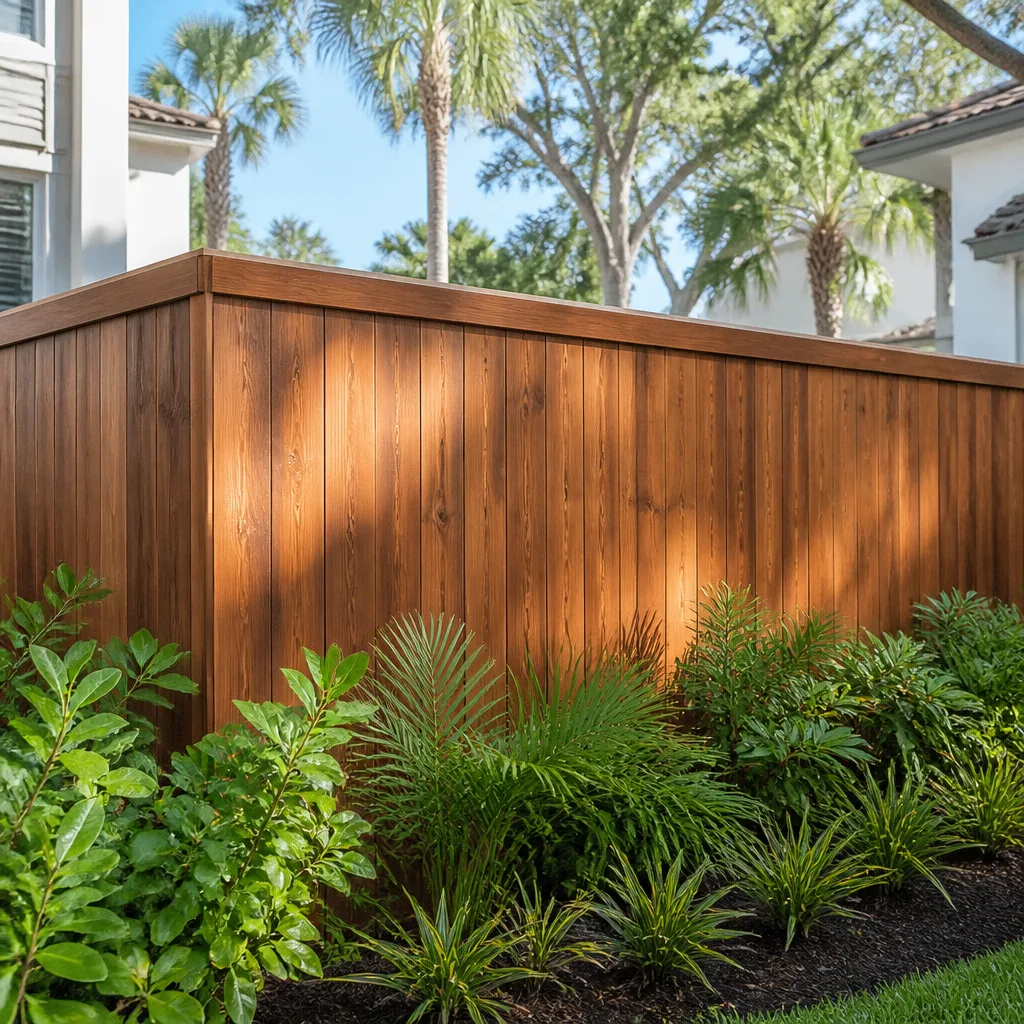
Wood (Cedar, Redwood, Pressure-Treated Pine)
Wood is the most affordable material and the one that needs the most attention here. Wild temperature swings from 40°F nights to 115°F afternoons cause shrinking and swelling; untreated wood that goes through a few seasons without sealing will cup, split, and gray out. Cedar and redwood hold up better than pine but still need sealing every 2 to 3 years. Budget $32 to $65 per linear foot. Wind performance is solid when post depth is right, because wood is relatively forgiving under gust load – it flexes instead of shattering.
Vinyl (Bufftech, ActiveYards)
Vinyl is the popular pick in Enterprise for a reason: no painting, no rot, no termites. Premium vinyl from brands like Bufftech or ActiveYards is UV-stabilized and won’t yellow or chalk the way first-generation vinyl did. The catch is wind. Solid privacy panels are the highest-load fence type, so vinyl in Enterprise demands 6-foot post spacing, deeper footings, and sometimes a reinforced post system. Budget $48 to $85 per linear foot. Ask for the specific brand and gauge; thin vinyl is where the cheap quotes hide.
Block or Masonry
Block walls are the most durable option in this climate and the most wind-resistant when built right, because the mass is the anchor. They’re also the most expensive and slowest to install. A block wall is a masonry project, not a fence – footings go deep and wide, and block walls in Enterprise have a different height rule than wood and vinyl (more on that below). Budget $70 to $120 per linear foot. The look is clean and low-maintenance for decades; the budget is a real one.
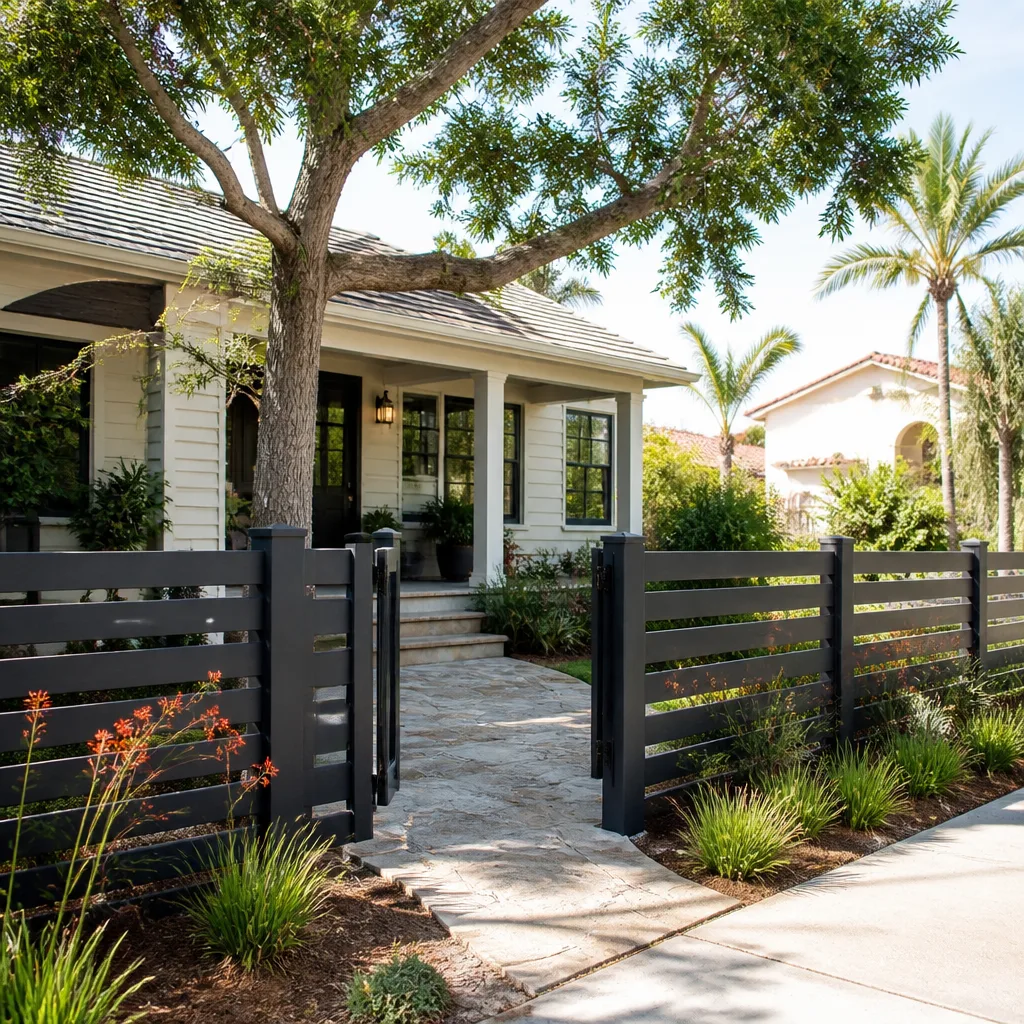
Steel and Ornamental Metal (Jerith)
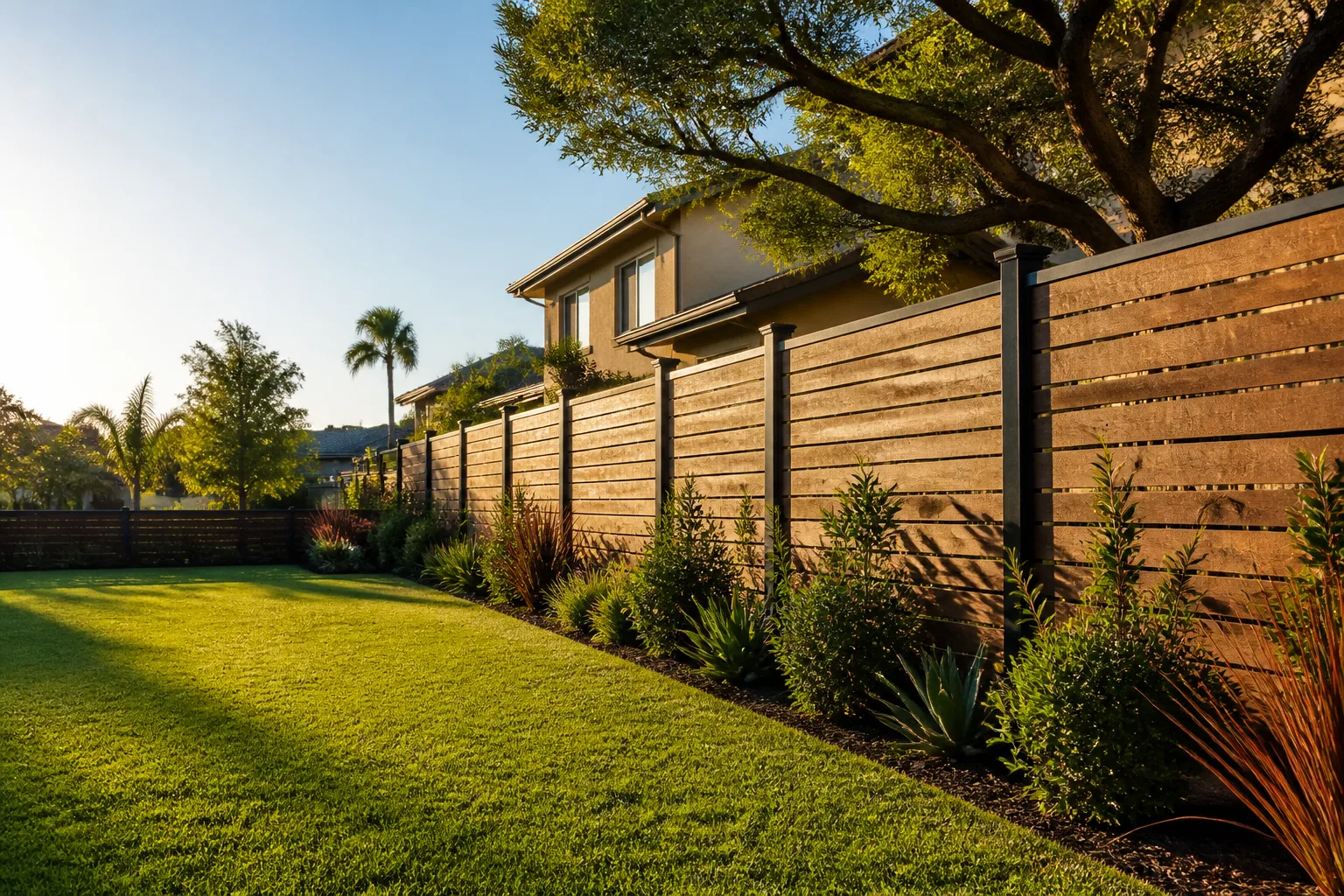
Ornamental steel from Jerith and similar brands is the lowest-wind-load fence type because of the open design, and it’s the ideal choice for open, exposed Enterprise lots. Steel won’t rot, won’t warp, and won’t fade. It needs upkeep to battle rust in monsoon humidity, but the panels are long-lived. Pair steel with block pilasters for a look that’s both wind-hardy and striking. Budget $55 to $95 per linear foot.
Our working recommendation for most Enterprise yards is a wood or premium vinyl privacy fence on exposed-lot footing specs, or ornamental steel if the lot is wide open and wind is the dominant concern. The best call depends on your lot, the HOA, and how much privacy you need. If you’re looking at fence as part of a larger project, home additions and ADU work in Enterprise often triggers new fencing and paving, and the two should be planned together.
HOA and Clark County Fence Height and Setback Rules
Fence height and setback rules in Enterprise and unincorporated Clark County are where more projects stall than anywhere else. Two different rulebooks apply depending on where your lot sits, and the two don’t match in height allowance. Getting this wrong means tearing out a finished fence.
Here’s how the rules break down:
- Clark County unincorporated rules vs. City of Henderson rules. Enterprise is mostly unincorporated Clark County in some pockets and City of Henderson in others. Height limits and setback requirements can differ between the two. Confirm which jurisdiction governs your parcel before you buy material.
- Residential rear and side yard height. Standard limit is 6 feet for rear and side yard fencing, with allowances for taller fences under specific conditions. Front yard limits are tighter and often capped at 3 to 4 feet.
- Corner lots. Corner-lot fences have sight-line triangle requirements, and a fence above 4 feet can be flagged for blocking the intersection view. This is a common surprise for Enterprise corner-lot owners.
- Block walls often have their own height rules, sometimes more permissive than wood or vinyl because of the structural difference. Don’t assume a 6-foot limit applies to a masonry wall.
- HOA covenants stack on top. If your Enterprise community has an HOA, its rules usually override county height limits and may cap fence height at 5 feet, dictate material color and style, and require architectural approval before any digging.
The order of operations matters: confirm the jurisdiction and its setback, then check HOA covenants, then get written HOA approval, then pull any required permits. Skipping step one to save a phone call is the most expensive shortcut in this guide. If a contractor bids the job without asking about your HOA, that’s a contractor who isn’t going to protect you from a tear-out.
The Installation Process, Step by Step
Fence installation is straightforward when the sequencing is right and a mess when it isn’t. Here’s how a properly built Enterprise fence goes up, in order, from lot line to finished run:
- Confirm the property line. Pull the plat or get a survey if there’s any doubt. Installing even a few inches over the line on a neighbor’s property is a legal problem no contractor wants to sort out later.
- Confirm jurisdiction, HOA rules, and permits. Clark County unincorporated or City of Henderson, plus HOA approval and any required permit, cleared before the first hole is dug.
- Locate utilities. Call 811 or the local utility locator before digging. Gas, water, and electrical lines run along and through fence lines, and hitting one is a genuine safety hazard – leave the marking and hand-digging around utilities to the trained pro, never a homeowner with a shovel.
- Dig test holes and confirm caliche. The step most people skip, and the one that determines whether the installation day is smooth or expensive. Auger or jackhammer the holes to spec, 3 to 4 feet deep, 10 to 12 inches wide.
- Set posts and pour footings. Gravel base, post plumb, concrete footing 18 to 24 inches deep, and let it cure. This is the longest wait of the job on a heavy fence, and cutting it short is the shortcut that makes a fence lean.
- Install panels and gates. Panels go up after footings are set, spacing tightened on wind-exposed lots, gate hardware and posts reinforced, and the run checked for level and plumb.
- Final inspection and walkthrough. Check height, setback, gate swing, and finish, and confirm your inspection if your jurisdiction required one.
Most fences take one to three days on site, longer with heavy caliche or a block wall. The details that decide whether your fence is standing after five wind seasons are all in steps three and five. For a broader view of the exterior work that pairs with fencing, our team covers the full range through the Groundwork Construction Co. of Enterprise home page.
What Fence Installation Costs in Enterprise
Fence pricing in Enterprise has a hard floor you can’t quote around: post count math. A standard 150-foot residential fence run uses 17 to 19 posts at 8-foot spacing, and 20 to 25 posts at the tighter 6-foot wind-exposed spacing we use on corner and open lots. Each post is a dig, a footing, and a concrete pour. That’s why “per linear foot” numbers wobble – they assume a post count, and a quote with tight spacing and deeper footings costs more per foot but holds up.
Here’s the real Enterprise market pricing broken down by fence type and what drives the number:
- Wood (cedar or treated pine): $32 to $65 per linear foot. A 150-foot run lands around $4,800 to $9,750 before caliche.
- Vinyl (Bufftech, ActiveYards): $48 to $85 per linear foot. A 150-foot run is roughly $7,200 to $12,750.
- Block or masonry: $70 to $120 per linear foot. A 150-foot run runs about $10,500 to $18,000, and the deeper footings on a masonry wall add to the top of that range.
- Ornamental steel (Jerith): $55 to $95 per linear foot. A 150-foot run is around $8,250 to $14,250.
Line items that move the total up or down:
- Caliche removal: $15 to $40 per post when the layer requires rock augering, jackhammering, or blasting. On a 17-post run, budget $250 to $700 extra if the test hole hits caliche.
- Post depth and footing spec: the deeper 4-foot footings on an exposed lot can add $10 to $25 per post.
- Gates: $150 to $600 per gate depending on material and size.
- Old fence removal and haul-off: $250 to $600 for a typical residential run.
- Permits and HOA application fees: vary by jurisdiction and community; the contractor should itemize these up front, not absorb and hide them.
Enterprise-specific pricing reality: the wind-exposed-lot footing specs that add cost are the ones that prevent a $2,000 repair in year three, so we treat them as part of the real number, not an upsell. An honest quote shows them as line items. When you’re comparing quotes in Enterprise, compare post count, post depth, footing spec, and caliche handling – not just the per-foot headline. Our team builds quotes that way, and the 730-Day Done Right Promise backs the workmanship behind the number.
Maintenance That Actually Matters in the Desert
Maintenance in Enterprise is a shorter list than you’d think, but it shouldn’t be ignored. The threats here are UV, heat cycling, and monsoon-season water, not snow load or wood-boring insects.
- Wood: seal or stain every 2 to 3 years to slow UV graying and heat-driven splitting. Check post bases for rot after monsoon season – pooling water against a post foot is what kills wood posts here.
- Vinyl: wash once a year with a garden hose and mild soap to prevent hard-water spotting and dust buildup. Check panel attach points after spring wind events for any loosening.
- Block: inspect the mortar joints and cap for cracks or hairline separations after monsoon rains. Repointing is cheap; letting a crack widen is not.
- Steel: touch up any scratches or rust spots before they spread. The dry climate keeps rust slow, but monsoon humidity plus a scratched coating is the one spot where rust gets a toehold.
- All materials: walk the line after any storm above 50 mph and check for leaning posts or gate sag. A single leaning post caught early is a re-set; a fence run caught late is a rebuild.
Common Mistakes to Avoid
- Setting posts at the national 2-foot minimum. That depth assumes stable soil moisture Enterprise doesn’t have. A 2-foot post here will lean by year two, and no amount of tamping fixes it.
- Skipping the caliche test hole. Owners who assume the dig is easy get hit with a mid-job change order for rock work. Test the soil before you commit to a budget, not during the project.
- Building before confirming Clark County versus City of Henderson jurisdiction. Enterprise parcels split between unincorporated County and City of Henderson, and the height and setback rules can differ. Confirm which rulebook governs your lot before you buy material.
- Ignoring HOA architectural approval. Many Enterprise communities require HOA approval for fence height, material, and color, and county approval doesn’t replace it. Build without it and you may be ordered to remove the fence.
- Skipping the utility locator. Hitting a gas or electrical line with a hand auger is a genuine hazard, not a nuisance. Call the utility locator and leave the digging around marked lines to a trained professional.
- Assuming a block wall follows the same height limits as wood. Masonry walls often have their own height rules under county code, and assuming the 6-foot wood limit applies can put you in violation.
- Comparing only the per-foot headline. A quote that’s $10 less per foot but uses 8-foot posts at 2 feet deep isn’t cheaper – it’s a fence you’ll rebuild in year three. Compare post count, depth, footing, and caliche handling.
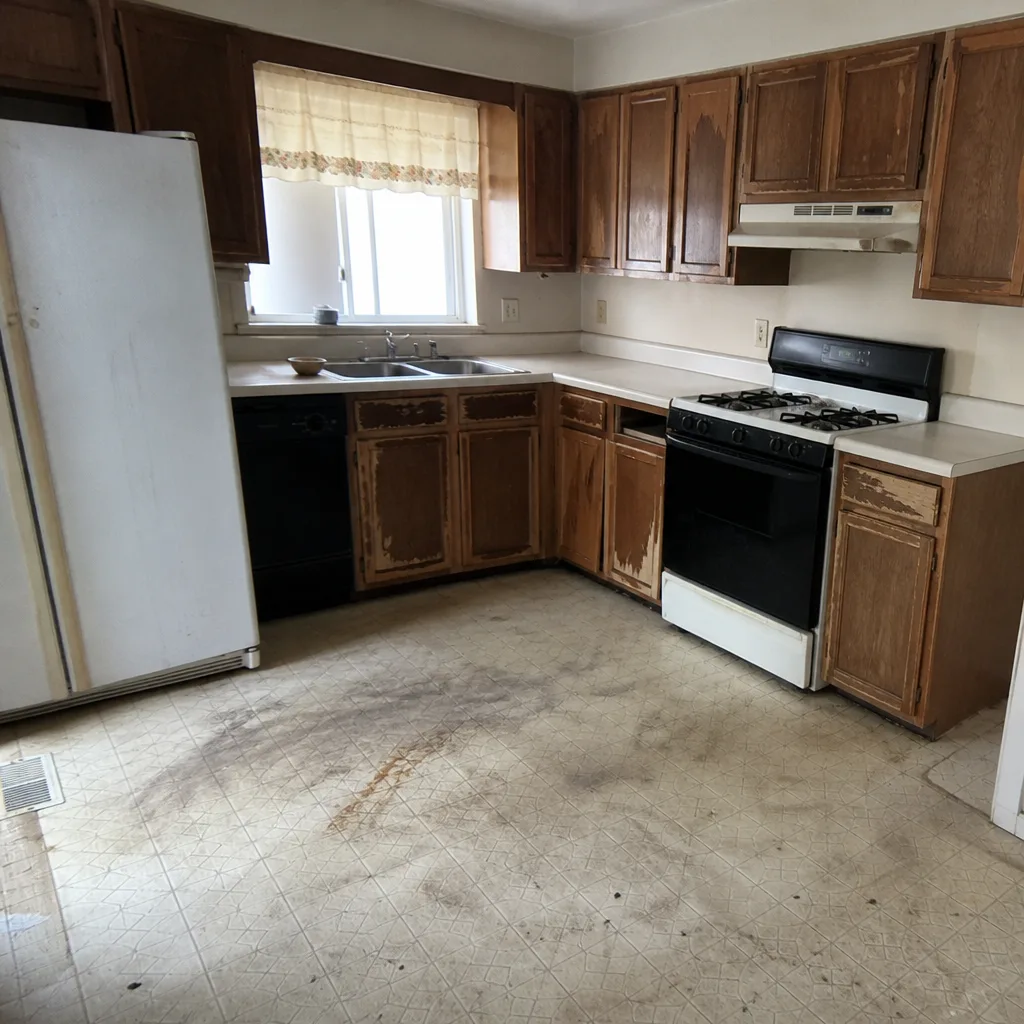
See the difference
 Before
 After
 Before
 After
 Before
 After
When to Call a Professional
Some fence work is genuinely DIY; most of the important parts in Enterprise aren’t. Call a professional when you’re dealing with caliche you can’t dig through with hand tools, when your posts need to go 3 to 4 feet deep with a proper concrete footing on a wind-exposed lot, when the property line is unclear and a survey may be needed, when you need a block or masonry wall, when utility lines run along your fence line, and when the job involves anything above 6 feet. Those are exactly the situations where a shortcut becomes an injury or a tear-out. Groundwork Construction Co. of Enterprise offers free estimates in Enterprise – call (844) 797-4406. We’ll confirm the jurisdiction and HOA rules, dig the test hole, and give you a written line-item quote with the caliche allowance spelled out, so the number you see is the number you pay.
Frequently Asked Questions
Fence posts in Enterprise should go a minimum of 3 feet deep for a 6-foot wood or vinyl fence, and 4 feet on wind-exposed lots like corner properties or streets facing open desert. That’s deeper than the national 2-foot minimum because Enterprise’s 50+ mph wind events and dry-then-wet soil cycle loosen shallow posts. Pair the depth with a 10 to 12-inch-wide hole and an 18 to 24-inch concrete footing. Call (844) 797-4406 for a free estimate that specs post depth for your specific lot.
Fence installation in Enterprise typically costs $32 to $65 per linear foot for wood, $48 to $85 for vinyl, $70 to $120 for block, and $55 to $95 for ornamental steel. Caliche removal adds $15 to $40 per post when rock is encountered, and exposed-lot footing specs add $10 to $25 per post. Call (844) 797-4406 for an exact quote on your fence line – estimates are free.
Permit requirements in Enterprise depend on whether your parcel is in unincorporated Clark County or City of Henderson, and on fence height, material, and location. Most fences under 6 feet in rear and side yards don’t require a county building permit, but corner lots, front-yard fences, and block walls often trigger one. HOA architectural approval is required separately and often stricter. Call (844) 797-4406 and we’ll help you confirm which jurisdiction governs your lot.
Caliche is a layer of calcium carbonate cemented into limestone-like rock under Enterprise soil that can stop an auger cold and turn a post hole into a jackhammer job. It’s common across the Las Vegas Valley, and where it’s thick it adds $15 to $40 per post and a day or two of install time. Dig a test hole before you commit to a budget. Call (844) 797-4406 for an estimate that includes a written caliche allowance.
Wood and ornamental steel handle Enterprise’s heat and wind best, with premium vinyl from brands like Bufftech or ActiveYards a close third when it’s installed with tight 6-foot post spacing and deep footings. Wood flexes under gust load instead of failing, and steel’s open design keeps wind load low. Solid vinyl privacy panels are the most wind-sensitive option, so the footing spec matters most for that material. Call (844) 797-4406 to talk through the right material for your lot.
A properly written Enterprise fence quote shouldn’t change once work starts, because post count, post depth, footing spec, and caliche handling are all priced up front. The number you see is the number you pay, and any legitimate adjustment is caught at the test-hole stage before material is ordered. Call (844) 797-4406 for a written line-item quote with no hidden surprises.
The Bottom Line
Fence installation in Enterprise is a wind engineering and soil problem before it’s a shopping problem. Get the post depth right (3 to 4 feet, not 2), dig the caliche test hole before you budget, pick material for UV and wind resistance rather than the cheapest per-foot number, and confirm the Clark County or City of Henderson jurisdiction plus HOA rules before you buy a board. Those four decisions decide whether your fence is plumb in year five or a leaning rebuild in year three. Enterprise pricing runs $32 to $120 per linear foot depending on material and the real conditions on your lot.
If you’d rather hand this to a team that specs it right the first time, call Groundwork Construction Co. of Enterprise at (844) 797-4406 for your free estimate and design consult. We’ll bring the test hole, the line-item quote, and the 730-Day Done Right Promise – built to last, backed in writing.
Written by the team at Groundwork Construction Co. of Enterprise.